The Dual Mechanics of High Performance Tribes and Toxic Traps
Golden Hook & Introduction
SECTION
Nova: If you want to build a high-performance team, you have to be vulnerable. But if you are too vulnerable, you might just be handing a manipulative person the keys to your mental health.
Atlas: That is a terrifying duality. It feels like we are constantly told to open up, to lead with empathy, and to create these beautiful, safe spaces. But the moment you drop your guard, you run the risk of letting in the exact kind of person who thrives on that openness.
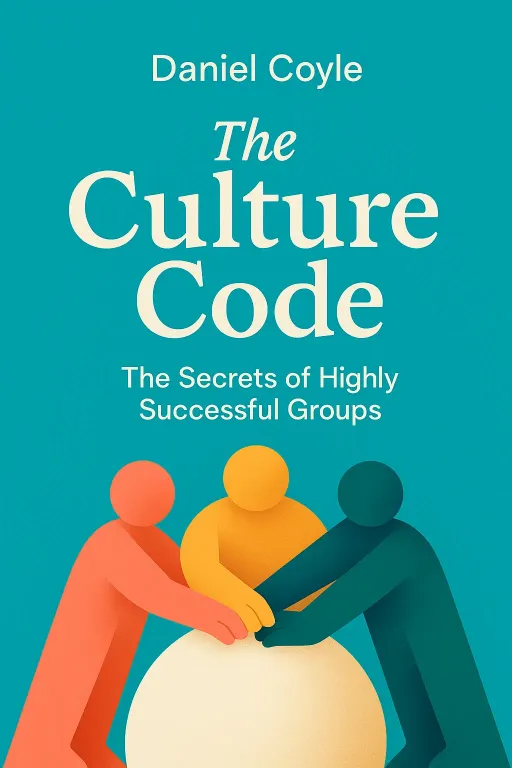
Nova: Exactly. It is the central tension of modern leadership. We are looking at two very different, yet essential, books today. First, there is The Culture Code by Daniel Coyle, which acts as a masterclass in how to build successful, high-functioning organizations. Then, we have Psychopath Free by Jackson MacKenzie, which serves as a necessary manual for spotting the toxic dynamics that can dismantle those same organizations from the inside out.
Atlas: I have always been fascinated by how these two concepts coexist. Coyle dives deep into the research of what makes groups like the Navy SEALs or Pixar so effective, while MacKenzie provides a framework for identifying the people who use those same social dynamics to manipulate others. It is the difference between building a greenhouse and identifying the weeds that try to choke it out.
Nova: That is a perfect analogy. We have to understand the architecture of trust to build the culture, but we also need the diagnostic tools to protect it.
The Architecture of High Performance
SECTION
Atlas: So, let’s start with the builder’s side of this. When you look at what Daniel Coyle uncovered in The Culture Code, it really comes down to three pillars. I have always thought that safety is the most misunderstood one. People hear safety and they think of comfort zones or avoiding conflict. But that is not what he means, is it?
Nova: Not at all. Coyle argues that safety is the foundation of high performance because it lowers the brain's internal threat detection system. When people feel safe, they stop spending energy on protecting their status or their ego. Instead, they redirect that energy toward the collective mission. He uses the example of the Pixar Braintrust. These are meetings where directors show unfinished, messy work to their peers. It is the opposite of a polished pitch.
Atlas: I remember reading about that. It sounds counterintuitive. Why would you want to show your unfinished work to a group of people who are essentially there to critique it?
Nova: Because they have built a culture where the feedback is directed at the project, not the person. Coyle highlights that they use language that separates the creator from the creation. They aren't saying, you are wrong. They are saying, this specific scene is not working, and here is why. That is the vulnerability component. It is the willingness to say, I do not know, or, I messed this up. When a leader goes first in admitting a mistake, it gives everyone else permission to do the same.
Atlas: That makes sense. It creates a psychological environment where the cost of being wrong is lower than the cost of hiding a mistake. But, and I have to push back here, what happens when that environment is exploited? If I am a leader and I am constantly admitting my mistakes to build safety, I am essentially giving a roadmap of my weaknesses to anyone who might want to exploit them.
Nova: That is the pivotal question. You are touching on the difference between healthy vulnerability and naive exposure. In a healthy culture, your vulnerability is met with support and collaborative problem-solving. In a toxic culture, your vulnerability is met with judgment or used as leverage. That is why Coyle’s third pillar, purpose, is so critical. It acts as the anchor. If everyone is aligned on the mission, the vulnerability becomes a tool for improvement rather than a target for attack.
Atlas: I can see how that works in a high-trust environment. But for the listener who is in a high-stakes, competitive, or perhaps even a disorganized environment, that sounds like a dangerous level of trust to give away. How do we know when the environment is ready for that level of openness?
Nova: You start by testing the waters with small, low-stakes signals of vulnerability. You do not dump your deepest professional insecurities on the team on day one. You start by admitting to a small error, or asking for input on a minor problem. You watch how the team responds. Do they jump in to help? Do they use it as an opportunity to look better than you? The reaction will tell you everything you need to know about the safety level of your environment.
The Anatomy of the Toxic Trap
SECTION
Atlas: Okay, so that is the diagnostic test for the team. But let's pivot to the other side of the coin. Jackson MacKenzie’s work in Psychopath Free is arguably the most important counterpart to this conversation. If Coyle is about how to build the culture, MacKenzie is about how to stop the person who wants to destroy it.
Nova: MacKenzie writes from a place of deep, firsthand understanding. He really focused on the patterns of psychological manipulation, specifically gaslighting. His work is incredibly practical because he identifies the stages that toxic individuals use to infiltrate a group or a relationship. He talks about the initial phase of love bombing or, in a workplace context, extreme flattery and over-the-top alignment.
Atlas: The over-the-top alignment. That is the one that always catches people off guard. It feels so good to have someone who is suddenly your biggest fan, who agrees with every idea you have, and who seems to perfectly understand your vision. It feels like you have finally found a partner who gets it.
Nova: Exactly. It is designed to feel like a perfect match. But MacKenzie’s framework shows that this is actually a tactic to lower your defenses. Once they have built that connection, they start the devaluation phase. They begin to use your own vulnerabilities, the ones you shared in that early stage of high trust, against you. They might twist your words, deny things they said, or make you question your own perception of reality. That is the gaslighting.
Atlas: It is fascinating and terrifying because the very traits that make a good team member—openness, trust, empathy—are the exact traits that a manipulator looks for. It is almost like they are predators who have evolved to target the most cooperative members of the group.
Nova: That is a very apt way to put it. MacKenzie emphasizes that these individuals often lack the capacity for genuine empathy. They are not interested in the mission or the team’s success. They are interested in power and control. And the reason this is so relevant to our conversation about culture is that one toxic person can effectively cancel out the safety that a leader has spent years building.
Atlas: I have seen this happen. A leader tries to create a culture of vulnerability and transparency, and then someone comes in, acts like they are on board, but then starts whispering, creating factions, and making people feel unsafe for speaking up. It shatters the culture overnight.
Nova: It does. And the damage is often invisible until it is too late. MacKenzie points out that the goal is not to fix these people. You cannot fix them. The goal is to identify the behavioral patterns early and establish firm, non-negotiable boundaries.
Atlas: So, how do we combine these two? How do we build the high-performance culture that Coyle describes while keeping our eyes open for the patterns that MacKenzie warns us about?
Synthesis and Strategic Boundaries
SECTION
Nova: The answer lies in what I would call shielded vulnerability. You need to be vulnerable, but you must be discerning about where, when, and with whom you share that vulnerability. It is about creating a secure perimeter. You share your mistakes and your need for feedback with your trusted inner circle—the people who have proven they are aligned with the mission and who respond to vulnerability with support.
Atlas: I like that. It creates a tiered system of trust. You are not being closed off; you are being strategic with your openness. It is like a castle. You have the outer walls, which are professional, respectful, and clear, and then you have the inner sanctum where the real, raw collaboration happens.
Nova: That is a great way to put it. And the key diagnostic tool here is observing how people handle the information you give them. If you share a challenge you are facing, and a colleague responds with empathy and a collaborative idea, that is a green flag. If they respond by subtly using that information to question your competence later, or if they bring it up in front of others to undermine you, that is a massive red flag.
Atlas: It is also about the consistency of their behavior. MacKenzie’s work really highlights that toxic patterns are repetitive. They aren't one-off mistakes. If you see the same behavior—the manipulation, the twisting of facts, the sudden shifts in mood—repeatedly, you have to stop trying to interpret it as a misunderstanding and start seeing it as a pattern.
Nova: Precisely. We often want to give people the benefit of the doubt because we are conditioned to be cooperative. But when you are a leader, you have a responsibility to protect the culture. Allowing toxic behavior to fester in the name of being nice or being vulnerable is a failure of leadership. It is not being kind; it is being negligent to the people who are actually contributing to the mission.
Atlas: That is a powerful realization. Protecting the culture is an act of service to the people who are doing it right.
Nova: It is the ultimate act of service. When you remove a toxic element, or when you set a firm boundary that stops the manipulation, you are essentially telling the rest of your team that their safety matters. That is the ultimate way to reinforce the culture.
Atlas: This brings us back to the idea of the Strategic Architect. We want to build, we want to scale, and we want to achieve. But we have to be the ones who hold the blueprint. We have to be the ones who say, here is where we are open, and here is where we are closed.
Nova: And that is the balance. You lean into Coyle’s pillars—safety, vulnerability, and purpose—to foster growth. But you use MacKenzie’s framework of awareness to ensure that growth is not being sabotaged. You are not choosing between trust and caution. You are practicing both simultaneously.
Synthesis & Takeaways
SECTION
Atlas: This has been a massive shift in how I think about leadership. It is not just about having a great team; it is about having a protected environment where that team can actually flourish.
Nova: I am glad you feel that way. The takeaway here is that you don't need to be paranoid to be protected. You just need to be observant. Pay attention to how people react to your vulnerability. Do they lift you up, or do they look for ways to push you down? And more importantly, are you building a culture where that kind of support is the default?
Atlas: It really comes down to intentionality. We are the designers of the environments we work in. If we aren't designing for safety, we are, by default, designing for something else—usually chaos or politics.
Nova: Exactly. So, for our listeners, here is the challenge for the week. Look at your team or your professional network. Identify one area where you can practice healthy, strategic vulnerability. Maybe it is admitting a mistake in a meeting or asking for help on a project you are struggling with. But as you do that, observe the reactions. Are you building trust with the right people? And are you noticing any patterns that might suggest someone is not operating with the integrity you need?
Atlas: That is an actionable, high-impact step. Observe the reaction, assess the pattern, and adjust your boundaries accordingly. It is a simple experiment, but the data you get back will be invaluable.
Nova: It will tell you everything you need to know about the health of your professional ecosystem.
Atlas: I love that. It takes the abstract concept of culture and turns it into a concrete, daily practice. Thanks for walking through this with me, Nova. It feels like a much safer, yet more ambitious way to operate.
Nova: It is the only way to scale without burning out or getting taken advantage of. Remember, high performance is not about being invulnerable. It is about being smart enough to know where to be vulnerable, and brave enough to protect the culture you are building.
Atlas: Well said. And on that note, we are wrapping up today’s exploration of the mechanics of culture. This is Aibrary. Congratulations on your growth!