Reclaiming Personal Sovereignty from Toxic Dynamics
Golden Hook & Introduction
SECTION
Nova: The most expensive thing you will ever buy is the temporary peace you get by lowering your standards. We have all done it. You tolerate a little bit of disrespect, you swallow a comment that stings, or you ignore a red flag just to keep the atmosphere calm for another hour. But that purchase always comes with interest, and eventually, the bill comes due.
Atlas: That is a brutal way to start, but I cannot argue with it. It reminds me of those moments where you realize you have been living in a compromise for so long, you have forgotten what it feels like to have a solid foundation under your feet. It is like slowly boiling a frog, but the frog is your own sense of self.
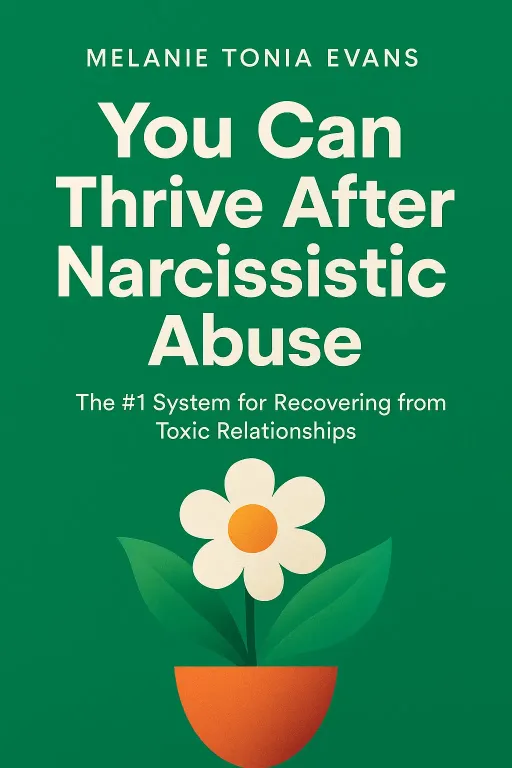
Nova: Exactly. And that is what we are unpacking today. We are looking at how to stop paying that price. We are diving into two essential resources that tackle this from different angles: by Melanie Tonia Evans, and by Jackson MacKenzie.
Atlas: These are two heavy hitters in the recovery space. I have always found it fascinating how MacKenzie, in particular, managed to turn such a dark subject into a roadmap for rebuilding. It is not just about identifying the toxic person; it is about identifying why we stayed in the orbit of that toxicity for so long.
Nova: That is the core of it. Melanie Tonia Evans takes a slightly different, deeply somatic approach, arguing that we often try to think our way out of trauma, which is like trying to fix a broken leg with a philosophy book. It just does not work. We need to bridge the gap between understanding the dynamic and actually healing the nervous system.
Atlas: That distinction is vital. I think a lot of people get stuck in the loop of analyzing the abuser, trying to solve the riddle of why they are the way they are, thinking that if they just gather enough data, they will be safe.
The Somatic Shift vs. Intellectualizing
SECTION
Nova: That is the trap. We call it "intellectualizing," and it feels like progress because you are gathering information. You are reading the articles, you are listening to the podcasts, you are mapping out the narcissist’s behavioral patterns. You think, if I understand the pattern, I can predict the next move and avoid the pain. But the nervous system does not care about your analytical prowess. It is reacting to the threat in real-time.
Atlas: I can see why that feels like a trap. It gives you a false sense of control. You are sitting there with a clipboard, taking notes on the chaos, convinced that because you have labeled the behavior, you are immune to it. But the body is still in a state of high alert, right?
Nova: Precisely. Evans argues that true recovery requires a shift from cognitive processing to deep somatic healing. She calls it the Quanta Freedom Method. The idea is that trauma is stored in the cells, in the nervous system. You can understand every psychological theory about narcissism, and you will still feel that pit in your stomach when the person walks into the room. The healing happens when you stop trying to explain the dynamic to your brain and start soothing the reaction in your body.
Atlas: That sounds like a tall order. For someone who lives in their head, like a lot of our listeners who are high achievers and problem solvers, this must be incredibly frustrating. How do you actually do that? How do you soothe a nervous system that is wired to scan for danger?
Nova: It starts with a radical redirection of focus. When you feel that surge of anxiety or the urge to "figure out" what the other person is thinking, you have to pivot inward. You stop asking, "Why did they say that?" and you start asking, "Where do I feel this in my body right now?" Is it a tightness in the chest? A racing heart? A coldness in the stomach? By naming the sensation rather than the story, you start to decouple the trauma from the situation.
Atlas: So, you are essentially turning the volume down on the internal narrative and turning the volume up on the physical experience. That makes sense because the narrative is usually a loop. It is a recording that plays over and over. The physical sensation, however, is current. It is happening now.
Nova: That is the breakthrough. When you sit with the sensation without trying to fix it or explain it away, it begins to dissipate. It is like letting steam out of a pressure cooker. If you keep the lid clamped down with intellectual analysis, the pressure builds. If you acknowledge the sensation, it moves through you.
Atlas: I imagine this is where the "temporary peace" we mentioned earlier comes in. We intellectualize to keep the peace, to keep the lid on the pressure cooker, but the pressure is still there.
Nova: Exactly. We tell ourselves, "I will just understand them better, and then I will be fine." But you are not fine. You are just exhausted.
Reclaiming Boundaries and Empathy
SECTION
Atlas: Let’s pivot to the other side of this, because I want to talk about the mechanics of how we get into these dynamics in the first place. Jackson MacKenzie’s is famous for mapping out the specific phases of these relationships. If we are talking about rebuilding, we need to know what we are rebuilding from. What are these phases he talks about?
Nova: MacKenzie lays out a very clear, almost clinical progression. It usually starts with love bombing. This is the stage where you feel like you have met your soulmate. The intensity is off the charts. They mirror your values, your interests, your dreams. It feels like you have finally found someone who truly "gets" you.
Atlas: That is the hook. It is designed to be the hook. And the problem is, it feels so good that you ignore the tiny red flags because you are drunk on the validation.
Nova: Right. And then comes the devaluation phase. This is where the mask slips. It is subtle at first. A backhanded compliment, a moment of coldness, a sudden disappearance. You are left confused. You think, "Wait, who was that person from last week?" You try to get back to that initial high, so you work harder to please them, to be the person they want you to be. You are essentially negotiating with a ghost.
Atlas: And that is where the empathy comes in. Because you are a good person, you assume they are, too. You think, "They are having a bad day," or "They have had a rough past, I can help them." Your empathy is being weaponized against you.
Nova: MacKenzie is very strong on this point. He talks about recovering your natural empathy. He does not suggest you should stop being an empathetic person. He argues that you need to stop being an empathetic person. You have to protect your empathy. It is a resource, not a bottomless well that you should drain for the sake of someone who is actively exploiting it.
Atlas: That is a crucial distinction. There is a difference between being a kind person and being a naive person. But how do you reconcile that? How do you stay open and caring without being a target?
Nova: Boundaries. And I don’t mean the walls you build to keep people out. I mean the clear, consistent standards you hold for how you are treated. MacKenzie suggests that rebuilding your boundaries is like installing a security system. You are not trying to stop people from approaching your house; you are installing cameras and locks so that you can see who is coming and decide whether to open the door.
Atlas: I love that analogy. It is not about turning into a cynic. It is about becoming an observer. You watch for the patterns. If someone shows you who they are, you believe them the first time, rather than waiting for the pattern to repeat ten times because you are holding out for the "potential" you see in them.
Nova: That is the key. We fall in love with potential. We see who someone be, and we ignore who they. Reclaiming your sovereignty means saying, "I am going to base my decisions on reality, not on my hopes for this person."
Atlas: So, if I am a pragmatic learner, someone who wants actionable steps, how do I apply this today? If I am in a situation where I feel like I am walking on eggshells, what is the first move?
Synthesis & Takeaways
SECTION
Nova: The first move is a radical act of honesty. You need to identify the specific boundary you have let slip to maintain that temporary peace. Ask yourself: "What am I currently tolerating that I would never advise a friend to tolerate?"
Atlas: That is a mirror-check question. It forces you to step outside your own situation and look at it with the clarity you would offer someone else.
Nova: Exactly. And once you identify that boundary, you do not need to have a grand, dramatic confrontation. You just need to hold the line in the next small instance. If they interrupt you, you gently say, "I wasn't finished." If they make a passive-aggressive comment, you say, "I don't appreciate that tone." You are retraining the environment to understand that you are no longer a participant in the old dynamic.
Atlas: It is about micro-adjustments. You don't need to burn the bridge; you just need to stop traffic from crossing it.
Nova: Yes. And as you do this, you will notice something interesting. The people who respect you will adjust. The people who rely on your lack of boundaries will get angry or pull away. And that is the most important piece of information you will ever receive.
Atlas: That is the litmus test. The reaction to the boundary tells you everything you need to know. If they get angry, they were never interested in your well-being; they were interested in your utility.
Nova: And that is the moment of liberation. When you realize that their reaction is not your responsibility. You are not responsible for managing their emotions. You are only responsible for managing your own energy and your own space.
Atlas: This brings us back to the somatic piece. When you set that boundary, your body is going to scream at you to retreat. It will feel dangerous. It will feel like you are about to lose the "peace" you have been maintaining.
Nova: That is the fear reflex. It is just your nervous system trying to keep you in the familiar, even if the familiar is toxic. You have to breathe through that discomfort. Remind yourself: "I am safe. This is just the feeling of change." The safety you are looking for is not in their approval. The safety is in your own ability to hold your ground.
Atlas: I think for our listeners, the takeaway here is to stop waiting for permission to be okay. You don't need the other person to change for you to reclaim your sovereignty. You just need to change the rules of engagement.
Nova: That is exactly right. The goal is not to fix the other person. The goal is to return to yourself. It is to take that energy you have been spending on analyzing them, managing them, and worrying about them, and pour it back into your own life, your own goals, and your own healing.
Atlas: It is about moving from a state of reacting to a state of living.
Nova: And that is where the real thriving begins. It is not about what you have survived; it is about who you are becoming on the other side of it.
Atlas: This has been a powerful reminder. It is not just about identifying the "psychopath" or the "narcissist." It is about identifying the part of ourselves that was willing to trade our peace for their comfort. And today, we stop that transaction.
Nova: We do. And for anyone listening who feels like this is a daunting task, start small. You don't have to overhaul your entire life in an afternoon. Just pick one boundary. Just one. And hold it. The ripple effect will take care of the rest.
Atlas: That is a perfect place to leave it. A small, firm, consistent step.
Nova: Thank you for joining us on this deep dive. Remember, your peace is not something you negotiate; it is something you protect. This is Aibrary. Congratulations on your growth!