Mastering Boundaries against Toxic Influence
Golden Hook & Introduction
SECTION
Atlas: Check your phone right now. Scroll through your contacts. There is one name on that list that, when you see it, makes your stomach tighten just a fraction. You know exactly who it is. You probably have a mental script ready for when they call, a defensive posture you take before you even pick up.
Nova: That is the most visceral way to start a conversation, Atlas. It is true, though. We all have that person. We keep them around under the guise of loyalty or history, but in reality, we are just managing the fallout of their presence.
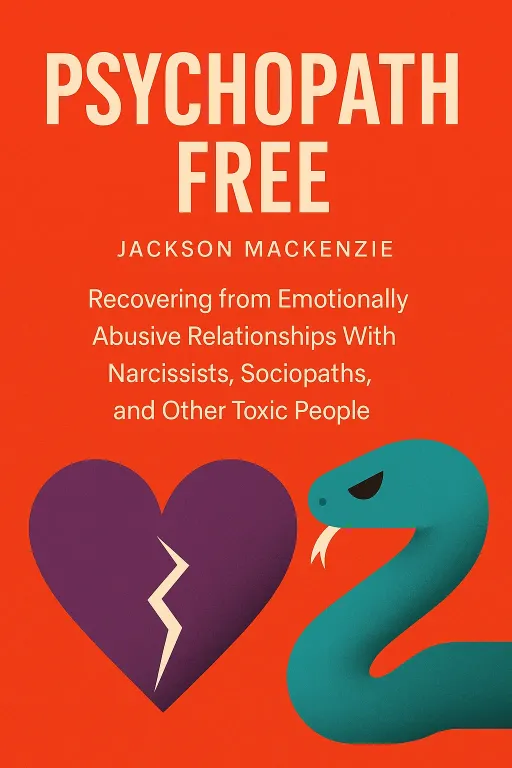
Atlas: Exactly. And today, we are stopping that. We are talking about mastering boundaries against toxic influence. We are looking at the roadmap provided by Jackson MacKenzie in his book Psychopath Free, which breaks down the subtle manipulation tactics that derail both careers and mental health. Then, we are bringing in the clinical, no-nonsense perspective from Dr. Ramani Durvasula in her book, Should I Stay or Should I Go?
Nova: It is a heavy pairing, but a necessary one. MacKenzie’s work is fascinating because he focuses on the recovery process, giving language to the chaos that people often feel when dealing with high-conflict personalities. And Dr. Durvasula? She is the gold standard for clinical reality checks. She strips away the hope-based thinking that keeps people trapped in these dynamics.
Atlas: I like that. Hope-based thinking is often just a polite term for delusion. So, let’s get into the blueprints. Where do we start when we are trying to identify these influences, especially for those of us who pride ourselves on being strategic and professional?
The Anatomy of Manipulation
SECTION
Nova: We start with the social audit. It sounds corporate, but it is deeply personal. MacKenzie points out that manipulators do not target the weak. They target the capable. They target the people who have capacity, empathy, and a drive to build things. If you are an architect, a connector, or someone building a legacy, you are a prime target because you have resources—emotional, intellectual, and professional—that they want to siphon.
Atlas: That is an interesting pivot. Usually, we think of victims as people who are vulnerable or down on their luck. You are saying that being high-functioning makes you a target?
Nova: Precisely. Think about the mechanics. A manipulator needs someone who will fix their problems, someone who will overlook their inconsistencies in the name of "the greater good" or "potential." They look for the person who is most likely to offer a second chance. If you are a high-achiever, you are trained to solve problems. When you encounter a high-conflict person, your brain treats them like a project to be solved rather than a threat to be neutralized.
Atlas: That hits home. It feels like a professional hazard. If I am in a leadership role, I am constantly trying to optimize team dynamics, right? So, if someone is difficult, I think, okay, what is the communication strategy here? What is the pivot? But you are saying that with a high-conflict personality, that optimization mindset is actually the trap.
Nova: You nailed it. You are trying to architect a solution for a structural defect that the other person has no intention of repairing. Dr. Durvasula emphasizes this constantly. She argues that we spend so much time analyzing the "why" behind their behavior—childhood trauma, stress, bad day—that we completely neglect the "what." The "what" is the behavior they are demonstrating right now.
Atlas: Okay, but how do we differentiate between a difficult person—like a demanding boss or a stressed colleague—and someone who is genuinely toxic? I don’t want to go around labeling everyone "toxic" just because they are annoying. That seems like a slippery slope.
Nova: That is a fair concern. The difference lies in the pattern of accountability. A difficult person, when confronted with a boundary or a mistake, might get defensive, but they eventually acknowledge the impact of their actions. They have a baseline of empathy. A high-conflict personality, or what MacKenzie describes in his work, lacks that baseline. When you set a boundary, they do not apologize. They escalate. They make you feel guilty for having the boundary in the first place.
Atlas: So, it is the reaction to the boundary that is the diagnostic tool?
Nova: Exactly. If you say, "I can’t take calls after 7:00 PM," a reasonable person says, "Oh, sorry, I didn't realize," or "Okay, I will email you." A toxic influence will make you feel like you are abandoning them, or they will frame your boundary as a personal attack on your relationship. It is a reversal of roles. Suddenly, you are the one apologizing for having a life.
Atlas: I have seen this in project management. You set a scope, and the client tries to push past it. If you hold the line, they act like you are being uncooperative. But if you give in, you are the one who burns out.
Nova: And that is where the "social audit" comes in. You need to look at your inner circle and ask: Who in my life requires me to shrink in order to accommodate them? Who makes me feel like I have to walk on eggshells to maintain the "peace"?
The Architecture of Boundaries
SECTION
Atlas: Let’s lean into that. We are talking about boundaries like they are property lines. If I am an architect, I know that you cannot build a stable structure without clear property lines. If you try to build on your neighbor’s land, the whole thing collapses. But in relationships, we are so afraid of those lines. Why?
Nova: Because we have conflated boundaries with walls. We think a boundary is an act of aggression, a way to keep people out. But Dr. Durvasula frames it differently. Boundaries are not walls. They are the parameters of your own integrity. They are the rules of engagement that allow you to interact with someone safely.
Atlas: That is a powerful distinction. A wall keeps people out. A boundary defines where you end and the other person begins.
Nova: Precisely. If you are a strategic connector, you need to be intentional about who you let into your ecosystem. Dr. Durvasula suggests a method that is incredibly effective for this: the "Gray Rock" method. Have you heard of this?
Atlas: I have heard the term, but I am not sure I grasp the application. Is it just being boring?
Nova: Essentially, yes. When you are forced to interact with a high-conflict person—say, a toxic colleague you cannot avoid—you become as uninteresting and unreactive as a gray rock. You provide short, non-committal answers. You do not share personal news. You do not defend yourself against their baiting. You give them nothing to work with.
Atlas: That sounds like a defensive strategy. It is basically emotional camouflage.
Nova: It is. And it works because high-conflict people feed on reaction. They want to see you get flustered, angry, or defensive. That is their fuel. When you stop providing that, they often get bored and move on to a more reactive target. It is not about changing them; it is about starving the dynamic of the energy it needs to sustain itself.
Atlas: But what about the guilt? That is the part that kills me. If I am being "gray rock" with someone, I feel like I am being fake or cold. I feel like I am failing at being the person I want to be—the open, authentic leader.
Nova: That is the crucial tension. We equate being "good" with being "available." But look at the long-term cost. If you are constantly giving away your energy to someone who drains it, you have nothing left for the people who actually matter. You are essentially prioritizing the approval of a drainer over the well-being of your actual team and your own sanity.
Atlas: So, it is a zero-sum game. If I am over-invested in the toxic dynamic, I am under-investing in my legacy.
Nova: Exactly. And that brings us to the "Deep Question" we wanted to explore today. Are you prioritizing the approval of others over your own long-term professional integrity? Because that is what is happening when you fail to set a boundary. You are trading your integrity for a temporary sense of relief, or to avoid a momentary conflict.
Atlas: That is a tough pill to swallow. It makes me realize that setting a boundary is not just for the other person's benefit or even just for my own comfort. It is an act of professional stewardship. If I am the architect of my life, I have to be the one who decides what gets built and what stays out.
Nova: That is the perfect way to put it. You are the architect. You decide the load-bearing walls. You decide the access points.
Synthesis & Takeaways
SECTION
Atlas: Okay, let’s bring this down to the ground. We have talked about the theory of the "social audit" and the "gray rock" method. We have talked about the psychological shift from "fixing" to "protecting." If someone is listening to this and they are ready to make a move this week, what is the smallest, most effective step they can take?
Nova: Start with one relationship. Just one. Do not try to overhaul your entire social circle in a weekend. Identify that one person who drains your energy—the one who triggers that stomach-tightening feeling when their name pops up.
Atlas: And then what? Do I cut them off? That feels extreme.
Nova: Not necessarily. Start with a non-negotiable boundary. Maybe it is not responding to texts after 8:00 PM. Maybe it is refusing to engage in gossip about a third party. Maybe it is simply ending a conversation when they start to berate you. Pick one small, clear boundary.
Atlas: And then observe the reaction.
Nova: Exactly. Observe the reaction. If they respect it, you have a baseline for a healthier dynamic. If they escalate, if they guilt-trip you, if they push harder—you have your answer. You have just performed a diagnostic test on the relationship.
Atlas: That is brilliant. It takes the emotion out of it. It turns a "confrontation" into an "experiment." I love that framing. It makes it feel like data collection rather than a fight.
Nova: And remember, you are not doing this to punish them. You are doing this to preserve your own capacity for growth. As MacKenzie would say, you are reclaiming your narrative from the influence of someone who never had your best interests at heart.
Atlas: This has been a masterclass in discernment. I feel like I have a clearer blueprint for my own boundaries now. It is not about being cold; it is about being intentional.
Nova: Intention is everything. When you are intentional about your boundaries, you are not just protecting yourself; you are creating space for the right people and the right opportunities to enter your life.
Atlas: I think that is the perfect place to leave it. Stop trying to optimize the toxic dynamic and start optimizing your own environment.
Nova: Well said. This is Aibrary. Congratulations on your growth!