The 'LLC Tax Optimization' Trap: Why You Need Proactive Profit Strategies.
Golden Hook & Introduction
SECTION
Nova: Atlas, what do you know about 'LLC Tax Optimization'?
Atlas: Oh, I imagine a lot of our listeners would say it's that thing where you pay your accountant a fortune to make sure you pay slightly less of a fortune, right? It feels like a necessary evil, a cost of doing business.
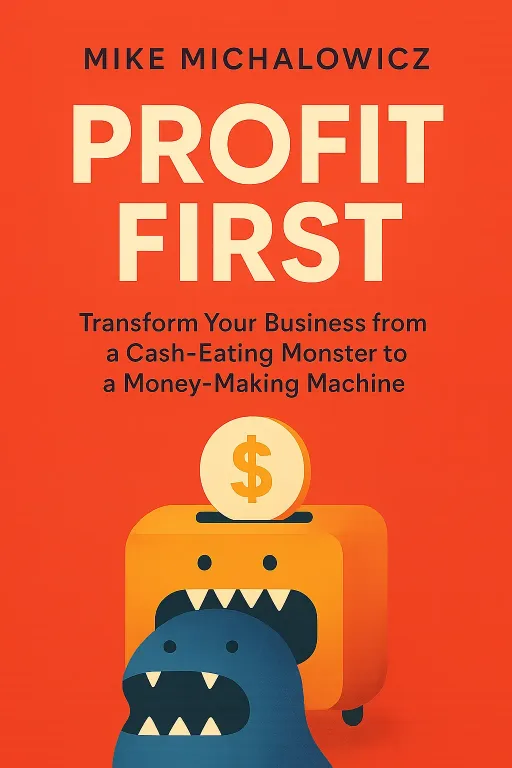
Nova: You're not wrong about the fortune part, but today we're actually flipping that idea on its head. We're diving into what we call 'The 'LLC Tax Optimization' Trap: Why You Need Proactive Profit Strategies' – a concept heavily influenced by books like 'Profit First' by Mike Michalowicz and 'The E-Myth Revisited' by Michael E. Gerber. These aren't just dry business books; they're foundational texts that challenge the very core of how entrepreneurs build wealth.
Atlas: Okay, so we're talking about not just saving money through clever accounting, but actually making more of it, and it. That sounds... revolutionary for some business owners, especially those who are constantly looking for the next tax write-off.
Nova: Exactly! It's a profound shift from what many strategic builders and wealth architects instinctively do. Mike Michalowicz, the author of Profit First, is a serial entrepreneur who has started and sold multiple companies. He even lost a significant fortune after selling one of them, which led him to develop his profit-first system out of a deep personal need to avoid those financial pitfalls again. His approach is rooted in behavioral science, making it surprisingly simple yet incredibly effective.
Atlas: Okay, that background really resonates. I imagine a lot of our listeners, the strategic builders, want to avoid those kinds of financial rollercoasters. So, what’s this trap we’re falling into?
The 'LLC Tax Optimization' Trap: Why Profit Comes First
SECTION
Nova: The trap is this: many entrepreneurs become so laser-focused on revenue, or even on minimizing their tax burden through deductions and clever accounting, that they completely miss the point of. They chase the top line, or they try to shrink the tax bill, but they don't have a clear, proactive system for retaining cash.
Atlas: That sounds like a lot of businesses I see. They're making money, they're busy, but when tax season rolls around, they're scrambling, or they realize they don't actually have the cash they thought they did. What does that look like in practice?
Nova: Let's consider Sarah. Sarah runs a successful digital marketing agency, an LLC. Her revenue numbers look fantastic. She's constantly talking to her accountant about every possible deduction, every way to optimize her tax liability. But because she doesn't have a system for profit, every dollar that comes in often gets immediately reinvested into new tools, more staff, or just covers the ever-growing expenses of a busy business.
Atlas: So, she's busy, she's growing, but the actual cash in her business account isn't growing at the same rate?
Nova: Precisely. She's essentially running on a financial treadmill. Her LLC is generating a lot of activity, but it's not building up a substantial financial cushion or truly paying her, the owner, what she deserves. When a big tax bill hits, it's a huge surprise, or she has to dip into personal savings, or worse, take out a loan just to cover it.
Atlas: I imagine a lot of our listeners can relate to that feeling of always chasing, never quite getting ahead, even when the business seems to be doing well. It's like focusing on the speed of the car without checking if the gas tank is actually filling up.
Nova: That’s a perfect analogy, Atlas. And what happens then is that true wealth building, securing that long-term legacy, becomes incredibly difficult. You're constantly reacting to financial pressures instead of strategically building. It's the cold fact: without a clear system for profit, even high-earning businesses struggle to retain cash, leading to tax surprises and missed growth opportunities.
Atlas: Okay, but isn't part of being an entrepreneur about reinvesting everything back into the business to fuel growth? Isn't that how you build wealth?
Nova: That's a great question, and it's a common misconception. There's a critical difference between strategic reinvestment and simply reinvesting. When you continually pump all revenue back into the business without first taking your profit, you're essentially building a bigger and bigger machine that isn't designed to actually you or build reserves. It's like trying to fill a bucket with a hole in the bottom. You can pour as much water as you want, but you're not retaining it. This approach often leads to what Michael Gerber, in 'The E-Myth Revisited,' calls working your business, not it. You're caught in the day-to-day operations, constantly reacting, instead of designing a system that works for you.
Systematizing Profit: Lessons from 'Profit First' and 'The E-Myth Revisited'
SECTION
Nova: This naturally leads us to the solution: systematizing profit. Mike Michalowicz's 'Profit First' is a game-changer here. He challenges traditional accounting by prioritizing profit from every single deposit.
Atlas: Profit first? So, you're saying instead of revenue minus expenses equals profit, it's revenue minus profit equals expenses? That sounds... counter-intuitive to how most people run their books.
Nova: Exactly! It's a behavioral accounting system. The core idea is simple: when money comes into your business, you immediately allocate a percentage to different accounts. There’s an account for Profit, one for Owner's Pay, one for Taxes, and then the rest goes to Operating Expenses.
Atlas: So, you're literally forcing yourself to save and pay yourself first, before you even think about paying your bills? But what if you don't enough to cover expenses after that?
Nova: That's the genius of it. It creates what Michalowicz calls "forced frugality." If you only have, say, 80% of your revenue left for expenses after taking your profit and owner's pay, you to find a way to operate within that 80%. It forces you to get lean, to innovate, to question every expense, rather than just letting expenses expand to fill whatever revenue you have.
Atlas: That makes me wonder, how does this connect to Michael Gerber's 'The E-Myth Revisited'? Because that book is all about systematizing your business so it can run without you, right?
Nova: Absolutely. Gerber emphasizes working your business, not just it. Systematizing profit allocation, as suggested by Michalowicz, is a key managerial task for lasting success. It's not just about doing the work; it's about designing the that does the work. By embedding profit allocation into your business structure, you're building a system that automatically generates wealth, rather than relying on your discipline or sporadic good intentions.
Atlas: Can you give us an example of a business that actually implemented this and saw a transformation? Because for many strategic builders, the idea of taking profit when they're already stretched thin might feel impossible.
Nova: Think of David, who owned a small but growing web design company, 'David's Design Co.' Before 'Profit First,' David was like Sarah. High revenue, but his personal pay was inconsistent, and he dreaded tax season. He was constantly working the business, designing, managing projects, putting out fires. After reading 'Profit First,' he implemented the system, opening those separate bank accounts. He started small, just 1% to profit, 5% to owner's pay.
Atlas: And what happened? Did his business crash because he couldn't cover expenses?
Nova: Not at all. What he found was that it forced him to look critically at his expenses. He realized he was paying for software he barely used, and he renegotiated a few vendor contracts. Within months, he wasn't just to operate on the reduced expense pool; he was doing it more efficiently. His 'Profit' account started to accumulate, and for the first time, he had predictable owner's pay. His business became more financially resilient, and he started to work his business, designing more efficient processes, because he wasn't constantly worrying about where the next dollar was coming from.
Atlas: That's actually really inspiring. It’s like a forced financial diet that ultimately makes you healthier. And it speaks directly to the strategic builder who wants to create a lasting legacy, not just a temporary income stream.
Synthesis & Takeaways
SECTION
Nova: So, the key takeaway here is profound: true wealth building for an LLC isn't about avoiding taxes at all costs, or just chasing bigger revenue numbers. It's about proactively profit. It’s about building a predictable, wealth-generating system your business structure.
Atlas: Absolutely. It's about building an empire, one profit allocation at a time. It shifts the entire mindset from scarcity and reaction to abundance and proactive design. For anyone looking to maximize wealth retention and truly build generational wealth, this is foundational.
Nova: We want to challenge all our listeners, especially those strategic builders, wealth architects, and generational guides, to take that tiny step today: open a separate bank account labeled 'Profit' and transfer 1% of your next deposit into it. See what happens. It's a small action that can spark a massive shift in your financial trajectory.
Atlas: It's literally the smallest step with the biggest potential impact on your future wealth retention and generational wealth transfer. No more tax surprises, just planned profit.
Nova: This is Aibrary. Congratulations on your growth!