The Hidden Cost of Growth: Why You Need to Master Your Business's Numbers.
Golden Hook & Introduction
SECTION
Nova: Most entrepreneurs believe the golden rule of business is "revenue, revenue, revenue." They chase the top line, celebrate big sales... but what if I told you that focusing solely on revenue is often the fastest path to stress, burnout, and a business that's secretly bleeding cash?
Atlas: Whoa, that sounds a bit out there, Nova. Isn't more money always better? I mean, that's what everyone preaches, right? "Grow or die!"
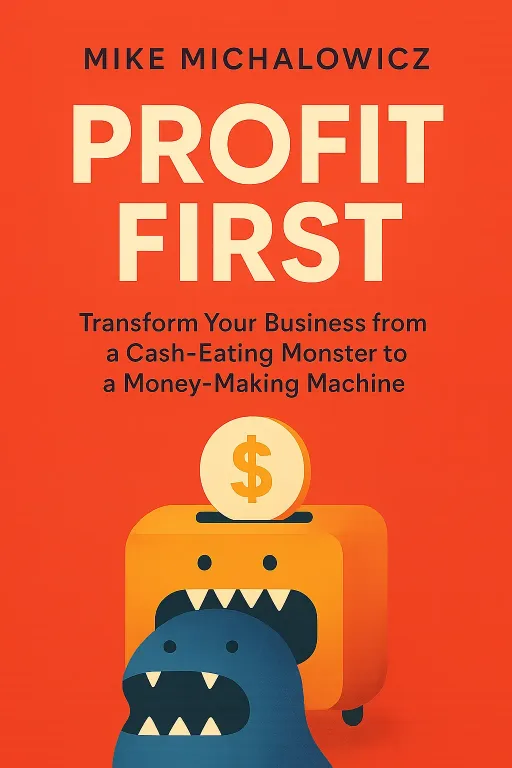
Nova: Exactly the myth we need to bust, Atlas. Because many businesses, even those with impressive revenue, are actually struggling with what we call 'the hidden cost of growth.' It's the silent anxiety that comes from not truly understanding your numbers, prioritizing the wrong metrics, and ultimately, building on shaky ground. Today, we're diving into why understanding your business's numbers isn't just for accountants; it's the bedrock of sustainable growth and, crucially, peace of mind. We're drawing insights from two phenomenal resources: Mike Michalowicz's game-changing "Profit First" and Josh Kaufman's incredibly accessible "The Personal MBA."
Atlas: Oh, I love that. Turning financial anxiety into peace of mind. That’s going to resonate with anyone who's ever looked at their bank account and felt a pang of dread, even after a 'successful' month.
The Profit-First Mindset: Redefining Business Success
SECTION
Nova: It absolutely will. Let's start with Mike Michalowicz and his radical, yet brilliantly simple, idea of "Profit First." For decades, the standard accounting formula has been etched into our brains: Sales minus Expenses equals Profit. Sounds logical, right?
Atlas: Yeah, I mean, that's what I learned in school. You sell stuff, you pay your bills, and whatever's left over is your profit. Simple math.
Nova: Simple math, but a disastrous behavioral pattern for most entrepreneurs. Because what happens? We focus so much on sales, then we pay all our expenses, and if there's anything left, we consider it profit. The problem is, for many, there's rarely anything left. Expenses tend to expand to consume whatever revenue comes in. It's Parkinson's Law applied to your bank account.
Atlas: Oh, I know that feeling. It's like no matter how much you make, there's always something else to spend it on, always another bill, another opportunity, another 'necessary' upgrade. So what's Michalowicz's magic trick?
Nova: He flips the formula. Instead of Sales minus Expenses equals Profit, he says: Sales minus Profit equals Expenses. It's a subtle but profound psychological and practical shift. He argues that profit isn't a leftover to hope for; it's an allocation you make from day one, non-negotiable, just like taxes or rent.
Atlas: So, how does this actually work in practice? Are we talking about opening a bunch of bank accounts? Because that sounds like more admin, not less anxiety.
Nova: That's precisely what we're talking about! But it's simpler than it sounds. Michalowicz suggests you open separate bank accounts for different purposes: an Income account, a Profit account, an Owner's Pay account, a Tax account, and an Operating Expenses account. When revenue comes in, you immediately allocate a predetermined percentage to each account.
Atlas: Okay, so it's like personal budgeting, but for your business. I put 10% here, 5% there... But what if you don't any profit to allocate? Isn't that just moving deck chairs on the Titanic if the business isn't making money?
Nova: That’s a great question, and it gets to the heart of the "Profit First" philosophy. Michalowicz says you start small. Even if it's just 1% of your income into the Profit Account, you start. The point is to build the habit, to make profit a non-negotiable part of your financial flow. You train your business, and yourself, to operate on the remaining money in the Operating Expenses account. Over time, as your business becomes more efficient, you gradually increase those profit percentages. It forces you to innovate, to cut wasteful spending, and to run a leaner, more intentional operation.
Atlas: That makes sense. It's less about finding more money, and more about managing the money you already have differently. It's like going on a financial diet, but for your business, right? You're forcing yourself to be creative with what's left.
Nova: Exactly! It makes profit a habit, not a happy accident. And that naturally leads us to the broader landscape of business literacy, which Josh Kaufman masterfully distills in "The Personal MBA."
Mastering Business Literacy: The Entrepreneur's Secret Weapon
SECTION
Atlas: Business literacy – that sounds a bit intimidating, like a textbook. What makes Kaufman's approach different? Is it just more accounting jargon?
Nova: Not at all. Kaufman’s genius is in distilling complex business concepts into easily digestible mental models. He argues you don't need a formal MBA to understand the fundamentals of how businesses actually work. He covers everything from value creation and marketing to sales, delivery, and finance. It's about understanding the core components, the levers you can pull, rather than just getting bogged down in the minutiae. Think of it like a chef. They don't just follow recipes; they understand the ingredients, how they interact, and why certain techniques work. That's business literacy.
Atlas: I see. So it’s not just about the numbers, but the the numbers are telling. Can you give an example of one of these 'mental models' and how it helps an entrepreneur make better decisions, beyond just profit?
Nova: Absolutely. One fundamental model is "Value Creation." It's simple: what do people want, and how can you create it for them? Many entrepreneurs get caught up in they want to sell, instead of or for their customers. When you understand value creation, your marketing becomes clearer, your sales process becomes more natural, and your pricing becomes justified. This directly ties into my take: financial clarity removes anxiety and empowers you to make strategic choices. If you truly understand the value you create, you understand your pricing power, your market, and where to invest your resources.
Atlas: That's a huge shift. I imagine a lot of our listeners are just reacting to the numbers, rather than proactively understanding the behind them. So, how does this directly reduce anxiety for someone who's constantly worried about cash flow?
Nova: It's about replacing uncertainty with knowledge. When you understand the mental models of business, you stop guessing. You understand certain expenses are necessary for value delivery, your marketing efforts translate into sales, and your business truly generates its margin. This knowledge allows you to make informed decisions, rather than operating on hope or fear. It’s like navigating a dark room versus a well-lit one. Both "Profit First" and "The Personal MBA" illuminate that room, making the path forward clear.
Atlas: That makes perfect sense. It’s not just about having more money, but knowing how to manage it, and knowing how the entire engine of your business actually runs. That’s empowering.
Synthesis & Takeaways
SECTION
Nova: Precisely. The cold fact is, many entrepreneurs focus solely on revenue, overlooking the crucial role of profit and fundamental business principles. But understanding your numbers isn't just for accountants; it's truly the bedrock of sustainable growth and, most importantly, peace of mind. It’s about being proactive, not reactive, with your finances. It's about making profit an intentional component of your business, and understanding the core mechanics that drive it.
Atlas: That's actually really inspiring. It takes the overwhelming feeling of 'I need to make more money!' and reframes it as 'I need to understand and manage the money I have, and the value I create, better.' So, for our listeners who are feeling overwhelmed by their numbers right now, what's one tiny, actionable step they can take this week?
Nova: My challenge, and our tiny step for you today, is this: take 30 minutes to review your last month's expenses. Categorize them. And then, identify the top three areas where you could reduce spending without impacting the core value you deliver to your customers. It’s a small step, but it’s the beginning of reclaiming control and building that peace of mind.
Atlas: I love that. It’s not about grand gestures, but consistent, intentional action. That clarity, truly, is priceless.
Nova: Absolutely. It's about moving from anxiety to empowerment, one number at a time.
Nova: This is Aibrary. Congratulations on your growth!