Stop Guessing, Start Building: The Guide to Profitable Operations.
Golden Hook & Introduction
SECTION
Nova: Most people believe a brilliant business idea is all you need to get rich. They pour their heart and soul into that one amazing concept. But what if that brilliant idea is actually your biggest liability?
Atlas: Whoa, hold on. A brilliant idea can be a liability? That sounds completely backward for anyone trying to start a business. I imagine a lot of our listeners are thinking, "Isn't the idea the whole point?"
Nova: Exactly! It's the common trap. We get so enamored with the 'what' that we completely ignore the 'how' and the 'why it will actually make money.' Today, we’re challenging that notion and diving into how to truly 'Stop Guessing, Start Building' a profitable venture.
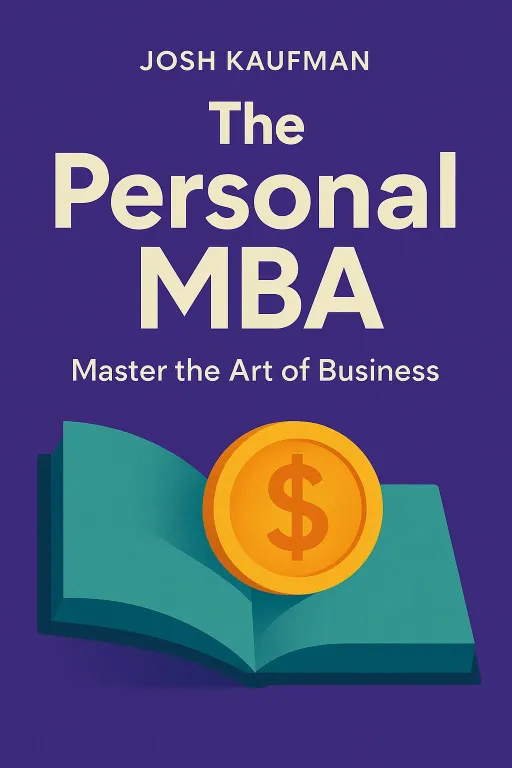
Atlas: And you’re talking about foundational texts here, right? Like 'The Personal MBA' by Josh Kaufman, which is renowned for breaking down business school concepts without the tuition fee, and 'Profit First' by Mike Michalowicz, which offers a genuinely radical approach to financial management.
Nova: Absolutely. Kaufman is a master at distilling complex business concepts into easily digestible models, showing you the absolute essentials. And Michalowicz? He offers a counter-intuitive, yet incredibly effective, method for ensuring your business is profitable from day one. He fundamentally shifts how we think about money in business.
Atlas: That’s fascinating. So, let's talk about that 'Personal MBA' then. What are these 'nuts and bolts' that so many people miss, even with a supposedly brilliant idea?
Deep Dive into Core Topic 1: Mastering the Business Fundamentals
SECTION
Nova: Kaufman argues that regardless of your industry, every successful business, at its core, needs to master four key areas: value creation, marketing, sales, and finance. It’s a holistic view. You can have the most revolutionary product, but if you don't know how to create that value efficiently, tell people about it, convert interest into cash, and manage that cash, you're building on sand.
Atlas: Okay, so it’s not just about having a great product. It’s about knowing how to actually that product,,, and then. That makes sense, but so many people, especially those starting out, often feel overwhelmed by all of that.
Nova: Let me paint a picture. Imagine a chef, a truly brilliant culinary artist. Let's call her Chef Anya. Her food is divine, Michelin-star worthy. She decides to open her own bistro. She pours every ounce of her passion into creating incredible dishes. Diners rave about the taste, the presentation, the experience. But Anya, bless her heart, has no idea how to market her bistro beyond word-of-mouth. Her pricing is off because she doesn't understand her true costs. She's constantly running out of key ingredients because her supply chain is chaotic, and she's not tracking her cash flow.
Atlas: That sounds like a disaster waiting to happen. She's got the 'value creation' part down – amazing food – but everything else is crumbling.
Nova: Exactly. Despite rave reviews for the food, her bistro is constantly in the red. She's working 18-hour days, burning out, and eventually, her brilliant idea, her passion project, collapses under the weight of operational chaos and financial mismanagement. The cause was neglecting those fundamental business pillars. The process was focusing solely on the product, neglecting the infrastructure. The outcome? Financial collapse and wasted effort.
Atlas: That’s heartbreaking! I imagine a lot of our listeners, especially those starting something like a cargo van business, might be thinking, "I'm great at driving, I'm great at logistics, but do I really need to be a marketing guru too, or a finance expert?" It feels like wearing too many hats.
Nova: It’s not about being a guru in everything, but understanding the basics of each. Think of it like a four-legged stool. If one leg is weak or missing, the whole thing tumbles. Your cargo van service might be incredibly efficient, but if potential clients don’t know you exist, or if your pricing doesn't cover your fuel, maintenance, and your own salary, you're going to struggle. Kaufman's work gives you the mental models to understand how these pieces fit together, so you can make informed decisions or know what expertise to seek.
Atlas: So, when you say 'value creation,' for someone like our cargo van entrepreneur, is that just delivering packages on time? Or is there a deeper layer to it?
Deep Dive into Core Topic 2: Profit First: Redefining Financial Health for Small Businesses
SECTION
Nova: That’s a fantastic question, and it actually leads us perfectly into our second big idea, which often gets completely backward in traditional business thinking. Because even if you create immense value and market and sell it brilliantly, if you don't manage the money correctly, you can still end up struggling. This is where Mike Michalowicz's 'Profit First' methodology comes in.
Atlas: Profit? Wait, isn't profit what's left over at the end? This sounds completely counter-intuitive to how most businesses operate. I've always been taught that revenue minus expenses equals profit.
Nova: That's the traditional formula, and it's precisely what Michalowicz challenges. He argues that by treating profit as an afterthought, businesses often end up with no profit at all. His core idea is simple: you allocate profit. It's like putting money aside for taxes, but for your business's financial health. When money comes into your business, a predetermined percentage immediately goes into a separate 'Profit' bank account.
Atlas: So it's not just about revenue, it's about revenue. I imagine a lot of small business owners get caught in that trap of having lots of sales but no actual money in the bank. They're busy, they're generating income, but they're not actually any of it.
Nova: Exactly. I know a brilliant online retailer, let’s call him David. His e-commerce store exploded with sales. He was constantly reinvesting in inventory, marketing, new tech. On paper, his revenue looked fantastic. But he was always stressed about cash flow, always chasing the next sale to cover the last expense. He was revenue-rich but profit-poor, leading to constant stress and eventually, burnout. He was playing the traditional game.
Atlas: And the Profit First approach would have changed that?
Nova: Dramatically. Another entrepreneur, Sarah, in a similar online retail space, implemented Profit First from day one. Every time a payment came in, a small percentage went straight to her 'Profit' account. Other percentages went to 'Owner's Pay,' 'Operating Expenses,' and 'Taxes.' By proactively setting aside these funds, she always knew exactly how much she had for expenses and how much was hers. She had a clear picture, less stress, and a financially stable business, even if her top-line revenue wasn't always as flashy as David's.
Atlas: That’s a powerful contrast. So, how does this actually prevent the 'revenue without profit' trap? Is it about changing your mindset, or is it a strict system? And how would this apply to a solo entrepreneur, like someone running a cargo van where every dollar feels like it needs to be immediately put back into gas or maintenance?
Nova: It's both a mindset shift and a strict system. The mindset is that profit is not optional; it's a fundamental requirement for a healthy business. The system involves setting up multiple bank accounts and allocating percentages of every deposit to these accounts. For our cargo van entrepreneur, when a payment comes in, you immediately transfer, say, 5% to a 'Profit' account, 30% to 'Owner's Pay,' 15% to 'Taxes,' and the rest to 'Operating Expenses.' It forces you to operate within the actual funds available for expenses, making you incredibly lean and efficient. You stop guessing where your money is going and start building a deliberate financial structure.
Synthesis & Takeaways
SECTION
Nova: What we're really talking about here is moving from hope and guesswork to intentional, strategic building. It’s about building a business that's not just running in place, but truly thriving and financially secure. It’s about mastering the holistic picture, from how you create and deliver value to how you manage every single dollar.
Atlas: It sounds like a fundamental shift, almost like learning to cook not just with great ingredients, but with a mastered technique and a clear understanding of the final plate. For our listeners, especially those aspiring entrepreneurs like the one starting a cargo van business, what's one immediate, tiny step they can take this week to begin this journey of strategic building?
Nova: The tiny step for this week is simple: allocate 30 minutes to map out the core value proposition of your business – what unique value are you truly offering? – and then identify just one key operational bottleneck you anticipate. It could be anything from customer acquisition to fuel efficiency. Just identify it.
Atlas: That's a tangible start. So many people get stuck dreaming, but these insights really give you a roadmap to actually something resilient. It’s about shifting from merely 'doing business' to strategically designing a profitable and sustainable enterprise. True self-reliance in business comes from this mastery, not just from working harder.
Nova: Precisely. It’s about building smarter, not just longer.
Atlas: This has been incredibly insightful. A lot to chew on for anyone looking to truly 'stop guessing and start building.' We hope you've found some valuable insights to apply to your own ventures.
Nova: This is Aibrary. Congratulations on your growth!