Beyond the Dashboard: Crafting Data Narratives That Drive Real Change.
Golden Hook & Introduction
SECTION
Nova: We've all heard the mantra: "Data doesn't lie." It's almost a sacred truth in the analytical world. But what if that's the biggest lie we tell ourselves, especially when it comes to driving real change and making a tangible impact?
Atlas: Wait, are you saying our meticulously analyzed, rigorously tested data — the stuff we spend hours building models for — is inherently misleading? Or is there a deeper 'lie' here that I'm missing? That sounds a bit out there, but I'm intrigued.
Nova: Oh, I love that skepticism, Atlas, because it hits right at the heart of it. It's not that the data lies. It's that we often present it in a way that prevents its truth from landing, from being and. Today, we're diving into a concept that's often overlooked but absolutely critical for anyone working with data: the art of crafting data narratives. It's the core philosophy behind what we at Aibrary call 'Beyond the Dashboard: Crafting Data Narratives That Drive Real Change.' It's not just about understanding your data; it's about making others feel it, act on it, and ultimately, change because of it.
Atlas: Okay, so for our listeners who are deep in analytics, building complex models, seeing systems and structures, this isn't about data or fudging numbers. This is about the often-overlooked gap between possessing brilliant insights and actually translating those insights into strategic impact. It's about effective communication of good data, not manipulation.
Nova: Exactly! It's about influence. That's the key.
The Imperative of Data Storytelling: Beyond the Numbers
SECTION
Nova: Too often, we analysts operate under the assumption that if the data is brilliant, if the analysis is sound, it will speak for itself. We present our meticulously prepared charts, our statistically significant findings, our detailed reports, and then... nothing happens. Or, at best, a polite nod and a 'good job' email. The cold, hard fact is, even brilliant data analysis can fall flat without a clear, compelling presentation. Your insights only create true impact when they are not just understood, but felt and acted upon.
Atlas: I know that feeling. Honestly, that sounds like my Monday mornings sometimes. We pour our hearts into these complex analyses, see a clear path forward in the numbers, present it, and then wonder why the needle doesn't move. But wait, isn't it the executive's job to interpret the data and make decisions? Why is it on the analyst to become a storyteller? Aren't we, by adding narrative, subtly diluting the objectivity of the pure numbers?
Nova: That's a great question, Atlas, and it gets to the core of this mindset shift. It's not about diluting objectivity; it's about amplifying impact. Think of it this way: imagine an architect who designs a breathtaking, structurally perfect building. The blueprints are flawless, the engineering brilliant. But if they just hand over the blueprints without articulating the vision, without telling the story of how this space will transform lives, how it will inspire, how it will solve a problem – it might just remain a brilliant set of papers. The building might never get built, or it might be built without the intended soul.
Atlas: So, the story isn't just window dressing. It's the bridge from 'what is' to 'what could be.' It's the vision that moves the blueprint into reality. I can see that. For our listeners who value structure and impact, that makes a lot of sense.
Nova: Precisely. As I often say, shifting your focus from merely presenting data to crafting a resonant story elevates your role from analyst to influential strategist. You're not just reporting on the past or present; you're shaping the future. You're moving from being a data provider to a catalyst for change.
Atlas: That's actually really inspiring. It redefines the role, giving it more strategic weight. It aligns perfectly with the growth recommendation to embrace the art of human connection and speak to the 'why', not just the 'what'.
Crafting Compelling Data Narratives: Zen and the Journey
SECTION
Nova: Exactly. And once we accept that imperative, the next question is: how do we actually build that bridge between data and impact? How do we transition from complex spreadsheets to compelling narratives? This is where tactical insights come in, and we can draw some incredible wisdom from masters of presentation.
Atlas: Okay, so, what's our toolkit here? I've been thinking about how to simplify complex insights, and it often feels like an uphill battle against the sheer volume of information.
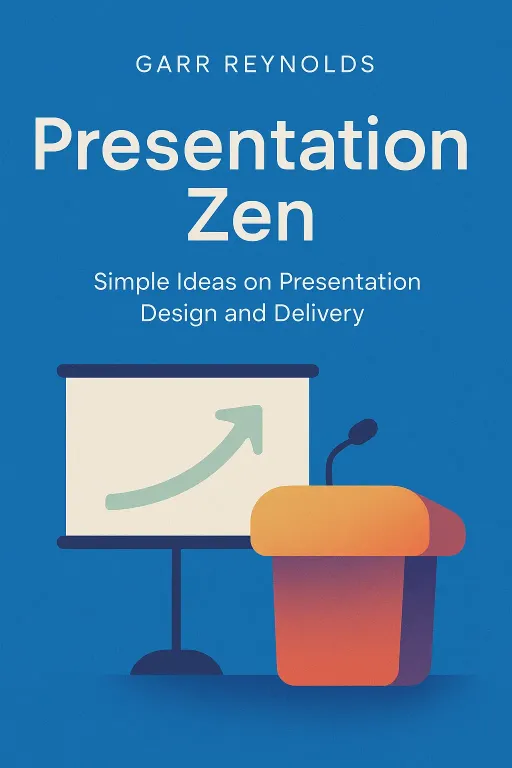
Nova: Let's start with Garr Reynolds' "Presentation Zen." Reynolds advocates for radical simplicity and storytelling in presentations. He shows how to strip away clutter and focus on a single, powerful message. Think of it like this: instead of trying to cram every data point onto one slide, you identify that one, most critical takeaway. And then, you design a slide that communicates that message, visually and clearly.
Atlas: That's a tough discipline for many of us analytical types! We're trained to show all the supporting evidence, all the nuances. Focusing on just message per slide sounds almost… minimalist, even risky. How does that actually work in practice?
Nova: Let me give you a hypothetical. Imagine an analyst has performed a deep dive into customer behavior and discovered that a specific product feature, let's call it 'Feature X,' is directly leading to a 15% increase in customer churn. Instead of showing ten slides detailing the SQL queries, the statistical models, and various demographic breakdowns, the "Presentation Zen" approach would be one powerful slide. It might feature a stark visual – a downward trend line, a clear graphic of customers leaving – with a single, bold headline: "Feature X Drives 15% Customer Churn." The details are in the appendix, but the central message is undeniable and immediate.
Atlas: I can see how that cuts through the noise. It forces distillation. But that's just one slide. How do you string those powerful single messages together to actually guide someone on a journey, from 'what is' to 'what could be'?
Nova: That's where Nancy Duarte comes in with "Resonate." Duarte provides a framework for structuring presentations like a story, guiding your audience on a journey. She uses a classic narrative arc: you start with 'what is' – the current reality, perhaps a problem or a challenge. Then you introduce the 'what could be' – your proposed solution or vision. You transition back and forth, building tension, revealing insights, and ultimately, leading your audience to a call to action. It transforms data into a compelling journey.
Atlas: That's a perfect example. So it's not just about showing the problem; it's about showing the path forward, painting a picture of the desired future state, and motivating them to get there. For a strategic storyteller, that’s everything. But how do we avoid manipulating the data in the process? We want to be influential, but as ethical explorers, we also need to ensure we're not just telling a good story at the expense of accuracy. Where's the ethical line?
Nova: That's a critical point, and it speaks to the heart of responsible data storytelling. The story amplifies the truth of the data; it doesn't invent it. It's about clarity and impact, not deception. The ethical line is crossed when you selectively omit data that contradicts your narrative, or when you visually misrepresent proportions to exaggerate a point. The goal is to make the of your data resonate more deeply, not to create a false narrative. The 'Tiny Step' we recommend is a great way to practice this ethically: focus on one key takeaway, present it clearly and visually. That focus helps you stay true to the data's core message.
Atlas: That makes sense. It's about simplifying to clarify, not simplifying to mislead. It's about making the insight undeniable, not just understandable.
Synthesis & Takeaways
SECTION
Nova: Absolutely. Ultimately, data plus narrative equals influence. It’s about moving from being a mere analyst to a strategic partner, from simply providing information to inspiring genuine action. It’s a profound shift in mindset.
Atlas: So, the transformation isn't just in the presentation technique; it's a fundamental mindset shift for the analyst, recognizing their role as an influencer, as someone who can truly drive change. It's about understanding the human psychology behind decision-making and how to ethically apply that knowledge.
Nova: Exactly. And the best way to start this journey is with a tiny, actionable step. For your very next data presentation, identify one key takeaway. Just one. And then, design a single slide that communicates only that message, visually and clearly. Practice that focus.
Atlas: That's a tangible action. It forces you to distill, to simplify, to find that one powerful message. It's about speaking to the 'why,' not just the 'what,' which is a huge growth area for many of our analytical listeners who are seeking to elevate their impact beyond pure analysis.
Nova: And it's about embracing that human connection, telling the data's story with heart. Because ultimately, data is about people. It's about the decisions they make, the lives they lead, and the changes that impact them.
Atlas: Absolutely. It's about understanding decision-making biases, applying knowledge ethically, and elevating impact beyond just the numbers. It's about becoming that strategic storyteller who can translate complex systems into compelling human narratives. We challenge you to take that tiny step. See the impact it makes.
Nova: We'd love to hear how that goes for you. Share your experiences with us.
Atlas: This is Aibrary. Congratulations on your growth!