The Mind's Blueprint: Understanding Human Behavior for Sustainable Design
Golden Hook & Introduction
SECTION
Nova: What if I told you that the biggest obstacle to saving our planet isn't a lack of technological innovation, but something far more fundamental: the way our own brains are wired?
Atlas: Oh, I love that. So you're saying it's not the tech, it's us? That's going to resonate with anyone trying to implement big changes, whether that's in urban planning or community development.
Nova: Exactly! We often put so much energy into brilliant technical solutions for sustainable living – better solar panels, more efficient recycling systems, greener buildings. But then we scratch our heads when people don't adopt them, or they override the "smart" settings.
Atlas: I totally know that feeling. It's like, the solution is right there, clearly beneficial, but human behavior just... doesn't follow the script.
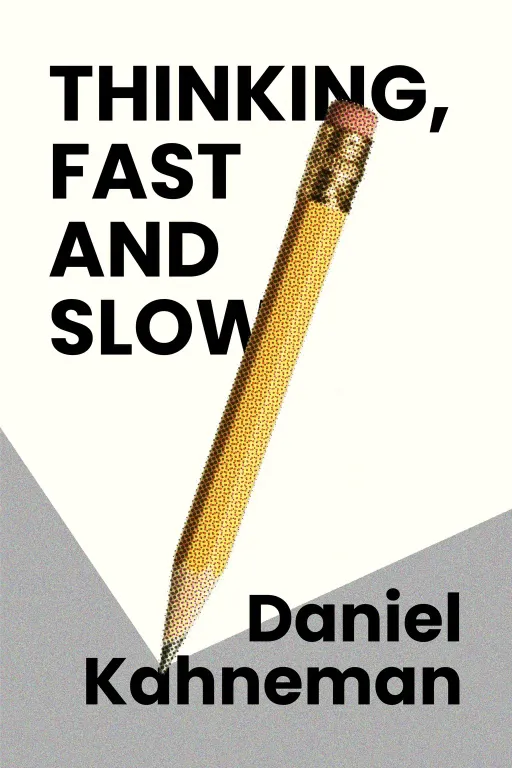
Nova: Precisely. Today we're dissecting the very idea of 'The Mind's Blueprint,' a concept that draws heavily from Nobel laureate Daniel Kahneman's groundbreaking work in 'Thinking, Fast and Slow,' and Dan Ariely's fascinating insights in 'Predictably Irrational.' Kahneman, a psychologist, won the Nobel Memorial Prize in Economic Sciences for integrating psychological research into economic science, fundamentally reshaping our understanding of human decision-making and challenging the very idea of rational economic actors. And Ariely’s work builds on that, showing us predictably irrational we are.
Atlas: That's fascinating. I can see how that would be absolutely crucial for anyone trying to build sustainable systems or implement global policy. If our decisions aren't always rational, then the policies designed around rational actors are bound to hit a wall. So, let’s dig into this 'blind spot' you mentioned. What exactly is it?
The Blind Spot: Why 'Rational' Design Fails Sustainable Behavior
SECTION
Nova: Our first core topic is "The Blind Spot: Why 'Rational' Design Fails Sustainable Behavior." We often design for sustainability assuming people will act rationally, right? Like, if we just give them the facts about climate change, or show them the financial savings of an eco-friendly choice, they'll automatically make the "right" choices.
Atlas: Right, like, "Here's the energy-efficient lightbulb, buy it, it saves money and the planet!" But then people don't, or they buy it and don't use it effectively. Honestly, that makes me wonder, what's really going on there? Why do we consistently fail to act in our own long-term best interest, let alone the planet's?
Nova: Well, Kahneman's work, particularly his concept of System 1 and System 2 thinking, is our guide here. System 1 is fast, intuitive, emotional – it's our gut reactions, our automatic pilot. System 2 is slow, deliberate, logical – it requires effort, conscious thought, and calculation.
Atlas: Oh, I know that feeling. So, when I'm tired after a long day of synthesizing complex fields, my System 1 is definitely in charge. I'm just looking for the easiest path, not necessarily the most optimal.
Nova: Precisely. And sustainable choices often require System 2 – thinking long-term, calculating future impact, resisting immediate gratification for a later, greater good. But our designs often speak to System 2 when System 1 is running the show, especially in moments of low attention or high stress.
Atlas: So, it's not that people are inherently anti-sustainability; it's that the sustainable option often demands more mental energy than we're willing to expend in the moment?
Nova: Exactly! Consider the example of smart home energy systems. Technically brilliant, right? They can learn your habits, optimize energy use, save money, and reduce your carbon footprint. But early adoption was slower than experts predicted. People would override them, or get frustrated with complex programming interfaces, or simply forget to set them up properly. The design was perfectly rational from an engineering standpoint, but human behavior isn't always.
Atlas: Hold on, so even with clear, undeniable benefits, if it like too much work, or if it clashes with my immediate comfort, my System 1 just says "nope"? That's a bit like trying to get busy global architects to adopt a complex new green infrastructure policy when they're swamped with immediate project deadlines. The long-term gain gets overshadowed by the immediate cognitive load.
Nova: That's spot on. It's not about being lazy; it's about cognitive load and our inherent biases. We have a present bias – we value immediate rewards and comfort over future ones. We have status quo bias – we prefer things to stay the same, even if change is beneficial. And a big one is loss aversion – the pain of losing something, like perceived comfort or convenience, is psychologically much stronger than the pleasure of gaining something, like future savings or environmental benefits.
Atlas: Wow. That's kind of heartbreaking, considering the urgency of climate change and the drive for global good. So, the "blind spot" is assuming people act rationally, when in reality, our brains are constantly taking shortcuts, often towards the path of least resistance, which isn't always the sustainable one.
The Shift: Designing for Predictably Irrational Humans
SECTION
Nova: And that naturally leads us to our second core topic: "The Shift: Designing for Predictably Irrational Humans." If our brains are wired this way, how do we design that, instead of constantly fighting against it? This is where Dan Ariely's work, amongst others, really shines, showing us that our irrationality is often. It’s not random; it follows patterns.
Atlas: So you're saying we can actually anticipate how people will be irrational, and then use that knowledge to design systems that gently guide them towards sustainable choices? That sounds like a superpower for anyone trying to influence behavior on a global scale, or within a community.
Nova: It absolutely is! Think about the incredible power of defaults. Ariely's research, and others, has shown that if you make the sustainable option the default, people are far more likely to stick with it. Take organ donation rates, for example. In countries where you're automatically an organ donor unless you actively opt-out, rates are dramatically higher – sometimes over 90% – compared to countries where you have to opt-in, where rates can be as low as 10-20%.
Atlas: That's a perfect example. It takes advantage of that System 1 inertia, that preference for the path of least resistance. It's not about convincing people with endless facts; it's about making the easy choice the right choice. So it's like, instead of just telling people to recycle, you make recycling bins the most prominent, easiest-to-access bins, with clear labels that remove all mental friction. You make recycling the default action for waste disposal.
Nova: Precisely. Another powerful tool is leveraging social norms. We are deeply influenced by what we perceive others are doing, especially those in our immediate community. If you tell people their neighbors are using less energy, or are composting more, they're far more likely to reduce their own consumption or adopt that habit. This taps into our desire to conform, to be part of the group, to be seen as good members of our community.
Atlas: That’s a great way to put it. That’s a perfect example of leveraging a predictable irrationality – our social comparison bias – for good. I can see how that would be incredibly effective for community catalysts. So, for someone designing sustainable urban infrastructure, this means thinking about how to make green choices the, the, or the path, rather than just the technically superior one that requires a lot of cognitive effort.
Synthesis & Takeaways
SECTION
Nova: Exactly. What Kahneman and Ariely, through the lens of 'The Mind's Blueprint,' teach us is that sustainable design isn't just about what's good for the planet; it's about understanding how to make it good, intuitive, and effortless for people. It's about designing for the human operating system with all its quirks and shortcuts, not just for a logical, ideal consumer.
Atlas: In other words, if you want real, systemic change, whether that's in global policy or local community initiatives, you have to meet people where their brains actually are, with all their biases and shortcuts. For a purposeful scholar focused on global policy implementation, this isn't just theory; it's a practical blueprint for interventions that actually stand a chance of working. It’s about building systems that subtly nudge us towards a better future, almost without us consciously realizing it's happening.
Nova: It's about recognizing that our 'irrationality' is not just a frustrating barrier, but also a powerful design constraint, and indeed, a powerful design tool. By understanding these fundamental mental blueprints, these predictable patterns of human behavior, we can create a world where sustainable choices are the easy choices, the default choices, and the socially desirable choices. It's truly a profound shift in how we approach creating impact and fostering human well-being.
Atlas: That's actually really inspiring. It completely reframes the challenge from a purely technical or informational one to a deeply human one, giving us practical levers to pull. The profound insight here is that the most effective sustainable solutions aren't just about engineering, but about empathy and a deep understanding of human psychology. It's about designing for the human, not just the environment.
Nova: Absolutely. And that's a powerful thought to leave you with: the future of sustainability is less about preaching, and more about truly understanding the human mind.
Atlas: This is Aibrary. Congratulations on your growth!