Decoding the Human Algorithm
Golden Hook & Introduction
SECTION
Nova: Your brain is running outdated software in a high-tech world. We make thousands of decisions daily, believing we are perfectly logical, yet research proves we are systematically, beautifully, and predictably flawed.
Atlas: Oh, I know that feeling all too well. It is like trying to navigate a modern city using a map from the Middle Ages. You are bound to end up in a swamp eventually.
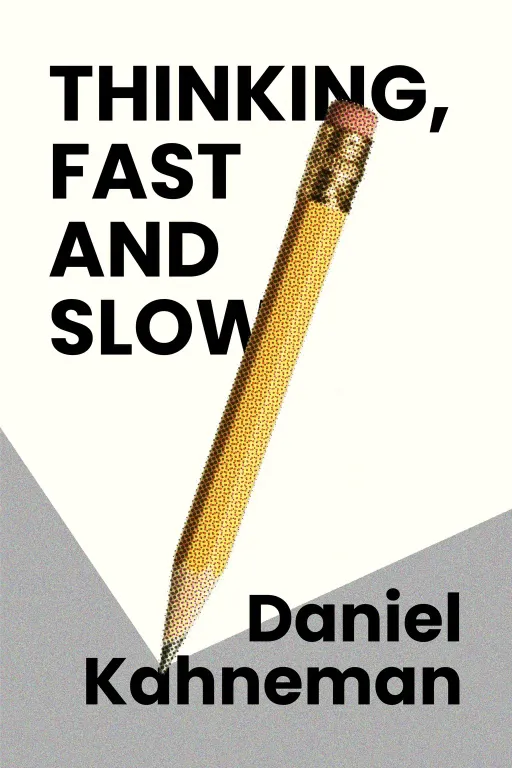
Nova: That is exactly what we are unpacking today. We are diving into the fascinating mechanics of the human mind through two absolute masterpieces of behavioral science. First, we have Thinking, Fast and Slow by Daniel Kahneman, and then we are pairing it with Predictably Irrational by Dan Ariely.
Atlas: I have been looking forward to this. Kahneman actually won a Nobel Prize in Economics, which is wild because he was a psychologist. He basically walked into the room of economic theorists and proved that the rational human they built all their models on does not actually exist.
Nova: He did. And Dan Ariely has an equally remarkable story. He survived severe physical trauma early in his life, and his long recovery in the hospital inspired him to study how humans perceive pain and make decisions. He realized our behavior is not random; our mistakes are highly systematic.
Atlas: That is a crucial distinction. We are not just occasionally clumsy thinkers. We are systematically flawed. Our brains are running on specific algorithms, and today we are going to decode them.
Nova: We are going to look at how these mental algorithms operate, why they constantly trip us up at work, and how we can run a daily cognitive audit to reclaim our focus, lower our stress, and communicate with real impact.
The Two Software Systems of the Mind
SECTION
Nova: To understand why we make these systematic errors, we have to look at the brain's operating system. Kahneman describes this through two characters, which he calls System One and System Two.
Atlas: Right, the fast and the slow. But let us break that down. What do these systems actually do when we are sitting at our desks?
Nova: System One is the autopilot. It is fast, intuitive, emotional, and operates completely outside of our conscious awareness. When you instantly sense anger in someone's voice, or when you automatically read a billboard on the highway, that is System One. It runs on pure pattern recognition and requires almost zero effort.
Atlas: That sounds incredibly useful. If we had to think about every single action, we would never even make it out of bed in the morning.
Nova: It is a biological masterpiece. It keeps us alive. The challenge comes because System One is also incredibly lazy. It prefers to jump to conclusions rather than do the hard work of processing complex information. That is where System Two comes in. System Two is the slow, logical, calculating part of your mind. It is the one that kicks in when you are filling out a tax form, comparing two software platforms, or trying to park in a really tight space.
Atlas: Oh, I can literally feel System Two working. It is that physical sensation of mental effort, like your brain is heating up.
Nova: That is because System Two is computationally expensive. It consumes a massive amount of glucose and energy. Because our ancestors faced scarce resources, our brains evolved to conserve energy by defaulting to System One whenever possible. We are cognitive misers. We will almost always choose the path of least cognitive resistance.
Atlas: So the autopilot is basically driving the car ninety percent of the time, and the actual pilot is asleep in the back, only waking up when there is an absolute emergency.
Nova: That is a perfect analogy. And this setup works beautifully in a primitive environment where survival depends on instant reactions. If you hear a rustle in the bushes, you do not want to run a statistical analysis on whether it is a tiger or the wind. You just run. But in a modern professional environment, that exact same survival mechanism turns into a major liability.
Atlas: I imagine a lot of our listeners struggle with this daily. Think about a high-stakes meeting or a complex project launch. If we are relying on System One, we are essentially making critical business decisions based on ancient survival instincts.
Nova: We do it constantly. Let us look at a classic cognitive test Kahneman uses. It is the bat and ball problem. A bat and a ball cost one dollar and ten cents in total. The bat costs one dollar more than the ball. How much does the ball cost?
Atlas: My brain instantly wants to say ten cents. It just feels so right and clean.
Nova: Exactly. That is System One whispering the easy answer. But if the ball costs ten cents, and the bat costs a dollar more, then the bat would cost one dollar and ten cents. That would bring the total to one dollar and twenty cents. The correct answer is actually five cents.
Atlas: Wow. Even knowing the trick, my brain still had to fight that initial urge to say ten cents. That is a perfect illustration of how easily we are deceived by what feels intuitive.
Nova: It shows that intuition is often just a shortcut that feels comfortable, not a reflection of objective reality. When we rely on that comfort at work, we fall victim to what Kahneman calls the planning fallacy. System One looks at a new project and says, oh, we can easily get this done in two weeks. It feels simple. It is only when System Two steps in to look at the historical data of past projects that we realize the average completion time is actually six weeks.
Predictable Bugs in the System
SECTION
Atlas: That leads us perfectly to Dan Ariely's work. If Kahneman gives us the architecture of the mind, Ariely shows us the specific, repeatable bugs that occur because of that architecture. He calls this predictable irrationality.
Nova: Ariely's research is brilliant because he demonstrates that our deviations from logic are not random. They follow specific rules. One of his most famous studies looked at the subscription options for a prominent weekly magazine. They offered three choices. A web-only subscription for fifty-nine dollars. A print-only subscription for one hundred and twenty-five dollars. And a print-and-web subscription for that exact same price, one hundred and twenty-five dollars.
Atlas: Wait, a print-only subscription and a print-and-web subscription for the exact same price? Who would ever buy the print-only option?
Nova: Nobody. It seems completely useless. When Ariely tested this with students, eighty-four percent chose the print-and-web option, and sixteen percent chose the web-only option. No one chose the print-only option. But then, Ariely did something fascinating. He removed that useless print-only option and ran the test again.
Atlas: I would assume the results stayed the same. If nobody was buying the print-only option anyway, removing it should not change anything, right?
Nova: You would think so. But the results flipped completely. Once the useless option was gone, sixty-eight percent of the students chose the cheaper web-only option, and only thirty-two percent chose the print-and-web option.
Atlas: That is incredible. By removing an option that literally nobody wanted, people actually changed their preferences and spent less money. How does that even happen?
Nova: It is a phenomenon called the decoy effect. The human brain struggles to evaluate things in a vacuum. We do not know how much a subscription is objectively worth, so we look for relative value. The print-only option was a decoy. It existed solely to make the print-and-web option look like an absolute steal by comparison. System One saw the decoy, perceived an easy bargain, and bypassed any logical evaluation of whether the student actually needed the print version.
Atlas: It is like we are being hacked. Our cognitive shortcuts are being turned against us.
Nova: They are. And this happens in our professional lives every single day. Think about how we negotiate salaries, budget for projects, or even buy software. We are constantly influenced by anchoring. The first number put on the table, no matter how arbitrary, sets the mental baseline. System One latches onto that anchor, and System Two struggles to drag us away from it.
Atlas: That explains why the first price mentioned in a negotiation has such a massive impact on the final outcome. It is not just a starting point; it literally recalibrates our sense of value.
Nova: Exactly. And we see this in communication too. When we present ideas to our teams or clients, we often assume they are evaluating the information objectively. The reality is that their brains are searching for cognitive ease. If your presentation is complex, cluttered, and hard to process, their System One will flag it as untrustworthy or low-value. They are not rejecting your idea; they are rejecting the cognitive strain of trying to understand it.
Atlas: That is a massive insight for anyone trying to communicate effectively. If you want people to buy into your vision, you have to make it easy for their brains to process. You have to reduce the cognitive friction.
Nova: You do. And that requires us to understand our own cognitive biases first. We have to learn how to identify when our own autopilot is leading us astray before we can hope to guide anyone else.
The Algorithm Audit at Work
SECTION
Atlas: Okay, let us get practical. How do we actually do this? If our brains are hardwired to take these shortcuts, how do we train ourselves to pause and let System Two take the wheel?
Nova: The solution lies in a practice we can call the Algorithm Audit. It is a highly structured way to transition from reactive intuition to deliberate analysis. The core idea is to identify one major System One impulse you experienced during your workday and analyze it using System Two logic.
Atlas: That sounds like a perfect use for a daily reflection habit. Maybe dedicating twenty minutes at the end of the day to just sit down and dissect a decision. But give me a concrete example. How does this look in practice?
Nova: Let us walk through a common scenario. Imagine you are working on a high-priority project, and you receive an email from a colleague questioning your approach. Your immediate reaction is a wave of defensiveness. Your heart rate increases, and your System One instantly registers this as an attack. Your impulse is to fire back a highly defensive, detailed email defending your position and pointing out their past mistakes.
Atlas: Oh, I think we have all been on both sides of that email. That is pure System One survival mode. It is the fight-or-flight response triggered by a digital notification.
Nova: It is. If you follow that impulse, you risk damaging a professional relationship and escalating a minor misunderstanding into a major conflict. So, to run the Algorithm Audit, you pause. You write down that initial impulse as your data point for System One. Then, you force your System Two to analyze it by asking three specific questions. First, what is the objective data here? Second, what assumptions am I making? And third, what is the actual goal of my response?
Atlas: Let us apply those questions to the email scenario. If we look at the objective data, the colleague simply asked why we chose a specific methodology. They did not actually say our work was bad or that we were incompetent.
Nova: Exactly. That is the data. Now, let us look at the assumptions. System One assumed the colleague was trying to undermine us or make us look bad in front of the team. But when we engage System Two, we realize they might just be genuinely curious, or perhaps they have access to information we do not have, or maybe they are just trying to align their own work with ours.
Atlas: That completely reframes the situation. And then the third question, what is our actual goal? The goal is to deliver a successful project and maintain a strong working relationship. Sending a defensive email does not achieve either of those things.
Nova: It does not. By running this audit, you dismantle the emotional charge of the impulse. You transition from a state of stress and reactivity to a state of clarity and focus. You write a response that addresses the core question professionally, perhaps even thanking them for their input. You have successfully debugged your cognitive algorithm.
Atlas: That is incredibly powerful. It sounds like this practice does more than just prevent bad emails; it actually helps manage stress. A lot of our daily anxiety comes from these constant, unchecked System One alarms going off in response to everyday workplace events.
Nova: It is a profound tool for emotional regulation. When we realize that our feelings of stress or defensiveness are often just evolutionary shortcuts running on outdated data, we gain a healthy distance from them. We do not have to believe everything our brain tells us.
Synthesis & Takeaways
SECTION
Atlas: This brings us back to the ultimate promise of understanding our mental algorithms. It is about self-growth and making a meaningful impact. We cannot change the world if we are constantly reacting to it on autopilot.
Nova: That is the deeper truth here. Our brains were designed for a world that no longer exists. To thrive in the modern landscape, we must become active programmers of our own minds. We have to build intentional systems that protect our focus and elevate our communication.
Atlas: I love that concept of becoming a programmer of your own mind. It starts with that daily commitment. Just twenty minutes of sacred time to step back, look at the code, and make those necessary adjustments.
Nova: It is a small investment that yields massive returns in clarity, confidence, and peace of mind. By decoding the human algorithm, we transition from being passive passengers of our biology to active authors of our lives.
Atlas: That is a perfect place to wrap up today's discussion. Thank you all for joining us on this journey into the mind.
Nova: Keep questioning your defaults, trust your capacity for growth, and protect that time to reflect. This is Aibrary. Congratulations on your growth!