Decoding the Hidden Logic of Choices
Golden Hook & Introduction
SECTION
Nova: Every single day, your brain makes thousands of decisions. And a shocking number of them, especially the ones you are rational, are actually driven by invisible forces, biases so ingrained they're practically hardwired. It's not a flaw; it's just how we operate.
Atlas: Oh man, that sounds a bit unsettling. As someone who tries to be intentional with every strategic choice, the idea that I’m on autopilot more often than not is… humbling.
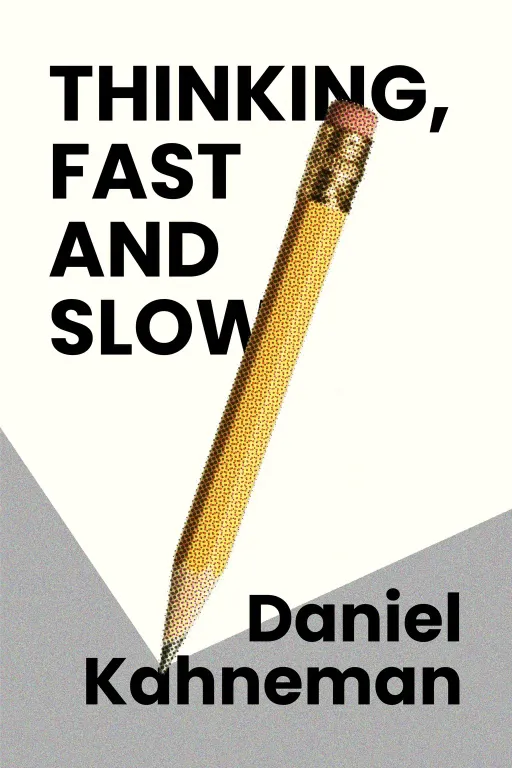
Nova: Humbling, yes, but also incredibly empowering once you understand it. Today, we’re diving into the brilliant minds who cracked this code: Daniel Kahneman, with his groundbreaking work in "Thinking, Fast and Slow," and Dan Ariely, with "Predictably Irrational."
Atlas: Ah, Kahneman. The Nobel laureate, right? I remember hearing about his work fundamentally shifting how we view economic decisions. It wasn't just theory; it was Nobel-winning science that challenged the very idea of Homo Economicus.
Nova: Exactly! Kahneman, a psychologist, won the Nobel Memorial Prize in Economic Sciences for his work on prospect theory, demonstrating how far human decisions deviate from rational economic theory. And Ariely, a behavioral economist, then took that foundation and showed us, through fascinating experiments, just how systematic and our irrationality really is.
Atlas: That’s a powerful combination. For the visionaries and builders in our audience, those focused on innovation for societal impact and refining their business acumen, this isn't just academic curiosity. This is about understanding why our cutting-edge tech might be falling flat with users, or why a perfectly logical business strategy encounters unexpected resistance. It’s about the very core of user experience design, isn't it?
Nova: It absolutely is. We’re going to explore the hidden psychological machinery driving our choices, revealing why we often act against our own best interests, and how understanding this can revolutionize how we design and innovate.
Deep Dive into System 1 & System 2 Thinking
SECTION
Nova: Let's start with Kahneman’s dual-process theory, which is really the bedrock of understanding how our minds make decisions. He introduced us to System 1 and System 2 thinking. Think of System 1 as your brain’s autopilot – it’s fast, intuitive, emotional, and automatic. It’s what you use to recognize a face, understand a simple sentence, or slam on the brakes when you see a hazard. It operates without conscious effort and often without a sense of voluntary control.
Atlas: So, System 1 is like our gut reaction, the immediate snap judgment?
Nova: Precisely. It’s efficient, but prone to biases and quick errors. System 2, on the other hand, is the deliberate, analytical, and effortful mode of thinking. It’s what you use to solve a complex math problem, fill out a complicated form, or consciously choose to focus your attention on a specific task. It requires energy and concentration.
Atlas: I can see that. When I’m deep in strategic planning for a new venture, mapping out market dynamics and user journeys, that feels like peak System 2. It’s slow, it’s deliberate, and it definitely takes a lot of mental juice.
Nova: It absolutely does. And the critical insight here is that System 1 is dominant. It’s always running in the background, constantly generating impressions, intuitions, and feelings. If System 1 encounters a problem it can solve, it does so. If it encounters a difficulty, it calls on System 2 to help. But System 2 is lazy. It prefers to conserve energy.
Atlas: So our default is always System 1, even if we we’re being analytical? That’s kind of scary for someone trying to make impactful, strategic decisions. I mean, we pride ourselves on foresight and rigorous analysis.
Nova: We do, and that’s the illusion. Let me give you Kahneman’s most famous example, the Bat and Ball problem. It’s simple, but incredibly revealing. Ready?
Atlas: Lay it on me. I’m ready to engage my System 2.
Nova: A bat and a ball cost $1.10 in total. The bat costs $1.00 more than the ball. How much does the ball cost?
Atlas: Okay, my immediate gut reaction, my System 1, is telling me 10 cents. That just right.
Nova: And that’s the common System 1 answer. It’s fast, it’s fluent, and it’s compelling. But it’s wrong. If the ball cost 10 cents, and the bat cost $1.00 more, the bat would be $1.10. Total cost would be $1.20.
Atlas: Oh, I see it now! My System 2 is kicking in. If the ball is 5 cents, the bat is $1.05. Add them together, and it’s $1.10. Wow. My brain wanted to go with 10 cents.
Nova: It’s a perfect illustration of System 1’s power. It offers a quick, plausible answer, and often, System 2 doesn’t bother to check. This isn't a trick; it's how our minds are wired to conserve effort. For visionaries building complex tech, who are constantly making high-stakes decisions under pressure, relying too much on that intuitive System 1 can lead to systematic errors, even if it feels efficient in the moment.
Atlas: That makes me wonder, then, for our listeners who are designing new interfaces or even entire venture models – if we’re trying to get users to make complex choices, are we fighting human nature by demanding too much System 2 engagement? Because I imagine a lot of our users are already overloaded, just like us.
Nova: Absolutely. System 2 is easily fatigued. Think about a time you had to make a lot of difficult decisions or focus intensely for hours. You likely felt mentally drained. That’s ego depletion. When System 2 is tired, System 1 takes over even more strongly. This is crucial for UX design. If your user interface demands constant System 2 effort – reading dense instructions, making complex comparisons, navigating convoluted menus – users will get frustrated, make mistakes, or simply abandon the task.
Atlas: So, the goal isn't necessarily to System 2, but to design in a way that allows System 1 to operate smoothly, or to strategically engage System 2 only when absolutely necessary and with clear guidance.
Nova: Exactly. It’s about understanding when to appeal to intuition and when to prompt deeper thought. But here’s the kicker: these aren't just random brain glitches. They're systematic.
Deep Dive into Predictably Irrational Choices
SECTION
Nova: And this is where Dan Ariely steps in, showing us that these aren't just random brain glitches, but systematic, repeatable errors. His book, "Predictably Irrational," demonstrates through case studies that our errors are not random but systematic and predictable.
Atlas: Predictably irrational. That phrase alone is so provocative! Because if our errors are predictable, that means they can be understood, and perhaps even influenced.
Nova: Precisely. Ariely’s work is filled with ingenious experiments that highlight this. One of my favorites is the "decoy effect." Imagine you're subscribing to a magazine. Option A: Digital-only subscription for $59. Option B: Print-only subscription for $125. Option C: Digital and Print subscription for $125.
Atlas: Okay, so immediately, my System 1 is thinking, "Why would anyone choose Print-only for $125 when I can get Digital AND Print for the same price?" That print-only option seems redundant.
Nova: And that's its genius. Ariely found that when the "Print-only" option was present, a significant number of people chose "Digital and Print" for $125. But when the "Print-only" option was removed, and people only saw Digital for $59 and Digital and Print for $125, the preference shifted dramatically, with many more choosing the cheaper Digital-only.
Atlas: Whoa. So the seemingly useless "Print-only" option acted as a decoy, making the "Digital and Print" option look like an incredible deal by comparison. It wasn't about the absolute value, but the relative value created by the decoy. That’s fascinating for anyone designing pricing tiers for a new software product or service.
Nova: It completely changes how we think about choice. Our decisions are often relative, not absolute. We compare, and those comparisons can be manipulated, sometimes subtly, sometimes overtly. Another powerful example from Ariely is the "power of free." He conducted an experiment offering either a Hershey's Kiss for 1 cent or a high-quality Lindt truffle for 15 cents. Most people chose the Lindt truffle because it was a better deal.
Atlas: Makes sense. Higher quality for a reasonable price.
Nova: But then he lowered the price of both by 1 cent. So, Hershey's Kiss was free, and the Lindt truffle was 14 cents. Suddenly, nearly everyone chose the free Hershey's Kiss, even though the value hadn't changed. The Lindt truffle was still a better deal for 14 cents than the Kiss was for free.
Atlas: That’s incredible. The allure of "free" completely overrides our rational calculation of value. For entrepreneurs trying to create lasting value, who are driven by progress and meaningful change, this is a huge insight. So, are we saying that understanding these biases is about exploiting them for sales, or designing them to genuinely serve the user better?
Nova: That's the critical question, Atlas, and it speaks directly to the "Changemaker" in our audience. Understanding these patterns gives you immense power. You can use it to create what some call "dark patterns" – intentionally misleading users into choices that benefit the business at the user's expense. Or, you can use it to design truly intuitive, ethical, and delightful user experiences.
Atlas: So, for our innovators, it’s not about tricking users, but guiding them towards beneficial outcomes with less friction, aligning with their intuitive System 1, but always with the user's best interest at heart? Like anticipating where they might make a predictable error and gently nudging them away from it, rather than towards it.
Nova: Exactly. It's about making the "right" choice – the one that genuinely aligns with their goals – the choice. When you know that people respond disproportionately to "free," you can offer a valuable free tier that hooks them ethically, rather than a misleading "free trial" that auto-renews. When you know about the decoy effect, you can structure your product tiers to highlight the best value proposition for your ideal customer, not to trick them into an upsell they don't need.
Atlas: It’s like, if you know the currents, you can either drown someone or help them sail faster. This really resonates with the idea of strategic foresight, not just predicting market trends, but predicting human behavior within those trends.
Synthesis & Takeaways
SECTION
Nova: Both Kahneman and Ariely, from their slightly different angles, reveal the deep-seated mechanisms behind our choices. They fundamentally challenge the notion that humans are purely rational actors. Instead, they show us that rationality is often a post-hoc justification for decisions already made by our intuitive, biased System 1.
Atlas: And the takeaway for our audience of visionary builders and changemakers? How do we apply this hidden logic to shape the future and create lasting value in our tech ventures?
Nova: The real power isn't in fighting human nature, but in understanding it. For anyone designing user experiences, building new ventures, or even just trying to improve their own decision-making, this means designing tech that respects the brain's natural tendencies. It's about reducing cognitive load, making the right choice the easy choice, and being mindful of the subtle cues that shape behavior.
Atlas: So, whether it’s an onboarding flow, a new feature, or even the language we use in our marketing – we need to ask: 'Am I appealing to their intuitive System 1, making it effortless and clear, or am I demanding too much from their analytical System 2, potentially leading to frustration or predictable errors?'
Nova: Precisely. It’s about building experiences that resonate with System 1’s intuition while allowing for System 2’s deep engagement when it truly matters. It’s the difference between a product that’s merely functional and one that feels magical because it understands how your brain works.
Atlas: That's a profound shift in perspective. And it certainly aligns with our audience's drive for meaningful change. It’s not just about building better tech, but building tech that truly understands and serves the human element.
Nova: So, the next time you're designing that user onboarding flow or pricing model, ask yourself: 'Am I speaking to their fast, intuitive System 1, or am I demanding too much from their analytical System 2?'
Atlas: And tell us, how have you seen these 'predictable irrationalities' play out in your own life or your ventures? Share your stories with us on social media using #AibraryChoices. We'd love to hear how you're embracing this hidden logic.
Nova: This is Aibrary.
Atlas: Congratulations on your growth!