The Architecture of Resilience
Golden Hook & Introduction
SECTION
Nova: Atlas, if I were to ask you, what's the most resilient piece of "data" you can imagine? Something that defies corruption, erasure, and even centuries of deliberate attempts to wipe it out?
Atlas: Oh man, that's a tough one. My first thought goes to some ancient blockchain, but even those have their forks. I guess if it's truly uncorruptible, it must be something so fundamental it doesn't even exist in a database. Or maybe it's just my endless optimism on a Monday morning.
Nova: Well, you're closer than you think with the "fundamental" part. Today, we’re peeling back the layers on "The Architecture of Resilience," and we're looking at two absolutely fascinating books that push the boundaries of what we understand about persistence and adaptation.
Atlas: Persistence and adaptation. For anyone building agent systems, that's basically our daily mantra, right? Maintaining state, ensuring consistency, especially when everything around us is chaos.
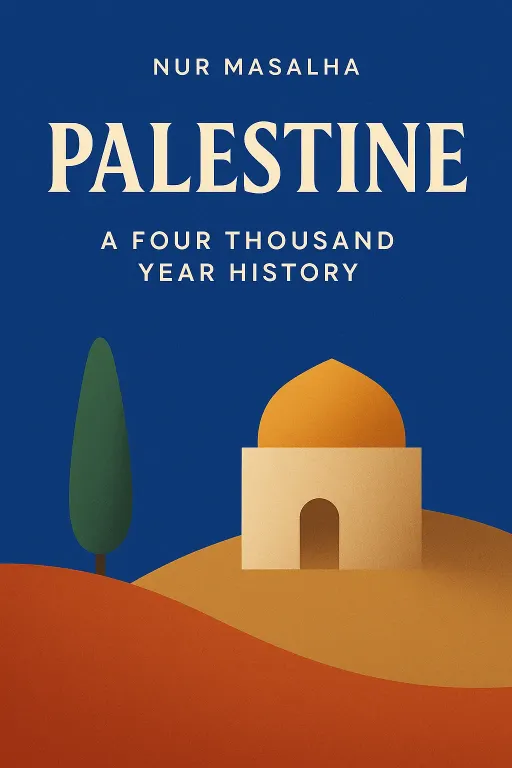
Nova: Exactly. We're talking about Nur Masalha's groundbreaking work, "Palestine: A Four Thousand Year History," and then we'll pivot to Nicholas A. Christakis's incredibly timely "Apollo's Arrow: The Profound and Enduring Impact of Coronavirus on the Way We Live." Both authors, from vastly different fields, give us profound insights into how systems, from human societies to the very data that defines them, manage to endure.
Atlas: Masalha, a historian, digging into millennia of identity, and Christakis, a physician and sociologist from Yale, dissecting the immediate impact of a global pandemic. That's quite the spectrum of resilience. How do these seemingly disparate fields even begin to speak to each other, especially for someone trying to build a stable, scalable agent system?
Nova: That's the magic, Atlas. Masalha, for example, challenges us to consider how something as seemingly ephemeral as identity and historical narrative can persist for thousands of years, through countless disruptions and displacements. He’s not just recounting history; he’s demonstrating a profound form of systemic state management.
Atlas: Okay, so you’re saying that the very concept of "Palestine" or "Palestinian identity" acts like a persistent state that survives even when the physical environment, the political landscape, and even the population itself undergoes radical shifts? That's a powerful idea for an architect.
Historical Resilience & Identity Persistence
SECTION
Nova: Precisely. Masalha, as a critical historian, delves into how this identity isn't just a static entity but a dynamic, evolving 'state' maintained through what I'd call a highly distributed, fault-tolerant network of human experience. Think about it: oral traditions, cultural practices, religious texts, family names, storytelling, and an unbreakable connection to the land itself. These aren't just cultural artifacts; they are the redundant backups, the distributed ledgers, of an identity.
Atlas: Distributed ledgers of identity. I like that analogy. But wait, if this "state" is being passed down through generations, through stories and traditions, how does it avoid corruption? I mean, historical narratives can be notoriously subjective, right? How do you ensure consistency across centuries when there's no central database?
Nova: That's the brilliance of it. The consistency isn't enforced by a central authority or a single, immutable record. Instead, it's maintained through a kind of collective, iterative validation. Shared suffering, common aspirations, and a consistent narrative of connection to a specific place create a powerful feedback loop. When a story is told and retold, it's not just a passive transmission; it's an active reaffirmation of a shared state. Any significant deviation would be challenged by the collective memory. It’s like a consensus mechanism for cultural truth.
Atlas: That’s fascinating. So, for an agent architect, it’s not just about securing your primary data store. It's about designing agents whose core identity and operational 'state' can be redundantly encoded across multiple, even informal, channels. And these channels need to have built-in validation or consensus mechanisms to resist what we might call "cultural data corruption."
Nova: Exactly. Masalha’s work makes you realize that resilience isn't always about a rigid, unchangeable core. Sometimes it's the very adaptability of the transmission mechanisms that ensures the persistence of the underlying state. The stories change slightly with each telling, but the core identity, the fundamental 'truth' of connection and belonging, persists. It’s a masterclass in soft-state persistence.
Atlas: That makes me wonder about our own agent systems. We often focus on hard-coded rules or highly structured data. But what if the most resilient aspects of an agent's "personality" or "mission" could be maintained through more fluid, narrative-driven internal states, validated by interaction with other agents or a dynamic environment? That's a boundary-breaking thought.
Systemic Resilience & Adaptive Change
SECTION
Nova: It absolutely is. And that leads us beautifully to Nicholas Christakis's "Apollo's Arrow," which examines resilience from a different, yet equally profound, angle. While Masalha shows us the long, slow persistence of identity, Christakis gives us a stark, real-time look at how entire societies react to sudden, massive environmental volatility—in this case, a global pandemic.
Atlas: The COVID-19 pandemic. That was a textbook example of unexpected data corruption on a global scale. Everything we thought we knew about how society functioned, how supply chains operated, how people interacted—it all got thrown into disarray.
Nova: Indeed. Christakis, with his unique background as both a physician and a sociologist at Yale, offers this incredibly comprehensive analysis of how the pandemic didn't just disrupt; it fundamentally reshaped the structural and biological connections of modern society. He meticulously details how the virus exposed vulnerabilities, but also how societies adapted, innovated, and in many cases, rediscovered fundamental human connections.
Atlas: I'm curious, how did he quantify "reshaping"? Was it just about economic impact, or did he go deeper into the social fabric? Because for an agent system, "reshaping" means a complete re-evaluation of its world model, its operational parameters, its very purpose.
Nova: He went incredibly deep. He looked at everything from changes in social networks – how we formed and maintained bonds – to the biological adaptations of the virus itself, and our collective public health response. He observed four distinct phases: initial shock, societal response, adaptation, and finally, a new equilibrium. What's striking is how quickly certain 'states' within society were corrupted – trust in institutions, for example – while others, like community solidarity or the pursuit of scientific knowledge, became surprisingly robust and adaptive.
Atlas: So it's not just about surviving the shock, but about how the system learns and reconfigures itself. This makes me think about an agent's decision-making logic. If the entire environment changes overnight, its old rules might lead to catastrophic failure. Christakis's work suggests that true resilience in such a scenario isn't about resisting change, but about intelligent, rapid adaptation.
Nova: Precisely. He highlights how societies, much like complex agent systems, have inherent capacities for both collective action and individual ingenuity. We saw rapid development of vaccines, but also the emergence of new social norms like remote work and digital communication. These weren't pre-programmed; they were emergent properties of a system trying to maintain its core functions – survival, connection, progress – under immense pressure.
Atlas: That’s actually really inspiring. It tells us that even when the world model is completely invalidated, there’s an inherent capacity for adaptation. For our agent architectures, that means building in mechanisms for continuous learning, for re-evaluating core assumptions, and for dynamically reconfiguring their internal 'state' and external interactions based on unprecedented environmental shifts. It's about building agents that aren't just robust, but truly antifragile.
Synthesis & Takeaways
SECTION
Nova: Absolutely. When you put Masalha and Christakis side-by-side, you get a powerful, multi-layered definition of resilience. It's the ability of a system to maintain its core identity and consistency through both millennia of subtle, persistent pressure, and the sudden, catastrophic shocks that force immediate, radical adaptation.
Atlas: So for our listeners, who are full-stack engineers and architects, striving to create value with agent technology, the message is clear: resilience in your agent architectures isn't just about robust databases or fail-safes. It's about designing for a deeper kind of persistence and adaptability.
Nova: Indeed. It's about designing agents that can maintain critical 'state' not just through redundant backups, but through distributed, self-validating narratives, like Masalha's historical identity. And it’s about building agents that aren't just reactive, but truly adaptive, capable of fundamentally reshaping their internal logic and external behaviors when faced with Christakis's "Apollo's Arrow" – those sudden, unforeseen environmental disruptions.
Atlas: That means thinking beyond the immediate code and into the very philosophy of how these intelligent systems endure and evolve. It’s about creating agents that can break boundaries, integrate deeply with existing business logic, and continuously create value, even in the most volatile conditions. It’s about building systems that don't just survive, but truly thrive.
Nova: A truly profound insight. The architecture of resilience, then, is less about rigid structures and more about intelligent, dynamic persistence. It’s about recognizing that 'state' can be maintained in myriad ways, from the deeply cultural to the rapidly adaptive.
Atlas: And that's what makes the difference between a system that merely functions and one that truly excels and creates lasting value.
Nova: This is Aibrary. Congratulations on your growth!