The Path to Mastery: Perseverance, Practice, and Unseen Advantages in Agent Development
Golden Hook & Introduction
SECTION
Nova: Forget everything you thought you knew about 'natural talent.' Because the truth is, the story we tell ourselves about innate ability might be one of the most persistent, and damaging, myths when it comes to achieving true mastery.
Atlas: Whoa, that's a bold claim, Nova. I imagine a lot of our listeners, especially those striving to become experts in complex fields like Agent engineering, might feel a little uneasy hearing that. Are you really saying talent doesn't matter at all?
Nova: Not that it doesn't matter, Atlas, but its role is profoundly misunderstood. Today, we're diving into two incredibly insightful books that redefine what it means to excel. First up, we have Malcolm Gladwell’s widely acclaimed work,, a book that ignited massive global discussion by popularizing the "10,000-hour rule" and challenging our conventional wisdom about success.
Atlas: Ah, Gladwell. His books always make you rethink fundamental assumptions. And the 10,000-hour rule has become almost legendary in productivity circles.
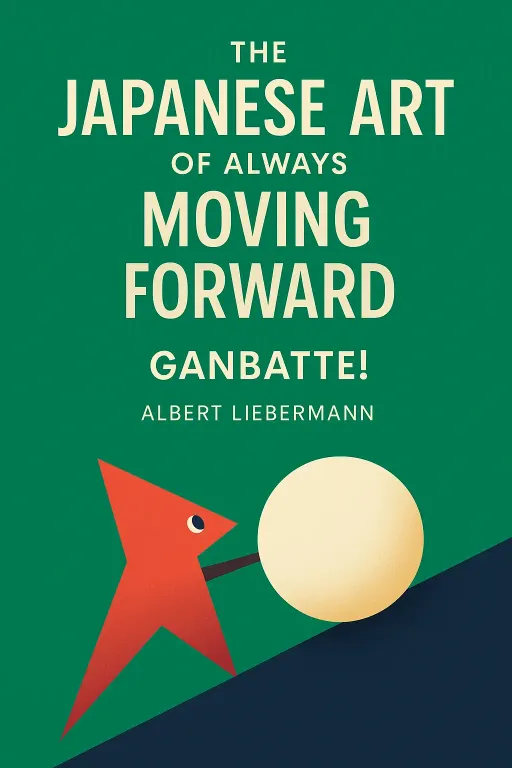
Nova: Absolutely. But we're also looking at a less globally known, but equally profound, perspective from Albert Liebermann's. This book taps into a deep cultural philosophy that offers a powerful, often overlooked, lens on sustained effort and resilience.
Atlas: Ganbatte! I like the sound of that. So, we’re talking about the secret ingredients to becoming a true master, not just in theory, but for someone building cutting-edge Agent systems, someone who wants to create real business value and push boundaries. How do these seemingly abstract ideas from different cultures and authors actually apply to the hands-on, daily grind of tech development?
Nova: That's precisely the deep question we're tackling, Atlas. We're exploring how these powerful principles can be intentionally designed into your learning environment and daily practices to foster not just skill acquisition, but true, lasting mastery in Agent engineering.
The Unyielding Spirit: Ganbatte and Cultural Resilience
SECTION
Nova: Let's start with the heart of. This isn't just about 'gritting your teeth and bearing it.' It's a fundamental Japanese cultural philosophy that emphasizes perseverance, continuous effort, and resilience in the face of adversity. It’s a call to always move forward, to do your best, and to never give up, no matter the challenge.
Atlas: So it's more than just a personal mantra, it's a societal expectation? That makes me wonder, how does that manifest? Because in a high-stakes tech environment, 'never giving up' can sometimes feel like a recipe for burnout if you're just banging your head against a wall.
Nova: That's a crucial distinction. Ganbatte isn't about blind stubbornness; it's about a steadfast mindset that views challenges as inherent parts of the journey, not roadblocks to be avoided. Think about the meticulous craftsmanship in traditional Japanese arts, or the nation's incredible post-war reconstruction. It wasn't just about individual effort; it was a collective, sustained commitment to incremental improvement and overcoming seemingly insurmountable odds.
Atlas: I see. So it's a deep-seated belief that sustained progress comes from an unwavering commitment to the process itself, rather than solely focusing on the immediate outcome. That resonates with anyone who’s had to debug a complex Agent model or optimize a distributed system – it’s rarely a single 'aha!' moment.
Nova: Exactly. It's the spirit of the daily, focused 30-minute session you commit to understanding and incrementally solving that one persistent challenge in your Agent project. It's not about fixing it all at once, but about showing up consistently, learning from each small attempt, and trusting that the cumulative effort will lead to a breakthrough. It fosters a kind of quiet confidence that comes from knowing you've poured your best into something, irrespective of how quickly the results appear.
Atlas: That's actually really inspiring. I think many of our listeners, especially the architects among them, are always looking for ways to build more stable and scalable Agent systems. This 'Ganbatte' spirit sounds like it could be applied to how you approach system resilience, how you design for fault tolerance, or even how you manage long-term technical debt. It's about building in that endurance from the ground up.
Nova: It is. It's about designing your mental and environmental architecture with that same resilience. When you encounter a bug that seems to defy logic, or an Agent's decision-making process becomes opaque, the Ganbatte spirit encourages you to lean into the discomfort, to chip away at the problem day after day, rather than abandoning it for an easier task. It transforms frustration into fuel for continuous learning.
Atlas: I like that framing – transforming frustration into fuel. For someone aiming to integrate Agent tech with existing business systems, that kind of sustained problem-solving is non-negotiable. You can't just quit when the integration gets messy. You need that deep well of perseverance.
Beyond Talent: Deliberate Practice and Systemic Advantages
SECTION
Nova: And that naturally leads us to our second key idea, which often acts as a powerful complement to Ganbatte: Malcolm Gladwell's insights from. Gladwell famously argued that extraordinary achievement isn't about innate talent as much as it is about intense, deliberate practice and opportune circumstances.
Atlas: So you're saying it's not just about grinding it out, as with Ganbatte, but about you grind? What's the 'deliberate' part that makes it different from just repeating the same task a thousand times?
Nova: That's the core distinction. Deliberate practice, as Gladwell explores, isn't just mindlessly putting in hours. It's highly structured, focused, and often uncomfortable. It involves pushing yourself just beyond your current abilities, receiving immediate feedback, and then adjusting your approach. It's about targeting specific weaknesses, not just practicing what you're already good at. Think of a musician practicing a difficult passage over and over, analyzing their errors, and refining their technique, rather than just playing songs they already know.
Atlas: Okay, so it’s about intentionality. For an Agent engineer, that might look like meticulously analyzing why an Agent made a suboptimal decision, rather than just retraining the model and hoping for the best. Or, it could be spending focused time understanding the mathematical underpinnings of a new algorithm, instead of just copying code.
Nova: Precisely. And Gladwell takes it a step further by introducing the idea of "systemic advantages." He shows how factors like cultural heritage, family background, and being born at a particular time can play a far greater role in success than we often acknowledge. For instance, many of the early Silicon Valley pioneers were born in a specific generational window that allowed them to be the perfect age when personal computers became widely available and accessible. They had an opportune circumstance, a unique window of opportunity.
Atlas: That makes me wonder, how does an Agent architect 'luck' or 'opportune circumstances' in their learning environment? We can't choose our birth year, but we design our professional growth. How do we intentionally create advantages for ourselves or our teams, especially when we're trying to build stable, scalable, and innovative Agent systems?
Nova: That's the profound insight, Atlas. While we can't change the past, we proactively seek out and cultivate 'opportune circumstances' in our present. For an Agent engineer, this means intentionally immersing yourself in communities where cutting-edge research is happening, seeking out mentors who are already operating at the next level, or even strategically choosing projects that expose you to emerging technologies and complex problems. It's about positioning yourself where the 'luck' is more likely to strike, and then being prepared to seize it with your deliberate practice.
Atlas: So, it's not just about individual effort, but also about understanding the ecosystem you're operating in. That's a very architect-minded way of thinking – looking at the broader system, not just the individual components. It's about asking, "How can I design my learning path to give me the best chance of encountering those 'right place, right time' moments?"
Nova: Exactly. It’s about being aware of the currents, not just rowing harder. It means understanding that the path to mastery isn't a solitary climb up a ladder, but often a navigation through a complex landscape where external factors, combined with your internal drive, truly accelerate your journey.
Synthesis & Takeaways
SECTION
Nova: So, bringing these two powerful ideas together, we see that Ganbatte provides the unwavering fuel – the resilience, the consistent effort, the steadfast mindset to keep moving forward even when the path is unclear. And gives us the map, showing us to apply that effort intelligently through deliberate practice and by consciously seeking and leveraging systemic advantages.
Atlas: That's a fantastic synthesis. It’s the perfect blend for our listeners: the unyielding spirit to tackle complex Agent challenges, combined with the strategic approach to practice that actually leads to breakthroughs. It reminds me of the deep question we posed earlier: How can you intentionally design your learning environment and daily practices in Agent engineering to mirror these principles, fostering not just skill acquisition but true, lasting mastery?
Nova: And the tiny step we suggest is incredibly practical. Identify one persistent challenge in your current Agent project – perhaps an Agent's unexpected failure mode, a performance bottleneck, or a tricky integration. Then, apply the 'Ganbatte' spirit by committing to a daily, focused 30-minute session dedicated solely to understanding and incrementally solving that specific problem, without distraction.
Atlas: That’s actionable. It’s not about finding the silver bullet, but about consistent, deliberate chipping away. For value creators and architects, this isn't just about personal growth; it's about building more robust, intelligent, and stable Agent systems. It’s the path to turning cutting-edge tech into concrete, reliable business value.
Nova: Ultimately, true mastery in Agent engineering, or any complex field, isn't reserved for some mythical 'chosen few.' It's a cultivated journey, forged through a powerful combination of relentless perseverance and strategically applied deliberate practice, often amplified by consciously designed advantages. It's about realizing that you have the power to engineer your own path to excellence.
Atlas: That's a profound takeaway, Nova. The idea that we can actively design our learning and our environment to cultivate mastery, rather than just waiting for talent to strike, is incredibly empowering. It truly embodies the spirit of breaking boundaries and creating value.
Nova: Absolutely. It’s about making the choice to consistently move forward, learn deeply, and adapt strategically.
Atlas: This is Aibrary. Congratulations on your growth!