The Psychology of Peak Productivity
Opening
SECTION
Nova: Content` format.
Golden Hook & Introduction
SECTION
Nova: What if I told you that the secret to peak productivity isn't about working harder or longer, but about what you do you even open your laptop, and how you time itself?
Atlas: Oh, I'm listening! Because if 'hustle harder' is the answer, my calendar just screamed and ran away. That's the feeling so many of us have, especially when every minute feels accounted for, and we're constantly trying to keep up.
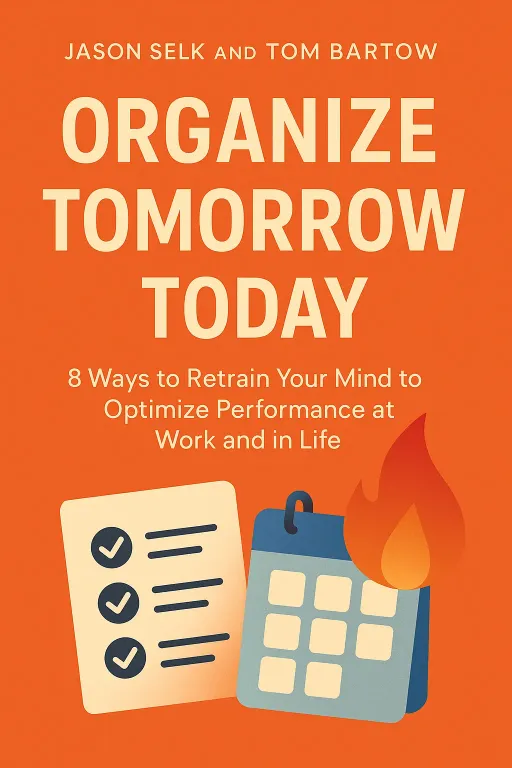
Nova: Absolutely. And that's exactly what we're diving into today. We're pulling insights from two incredibly powerful books that, when combined, offer a truly holistic approach to mastering your output and your mindset. First, "Organize Tomorrow Today" by the brilliant Dr. Jason Selk, Tom Bartow, and Matthew Rudy. Dr. Selk, for instance, comes from a background in elite sports psychology, working with Olympic athletes and professional teams. He brings that rigorous mental conditioning, typically reserved for high-performance sports, directly to everyday challenges in business and life.
Atlas: That's fascinating. So, it's not just abstract theory, but something battle-tested in the most demanding environments? That gives it some serious weight.
Nova: Precisely. And then we pair that with Kevin Kruse's "15 Secrets Successful People Know About Time Management," which really challenges the conventional wisdom around productivity. Kruse didn't just hypothesize; he interviewed hundreds of billionaires, Olympic athletes, and top entrepreneurs to find out what actually do. Together, they offer a robust, dual-pronged approach to not just managing your time, but mastering your mental game for sustained high performance.
Atlas: That blend sounds crucial. Because for many of us, it's not just about the external strategies; there's an internal battle happening too, right? We want to make our time count, not just fill it with busywork. It’s about impact.
Nova: Exactly! And that internal game, that mental preparation, is where "Organize Tomorrow Today" truly shines, especially with its focus on morning routines. It's about setting the stage for success before the curtain even rises on your day.
The Power of the Productive Morning: Mental Conditioning & Daily Structuring
SECTION
Nova: So, let's talk about the mornings. Dr. Selk and his co-authors propose what they call the "Power Hour." It's a series of six steps designed to be done, ideally, within the first hour of your day, before the world starts demanding things from you. It's not about responding; it's about your mind for peak performance.
Atlas: An hour? For someone juggling a demanding schedule, like many of our listeners who are deep in research or complex projects, where do you even an hour before the day kicks off? That sounds... ambitious, to put it mildly.
Nova: That's the common reaction, but it’s often about reallocating rather than magically finding extra time. Think of it as a crucial investment that pays dividends throughout your day. The six steps are: goal setting, visualization, positive self-talk, tactical breathing, gratitude, and exercise. It might sound like a lot, but many of these are short bursts. For example, tactical breathing is just a few minutes of controlled breaths. It’s about integrating these powerful elements, not necessarily dedicating 60 minutes to each.
Atlas: So, it's not about strict, rigid adherence to a full 60 minutes, but understanding the behind each step and finding ways to weave them into your existing routine? Can you give an example of how this actually plays out in real life for someone with a high-stakes, information-heavy role?
Nova: Picture this: a high-stakes research scientist, let's call her Dr. Anya Sharma. Her work involves analyzing complex data sets that determine the course of multi-million dollar projects. She used to wake up, immediately check emails, and feel a rush of anxiety, already behind before she even started. After implementing Selk's "Power Hour" principles, her mornings transformed. She started by setting her top three goals for the day, not just tasks, but. Then, she’d spend a few minutes visualizing herself successfully presenting her findings, feeling confident and clear, seeing the positive impact of her work.
Atlas: That sounds like it would shift your entire emotional and cognitive landscape before you even open your inbox. It’s like pre-loading your brain for success.
Nova: It absolutely does. The key here is the. It's not just checking boxes; it's training your brain to approach challenges with a specific, resilient mindset. Dr. Sharma would then engage in tactical breathing for a few minutes – a simple 4-second inhale, 4-second hold, 4-second exhale – which calmed her nervous system and brought her into the present. She'd spend another minute listing three things she was genuinely grateful for – even small things, like the quiet of her office before anyone else arrived, or a recent breakthrough in a colleague's work.
Atlas: Wow, that's powerful. Gratitude, especially when the pressure is on, can be a huge reframe.
Nova: It is. And by consciously engaging in positive self-talk, reminding herself of her capabilities and past successes, Dr. Sharma approached her complex data analysis with far greater clarity, less self-doubt, and a more robust problem-solving mindset. The exercise, even if it was just a quick 10-minute stretch or walk, got her blood flowing and sharpened her focus for the deep work ahead. The outcome? She found herself making more insightful connections in her data, completing tasks with fewer errors, and feeling significantly less overwhelmed by the sheer volume of information she had to process daily. Her ability to synthesize complex data improved dramatically.
Atlas: That’s actually really inspiring. Because for our listeners who are constantly synthesizing complex information and making critical decisions, clarity and sustained focus are gold. It's about being proactive with your mental state, not just reactive to the day's demands. But then, after you've conquered your morning and prepped your mind, what about the other 10 hours? That's where the traditional time management advice often falls short, leading to burnout.
Beyond the To-Do List: Strategic Time Allocation & Productivity Myth-Busting
SECTION
Nova: Exactly, Atlas. And that's where Kevin Kruse comes in, challenging everything we thought we knew about time management. He argues that successful people don't "manage time" at all. They manage their and. One of his most provocative points is the myth of the to-do list.
Atlas: Hold on, no to-do list? That feels like productivity heresy! How do you keep track of everything if you don't have a list? For many, the to-do list is a security blanket, a way to feel in control of the chaos.
Nova: It is! But Kruse argues that to-do lists are often just a dumping ground for tasks, without any real prioritization or sense of urgency. They can make us feel busy without actually being productive, because we tend to tackle the easy, quick items first, leaving the important, harder ones to languish. Instead, he advocates for what he calls "time blocking" and identifying your "Most Important Task," or MIT.
Atlas: Okay, so you’re saying it's about being ruthlessly selective with what actually goes into your day, and then protecting that time for the things that truly move the needle? That sounds like a big shift in mindset.
Nova: Precisely. Let me give you an example. Think of an entrepreneur, let's call him Leo. Leo used to have a sprawling to-do list with 30 items, and he'd constantly jump between tasks, feeling overwhelmed and always chasing his tail. He'd spend hours in meetings that felt optional, then try to cram his actual, strategic work into the leftover scraps of the day, often late into the evening. After reading Kruse, Leo made a radical change. He started identifying his MIT for the day – the single task that, if completed, would make the biggest impact on his business.
Atlas: So, he's not just writing it down; he's physically carving out the time. What does that look like in practice?
Nova: Yes, he treated that specific time block – say, 90 minutes, first thing in the afternoon – like a non-negotiable meeting with his most important client: himself. He'd shut down email notifications, put his phone on airplane mode, and work on nothing but that MIT. He cultivated a 'deep work' environment. The outcome? He started completing critical strategic initiatives much faster, launching new products and securing key partnerships that had been stuck for months. He realized that by focusing on that one high-leverage task, he was making more progress and generating more value than when he was frantically ticking off ten smaller, less important items. Kruse also highlights the myth of multitasking, showing how it actually efficiency and quality, rather than increasing it, because of the constant context switching.
Atlas: That makes me wonder, for our listeners who are navigating complex information, analyzing data, or developing intricate strategies, how do you decide what is when everything feels urgent and interconnected? It's not always a clear, single task that stands out.
Nova: That's a brilliant question, and it's precisely where the synergy with Selk's morning conditioning comes in. Your morning routine, with its goal setting and visualization, helps you clarify what truly matters for the day, aligning it with your larger objectives. Kruse then provides the framework to that priority. It often involves asking yourself: "What is the one thing I can do today that will make everything else easier or unnecessary?" It’s about impact and strategic leverage, not just activity. It means having the discipline to say 'no' to good opportunities so you can say 'yes' to great ones. It's a strategic choice, not just a time management trick. It's about designing your day around your most valuable contributions.
Atlas: That sounds like a powerful reframe. It’s not just about doing things efficiently, it’s about doing the things efficiently, and with the right mindset. It truly brings us back to that core idea of making your time count, not just for you, but for the impact you want to create.
Synthesis & Takeaways
SECTION
Nova: Exactly. The real breakthrough moment comes when you embrace both these approaches. You start your day with Dr. Selk's mental conditioning, setting a clear, focused, and positive tone for your mind, building resilience before the challenges even begin. You're mentally prepared, intentional, and ready to engage.
Atlas: And then, with that clarity and mental fortitude, you apply Kevin Kruse's strategic allocation, focusing on your Most Important Task, blocking out protected time, and ruthlessly prioritizing for maximum impact. It's about channeling your peak mental state towards your highest leverage activities, ensuring every ounce of your energy is directed where it matters most.
Nova: It’s the profound difference between merely reacting to your schedule and proactively crafting a day that aligns with your deepest goals and values. True productivity isn't about fitting more into your day; it's about leveraging your peak mental states for your highest leverage activities. It's about working smarter, not just harder, and defining what 'smarter' really means for —which often means doing less, but doing it with more focus, more intention, and ultimately, more impact.
Atlas: Honestly, that’s actually really inspiring. Because it empowers us to take control, not just of our tasks, but of our mindset and our strategic direction. It makes you realize that the most impactful changes might not be in the apps you use, or the latest gadget, but in the fundamental habits you cultivate and the way you approach your time and your mind.
Nova: Absolutely. So, for our listeners, I encourage you to try one thing this week. Pick one element from Selk's morning routine—maybe five minutes of tactical breathing, or simply listing three things you're grateful for before you check your phone. And then, identify your single Most Important Task for tomorrow. Block out some protected time for it. See how that small, intentional shift changes your day, your focus, and ultimately, your impact.
Atlas: We'd love to hear how that goes for you. Share your experiences with us on social media; tell us about your MIT or your morning power-up. What's one thing you're doing differently after this episode? We're curious to see the shifts you make.
Nova: We thrive on hearing how these insights impact your lives and contribute to your growth journey.
Atlas: This is Aibrary. Congratulations on your growth!