Strategic Productivity: Organize Your Day, Master Your Future
Golden Hook & Introduction
SECTION
Nova: What if I told you that the secret to getting more done isn't doing more things, but doing thing, really, really well, first?
Atlas: Oh, I like that. That sounds almost… counter-intuitive in our hyper-connected, always-on world. Everyone’s telling us to multitask, to optimize every second. You’re saying less is more?
Nova: Exactly! Today, we're dissecting "Strategic Productivity: Organize Your Day, Master Your Future" – a powerful synthesis of insights, drawing from elite sports psychology and strategic business thinking, designed to transform how we approach our work and our lives. It’s about building a future, not just reacting to a present.
Atlas: Right. For anyone navigating complex fields like business, healthcare, or technology, the idea of "strategic productivity" probably sounds like a siren song. But what does it actually to organize your day for a better future, beyond just checking off tasks?
Nova: It means shifting from mere activity to intentional action. We’re going to explore two powerful frameworks. First, the laser-focused "Power Hour" concept and the magic of tackling your Most Important Task. Then, we’ll discuss how to elevate time management into a strategic 'time investment,' ensuring your daily actions are building the future you truly desire.
The Power Hour & Your Most Important Task (MIT)
SECTION
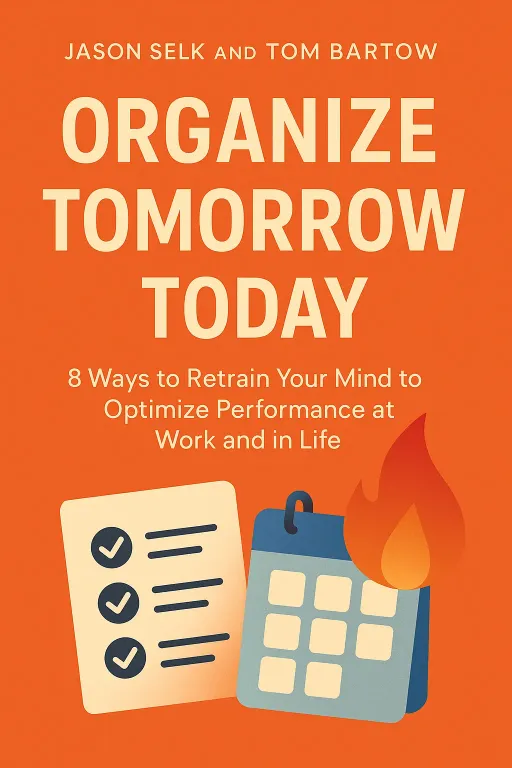
Nova: So, let's dive into that first idea, the "Power Hour," championed by Dr. Jason Selk and Tom Bartow in "Organize Tomorrow Today." It's incredibly simple, yet profoundly effective, especially for those who feel constantly swamped by immediate demands.
Atlas: Okay, so what is it? Is it literally just an hour of power? Because an hour of focused sounds like a luxury these days.
Nova: It is, and it isn't. The concept is to dedicate the first 60 minutes of your workday to your single Most Important Task – your MIT – you check emails, social media, or engage in any other distractions. This isn't just about productivity; it’s about building mental toughness and consistency, much like an elite athlete trains for peak performance.
Atlas: Huh. That’s a bold move. Before emails? For so many of us, especially in fast-paced environments, email the workday. How do you even identify this elusive "Most Important Task" when everything feels urgent? And what if that urgent email your MIT?
Nova: That's the critical distinction. An MIT isn't necessarily the thing; it's the task that will have the biggest positive impact on your long-term goals or the most significant strategic value. Imagine Sarah, a project manager at a growing tech firm. Her inbox is a battlefield. Every morning, she used to dive straight in, putting out fires, responding to requests. By noon, she felt exhausted but hadn't moved the needle on anything truly strategic.
Atlas: I know that feeling. It’s like you’re running in quicksand.
Nova: Exactly. Sarah learned about the Power Hour. She started identifying her MIT the night before: maybe it was outlining the architecture for a new product feature, or preparing a crucial presentation for a potential investor, or even deep-diving into market research for a new initiative. Tasks that often get pushed aside by the tyranny of the urgent.
Atlas: But wait, wouldn't her team or clients get frustrated if she's not responding immediately? That sounds rough, but it’s a real concern for people in client-facing or leadership roles.
Nova: That’s where the discipline comes in. It’s about setting boundaries and managing expectations. Sarah communicated to her team that her first hour was for focused work, for benefit, ultimately. She might put an auto-responder or schedule her first email check for 9:30 AM. The key is that what moved the needle, not what shouted loudest. The evidence from sports psychology shows that consistently tackling the hardest thing first builds a mental muscle. It gives you a win right at the start of your day, which creates momentum.
Atlas: That makes sense. It’s like a mental warm-up, but for your strategic brain. So, the case study you mentioned with Sarah… what was the outcome for her? Did she actually get more done, or just feel less stressed?
Nova: Both, actually. By consistently dedicating that hour, Sarah found she was completing those high-impact tasks that had been languishing for weeks. Her projects started moving forward faster, her strategic planning became more robust, and she felt a profound sense of accomplishment by 10 AM, rather than overwhelm. This habit, reinforced daily, transformed her output and reduced her stress because she knew she was making progress on what truly mattered. It’s about choosing proactively, not just reacting.
Strategic Time Investment vs. Time Management
SECTION
Nova: And that idea of choosing proactively naturally leads us to our second key insight, which elevates this daily tactical win to a broader strategic victory: Elizabeth Grace Saunders' concept of "strategic time investment."
Atlas: Oh, I’ve been thinking about this. What’s the real difference between "managing" time and "investing" time? Isn't it just semantics? I mean, we all try to manage our time, right? Calendars, to-do lists, productivity apps…
Nova: It’s far more than semantics. Time management often focuses on fitting as much as possible into your day – squeezing tasks in, optimizing efficiency for efficiency's sake. It’s like trying to perfectly organize a closet full of clothes you don't even like. Strategic time investment, on the other hand, asks: "What future am I building with this time?" It's about aligning your daily choices with your deepest values and long-term professional aspirations.
Atlas: So you’re saying it’s about purpose. But how do you define "clarity on priorities" when everything feels urgent and important? For many in demanding roles, the urgent the important.
Nova: Exactly the challenge. Saunders breaks it down into three secrets: clarity on priorities, conscious choices about where time goes, and accountability. Let's take Mark, a healthcare administrator. He used to manage his time by frantically triaging patient issues, attending back-to-back meetings, and processing paperwork. He was busy, but felt like he was constantly putting out fires and had no time for system improvements or strategic planning for his hospital. He was reacting.
Atlas: I can definitely relate. That sounds like a lot of people I know in high-pressure environments. They're indispensable, but they're also burning out.
Nova: Right. Mark realized he was managing time, not investing it. He lacked clarity on his priorities beyond the immediate. He started by defining his long-term goal: to implement a new patient intake system that would significantly improve efficiency and patient experience, even though it wasn't an "urgent" task. This became his strategic priority.
Atlas: Okay, so that’s clarity. What about conscious choices and accountability? How does Mark apply that to his packed schedule?
Nova: Conscious choices mean actively deciding where to allocate his energy, not just his minutes. For Mark, that meant identifying meetings he could delegate or skip, saying "no" to new initiatives that didn't align with his strategic goal, and crucially, time for that new intake system project – perhaps using his own version of a "Power Hour" for it.
Atlas: So, it's like budgeting money, but with your time. You decide what you're investing in based on your financial goals. Here, it's based on your life and career goals.
Nova: Perfect analogy! And accountability, the third secret, is ensuring those choices stick. For Mark, this meant regular check-ins with a mentor about his progress on the intake system, or even just daily self-reflection: "Did I make choices today that moved me closer to my strategic goal, or did I just react?" It transformed his approach. He moved from feeling overwhelmed by endless tasks to feeling empowered by making intentional investments in his future, ultimately leading to that new system being successfully implemented and a much happier team.
Atlas: Wow, that’s actually really inspiring. It’s not just about being productive, it’s about being. And that’s a huge distinction for anyone who feels like they’re on a hamster wheel, even if they’re technically "productive."
Synthesis & Takeaways
SECTION
Nova: Absolutely. What these two approaches, the Power Hour and strategic time investment, highlight is that productivity isn't about working harder; it's about working smarter and more. It's about recognizing that every moment is an opportunity to either react to immediate demands or to invest in the future you're actively trying to build.
Atlas: That makes me wonder, how many of us are just reacting, day in and day out, without ever really stepping back to ask that deep question: "Are my daily actions truly an investment in my future, or just a reaction to immediate demands?" It’s a powerful gut check.
Nova: It really is. And the beauty is, you don’t need a massive overhaul to start. The "Tiny Step" from our content today is a perfect starting point: dedicate the first 60 minutes of your workday to your single most important task, before checking emails or engaging in other distractions. Track your progress daily to reinforce this habit.
Atlas: I love that. It’s actionable, it’s concrete, and it ties directly into that mental toughness Nova mentioned earlier. It’s about building that muscle of intentionality, one Power Hour at a time. For our listeners in those demanding, complex fields, imagine what even one consistent hour could build over a year.
Nova: Imagine the clarity, the progress, the sheer impact. It’s not just about getting ahead; it's about building a robust, fulfilling future that truly aligns with your deepest values and professional aspirations.
Atlas: So, if you’re listening, we challenge you: try that Power Hour. Dedicate that first 60 minutes. And then, come back and tell us what future you started building. We’d love to hear your experiences.
Nova: We absolutely would. This is Aibrary. Congratulations on your growth!