Precision & Focus: Crafting Your Productive Day
Golden Hook & Introduction
SECTION
Nova: Atlas, I'm going to throw out a word, and you tell me the first thing that comes to mind: "Productivity."
Atlas: Oh, man. "Endless, elusive, always-on, guilt-inducing, mythical beast."
Nova: A mythical beast! I love it. And that's exactly what we're tackling today – taming that beast with precision and focus. For so many of us, productivity feels like this constantly moving target, doesn't it?
Atlas: Absolutely. It’s like trying to catch smoke. You feel like you're working hard, but then the day ends, and you're left wondering what actually got done. That’s going to resonate with anyone who struggles with feeling overwhelmed by their to-do list, wondering if they’re making time count.
Nova: Exactly. And that's why we're diving into two brilliant, yet distinct, approaches to crafting a truly productive day. We're looking at Francesco Cirillo’s deceptively simple "The Pomodoro Technique," and then we're going to explore the high-performance wisdom of Dr. Jason Selk's "Organize Tomorrow Today."
Atlas: Cirillo, the software developer, gave us the timer method, right? And Selk, the sports psychologist, brings that elite athlete mindset. That’s an interesting pairing.
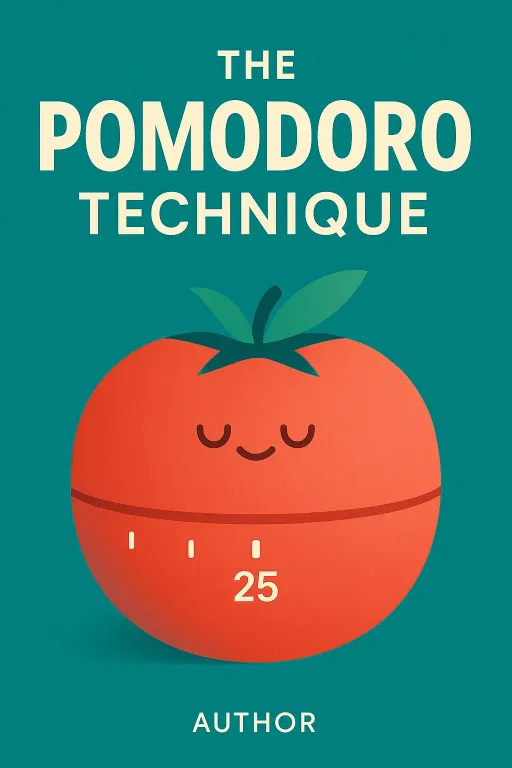
Nova: It is! Cirillo, a software developer in the late 1980s, literally used a tomato-shaped kitchen timer to structure his study sessions, giving birth to the Pomodoro. It’s about managing your attention, not just your time. And Selk, as an elite sports psychologist, brings principles from the highest levels of athletic achievement to everyday planning. It's about bringing intentionality to your day it even begins.
Atlas: So you're saying we’re going from a kitchen timer to a mental playbook from the pros? That sounds like a journey from micro-tactics to macro-strategy.
Nova: Precisely. Let's start with the micro-level, the sharp edge of focus, and dive into the Pomodoro Technique.
The Art of Micro-Focus: Mastering the Pomodoro Technique
SECTION
Nova: The Pomodoro Technique is incredibly simple. You choose a task, set a timer for 25 minutes, work with intense focus until the timer rings, then take a short 5-minute break. After four Pomodoros, you take a longer break.
Atlas: Okay, but 25 minutes? That feels short for deep work. I imagine a lot of our listeners, especially those grappling with complex projects, might feel like they’re just getting into the groove when the timer goes off. What about flow state?
Nova: That’s a common reaction, but here's the genius of it. The 25-minute commitment isn't meant to be the of your work session. It's about creating an for focused effort. It teaches your brain to commit to a short burst, knowing a break is coming. It’s a psychological trick to overcome procrastination and the urge to multitask.
Atlas: So you're saying it's less about the arbitrary number 25, and more about the of a break? Because honestly, the biggest challenge for me, and I bet for many, is how to stop distractions when the phone is right there, buzzing with notifications.
Nova: Exactly! The promise of the break acts as a powerful motivator. But here's the crucial part: during that 25 minutes, you commit to distractions. If an idea pops up, you jot it down on a "distraction log" and get back to the task. It's like building a mental muscle for concentration. The science behind it, like ultradian rhythms, suggests our brains naturally cycle between high-focus and low-focus states every 90 minutes or so. Pomodoro respects that, giving you structured recovery.
Atlas: That makes sense, but… what if I’m in a high-stakes environment, constantly getting pulled in different directions? Like, I can’t just ignore my boss’s email for 25 minutes.
Nova: That’s a valid point, and this is where flexibility comes in. Pomodoro isn't a rigid dogma; it's a framework. You can adapt it. If an urgent interruption truly requires your attention, you "reset" the Pomodoro. The goal is awareness. It helps you identify true interruptions you're getting, which can then inform how you structure your environment or communicate boundaries. It’s about reclaiming agency from the digital quicksand that pulls us in so many directions.
Atlas: "Digital quicksand" – that's a perfect analogy. It feels like we're constantly sinking. This approach sounds like it could be a small anchor, pulling you back to solid ground. I can see how that would help filter signal from noise, giving clarity to an overwhelmed navigator.
Macro-Planning for Peak Performance: The "Organize Tomorrow Today" Framework
SECTION
Nova: Okay, so we've got the micro-focus. But what if you're focusing intensely on the wrong things? That’s where Dr. Jason Selk’s "Organize Tomorrow Today" framework comes in. It’s about proactive, strategic planning.
Atlas: My ears are perking up. "Strategic planning" sounds a lot less overwhelming than just a giant to-do list. What’s the core idea here?
Nova: The core idea is simple, yet profoundly impactful: at the end of each workday, you identify your top five priorities for. That's it. Not your top 50, not a sprawling list of everything you do, but the five most critical, high-impact tasks that will move the needle.
Atlas: Top five? That sounds incredibly disciplined. What if I have 50 things on my plate? How do I choose the five, especially when I'm feeling overwhelmed and everything seems urgent? For someone who feels swamped by options, that selection process could be a new source of anxiety.
Nova: That’s the critical distinction. It’s not just five tasks. Selk, drawing from his work with elite athletes, emphasizes identifying tasks that are "needle movers." These are the tasks that, when completed, have the biggest impact on your goals, your team, or your progress. It forces you to think strategically. It’s about asking: "If I only get these five things done tomorrow, will I feel like I've had a productive day?"
Atlas: So it’s less about checking off boxes and more about strategic wins. That’s a great way to put it. It’s like, instead of just running laps, an athlete focuses on the specific drills that will improve their sprint time for the big race.
Nova: Exactly! It's a mental battle plan for your day. By identifying these five tasks the night before, you're doing two powerful things. First, you're priming your subconscious to start working on solutions overnight. Second, you wake up with absolute clarity, ready to attack the most important work, rather than getting sucked into reactive mode.
Atlas: That makes me wonder, though. What if something truly unexpected comes up during the day that derails one of those five? Life happens.
Nova: And Selk acknowledges that. The five priorities aren't set in stone, but they provide a guiding star. If something truly urgent arises, you re-evaluate. Which of the five can wait? Can one be delegated? It builds a framework for decision-making, rather than leaving you adrift in the chaos. It’s about building sustained progress, not just frantic activity.
Synthesis & Takeaways
SECTION
Nova: So, we have the micro-focus of Pomodoro and the macro-planning of Organize Tomorrow Today. The deep question from our content was: How can you integrate micro-focused work sessions with macro-level strategic planning to optimize both your daily output and long-term goals?
Atlas: This feels like the ultimate productivity power-up. Pomodoro gives you the intense, sustained energy to on tasks, and OTT gives you the absolute clarity on tasks to execute. It’s not just about doing more, it's about doing the things with intense focus.
Nova: Precisely. Imagine going into your Pomodoro session knowing, with absolute certainty, that the task you're about to tackle is one of your top five needle-movers for the day. That's a powerful combination. OTT provides the map and the compass, while Pomodoro provides the engine and the fuel for the journey. It builds momentum, as you said earlier, Atlas.
Atlas: Yeah, it’s about making time count. It's about protecting that learning time, that deep work time, by first knowing what's most important, and then creating the mental space to actually do it. It feels less like a struggle and more like a deliberate design for your day.
Nova: It truly is. It's about moving from reacting to your day to proactively designing it. The clarity from OTT reduces mental clutter, freeing up cognitive resources for the intense focus that Pomodoro demands. It's not just about being productive; it's about being productive.
Atlas: That’s actually really inspiring. This feels like a way to build momentum, not just react to the endless stream of demands. It's about building habits for sustained progress.
Nova: It truly is. So, our tiny step for you today, listeners, is this: for your next complex task, try the Pomodoro Technique. And then, at the end of your workday today, use the "Organize Tomorrow Today" framework to plan your top five priorities for tomorrow. Just try it once.
Atlas: I love that. It’s practical, it’s actionable, and it directly tackles that feeling of overwhelm. What one high-impact task will you tackle tomorrow with this new clarity and focus?
Nova: This is Aibrary. Congratulations on your growth!