Beyond the Battlefield: The Human Cost of Political Decisions
Golden Hook & Introduction
SECTION
Nova: Atlas, if you were a historical dictator, what would your one surprising weakness be?
Atlas: Oh, easy. I'd be undone by a really slow Wi-Fi connection. The sheer frustration would lead to my downfall. My iron fist would simply... clench in futility.
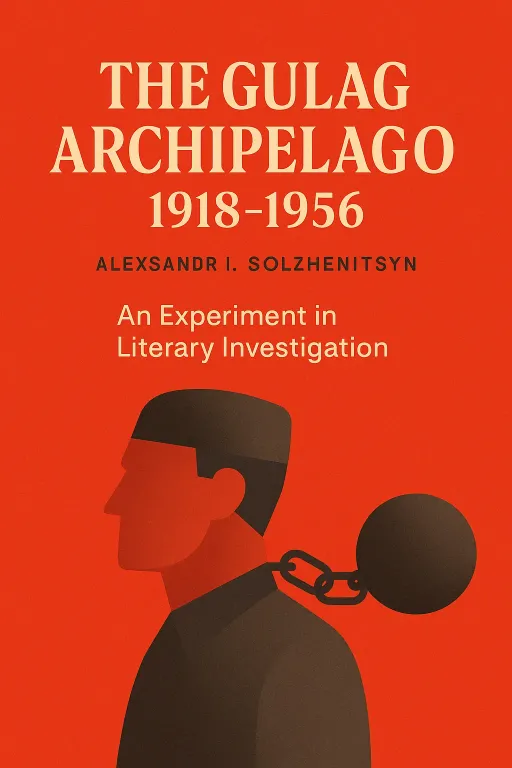
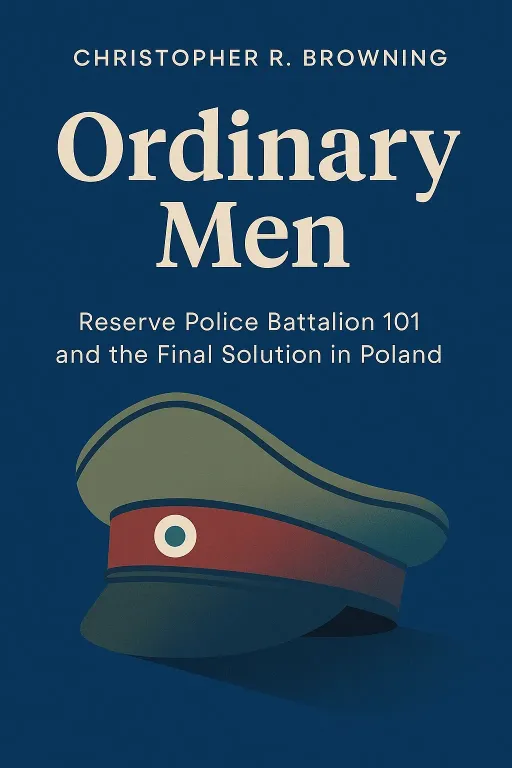
Nova: A very modern tyrant, indeed! But speaking of the less whimsical side of power and its pitfalls, today we're stepping 'Beyond the Battlefield' to really dig into the immense human cost of political decisions. We’re drawing insights from two incredibly powerful works. First, Christopher R. Browning’s 'Ordinary Men,' a book by a historian whose work profoundly changed our understanding of the Holocaust by focusing on the perpetrators' psychology. And then, Aleksandr Solzhenitsyn’s 'The Gulag Archipelago,' a monumental work written by a Nobel laureate who survived the Soviet labor camps, giving an unparalleled first-hand account of systemic oppression.
Atlas: That's a heavy start, but absolutely essential. I mean, we often talk about political strategies and outcomes in abstract terms, but these books force us to look at the faces behind the numbers. So, where do we even begin with such weighty material?
Nova: We start with the uncomfortable truth, Atlas: how 'ordinary men' can become agents of atrocity.
The Fragility of Ethical Boundaries & The Banality of Evil
SECTION
Nova: Christopher Browning's 'Ordinary Men' is a chilling deep dive into Reserve Police Battalion 101, a unit of German men, mostly middle-aged, working-class, and not fanatical Nazis, who became mass murderers during World War II. What's so profoundly disturbing is that these weren't hardened SS officers or ideologues. They were, in many ways, just regular guys.
Atlas: Wait, so you're saying these weren't the caricatures of evil we often see in movies? Not the mustache-twirling villains?
Nova: Exactly. Browning meticulously details how they were given the option to opt-out of killing civilians, particularly Jewish women, children, and elderly. A significant minority did, and faced no repercussions beyond a bit of verbal abuse or being assigned other duties. Yet, the vast majority chose to participate.
Atlas: That sounds rough, but… what pressures were so immense that they would choose that? I mean, surely there's always a line, right?
Nova: That's the core question, isn't it? Browning identifies several psychological mechanisms at play. There was intense peer pressure, the desire not to be seen as a coward by their comrades. There was obedience to authority, the feeling that they were just following orders. There was also the gradual desensitization, where the first killing was horrific, but the hundredth became routine.
Atlas: That makes me wonder, how does something so monstrous become 'routine'? It's like a frog in slowly boiling water, I guess?
Nova: A perfect analogy, Atlas. The water temperature was turned up incrementally. It wasn't a sudden plunge into depravity. They started with deportations, then guarded executions, then direct killings. Each step normalized the next. They developed coping mechanisms, like dehumanizing their victims or compartmentalizing their actions. They were doing their 'job.'
Atlas: Oh, I know that feeling of just trying to get through the workday, but this is on a whole other level. It's almost like the system itself became the villain, making individual choice seem impossible.
Nova: The system was certainly a powerful force, but Browning's work also highlights that choice always existed. Those who refused didn't face severe punishment. Their refusal often came down to a deeply ingrained moral compass, a personal boundary that simply wouldn't bend. It wasn't easy, but it was possible.
Atlas: So basically you’re saying that 'ordinary men' can commit unimaginable horrors because of a cocktail of peer pressure, obedience, and desensitization, but also that individual moral courage, however difficult, is always a possibility?
Nova: Precisely. It challenges our comfortable notion that evil is always 'other.' It forces us to confront the fragility of ethical boundaries within ourselves and in any group dynamic.
The Systemic Cruelty of Political Power & The Resilience of the Human Spirit
SECTION
Nova: And if we look at the other side of that coin, the systems these 'ordinary men' served, we turn to Solzhenitsyn's 'The Gulag Archipelago.' This isn't just a book, it's a monumental act of bearing witness to the systemic cruelty of the Soviet regime. Solzhenitsyn, a Nobel laureate, spent eight years in the Gulag and dedicated his life to documenting the suffering of millions.
Atlas: Wow. Eight years in a labor camp. That gives him an undeniable authority on the subject. I’ve heard the term Gulag, of course, but what does 'systemic cruelty' really mean in that context?
Nova: It means cruelty wasn't an aberration; it was the policy. It was built into the very fabric of the state. Arbitrary arrests were common, often for trivial or imagined offenses. People were tortured into confessing crimes they didn't commit. They were then sent to forced labor camps in Siberia, Arctic regions, or Kazakhstan, where conditions were designed to break the human spirit.
Atlas: That sounds rough, but… how do millions endure something like that? What does it do to the human spirit to be ground down by such a brutal, all-encompassing machine?
Nova: Solzhenitsyn paints an unflinching picture of the dehumanization: starvation, brutal cold, impossible labor, constant surveillance, and the psychological torment of not knowing if you'd live another day. Yet, amidst this unimaginable suffering, he also documents incredible acts of human resilience, solidarity, and defiance. People would share meager rations, recite poetry from memory, or stage small, symbolic acts of resistance.
Atlas: That’s actually really inspiring, that even in the darkest corners of human experience, people find ways to hold onto their humanity. It’s almost like the system tried to erase their individuality, but it couldn't fully succeed.
Nova: Exactly. Solzhenitsyn's work isn't just a catalog of atrocities; it's a testament to the indomitable nature of the human spirit. It shows how even when stripped of everything – dignity, freedom, family – the internal flame of resistance, hope, or simply human connection can persist.
Atlas: I can see how that would be… a powerful counterpoint to Browning's 'ordinary men.' One shows how easily morality can collapse, the other shows how stubbornly humanity can endure.
Nova: It’s a crucial juxtaposition. Browning shows us the active agents of a cruel system, while Solzhenitsyn reveals the victims and their incredible capacity to resist that system, even if only internally. It's a stark reminder that political decisions have profoundly personal, often devastating, consequences.
Synthesis & Takeaways
SECTION
Nova: So, bringing these two powerful narratives together, what emerges is a profound understanding that political decisions are never just about policies or power plays. They ripple through society, affecting individual choices, ethical boundaries, and the very essence of human endurance.
Atlas: That gives me chills. It highlights that 'feeling detached' from political consequences, as our material suggests, isn't just a luxury, it's a dangerous blind spot. So, what's our responsibility then, as individuals today, to these lessons?
Nova: Our responsibility is to cultivate empathy, to remember the individual faces behind the statistics, and to understand that the systems we create or passively accept can have horrifying human costs. It's about recognizing the early warning signs of dehumanization, challenging authority when it demands unethical acts, and fostering environments where moral courage is not just possible, but encouraged.
Atlas: That's such a hopeful way to look at it, Nova. That empathy isn't a weakness, but a powerful foundation for advocating for justice, both for those who suffered and for preventing future suffering.
Nova: Absolutely. These books aren't just historical accounts; they are profound ethical frameworks. They ask us to constantly evaluate our own roles and our collective responsibility in upholding human dignity. What steps can each of us take, however small, to ensure we never forget the human cost of political decisions?
Atlas: That’s a question worth pondering long after this episode ends.
Nova: This is Aibrary. Congratulations on your growth!