Stop Speaking on Autopilot, Start Speaking with Intention: The Guide to Vivid Expression.
Golden Hook & Introduction
SECTION
Nova: Atlas, quick, what's your gut reaction to most people's communication skills today? Don't hold back.
Atlas: Oh, Nova. It's like watching a really slow, unedited documentary about drying paint. With occasional mumbling. And a plot twist that never arrives.
Nova: Exactly! And that's precisely what we're tackling today with a fantastic guide titled, "Stop Speaking on Autopilot, Start Speaking with Intention: The Guide to Vivid Expression." This isn't just another book on public speaking; it really drills down into a profound truth: clear communication isn't merely about good grammar or a big vocabulary. It's about making your thoughts, truly connecting. And so many of us are just... missing it.
The Autopilot Problem & The Call for Intentionality
SECTION
Atlas: Missing it. That's a generous way to put it. I mean, we all talk all day long, right? So what does 'speaking on autopilot' actually like? And what's the big deal if I'm not consciously crafting every single sentence?
Nova: That's the core of the problem, isn't it? It sounds like filler words, vague generalities, hedging language, or just repeating common phrases without really thinking about their impact. Imagine someone trying to explain a new project: "Yeah, so, we're kinda looking at, like, a synergistic approach to, you know, leverage some of the key learnings..." It's a stream of words, but the is hidden.
Atlas: I know that feeling. Sometimes I listen back to myself and cringe a little. It's like my mouth is moving faster than my brain, almost. But why do we do it? Is it just laziness, or is there something deeper?
Nova: It’s rarely laziness. Often, it’s a form of self-protection or a habit we've fallen into. We're rushing, we're uncertain, or we simply haven't been taught to value intentionality in speech. The book highlights that when we speak on autopilot, our unique voice, our genuine perspective, gets hidden. It’s like wearing a generic, ill-fitting outfit when you have a custom-tailored masterpiece in your closet. You miss chances to truly connect, to persuade, to inspire.
Atlas: So, for someone who really cares about self-expression, about personal growth, about making their voice heard and, this 'autopilot' mode must be incredibly frustrating. It's like having something profound to say but only being able to whisper it through a thick fog.
Nova: Precisely. And that's the tragedy of it. Our words become forgettable, our ideas lose their impact, and our connections remain superficial. It's a huge missed opportunity in every conversation, every presentation, every interaction.
Crafting Vivid Expression: Insights from Literary Masters
SECTION
Nova: So, how do we break free from this autopilot trap? How do we start making our thoughts truly shine? The guide points us to some unexpected mentors: literary masters. It draws wisdom from giants like William Zinsser and Anne Lamott, showing us that the craft of vivid writing has direct applications to vivid.
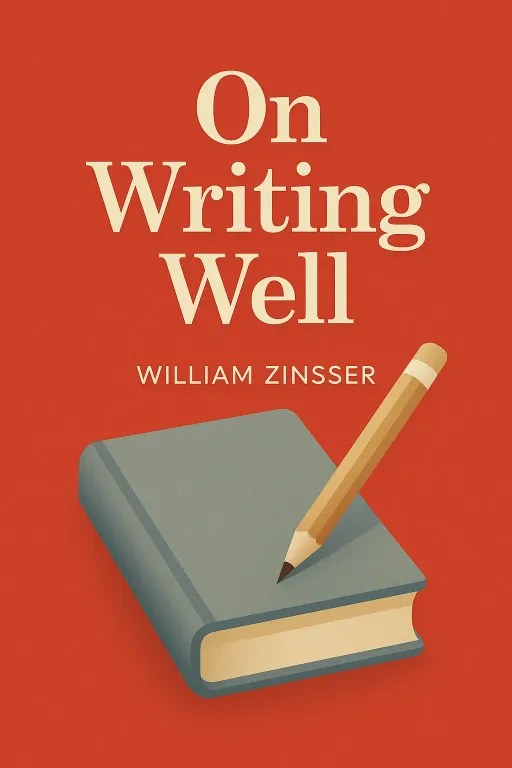
Atlas: Interesting. Writers are known for their precision with words. But how does Zinsser’s advice from "On Writing Well" – a book about – translate to the spoken word? I mean, we don't have an editor for our conversations.
Nova: That's the beauty of it. Zinsser argues for clarity, simplicity, and humanity in communication. He emphasizes cutting clutter and making every word count. In speaking, this means being direct, choosing the most precise verb, eliminating unnecessary adjectives and adverbs. Instead of saying, "I was, like, really, really excited about the incredibly innovative new strategy," you'd simply say, "I was thrilled by the innovative strategy." It's about respecting your listener's time and attention.
Atlas: Okay, so essentially, it's about stripping away the verbal fluff that often fills our sentences. Like, if I'm trying to explain a complex concept at work, I shouldn't try to impress with jargon, but rather simplify, simplify, simplify.
Nova: Exactly. Think of it as verbal minimalism. Every word should earn its place. And then, we have Anne Lamott, whose book "Bird by Bird" encourages finding your voice through honest, specific details. She shows how "small, true observations build into powerful narratives."
Atlas: That makes me wonder, isn't specificity hard in everyday conversation? Like, if I'm just telling a friend about my day, do I need to be as detailed as a novelist? Where's the balance?
Nova: It's not about turning every conversation into a soliloquy. It's about conscious choice. Instead of saying, "I had a busy day," which is generic, you might say, "My day felt like a three-ring circus, juggling client calls, a sudden server crash, and then my dog decided to eat my shoe." See how those specific details create a picture, evoke an emotion? They make your experience real for the listener. Lamott's point is that those "small, true observations" are what resonate deeply. They build connection.
Atlas: That’s a great way to put it. It’s not just about what you say, but you paint the picture with your words. So, Nova's take on all this, which is highlighted in the guide, is that authentic expression comes from stripping away the unnecessary and focusing on the core truth you want to share. It's about intention.
Nova: Absolutely. It's about understanding that every word is a choice, and those choices determine whether your thoughts land with impact or just drift away. It empowers you to be an architect of your own meaning, rather than just a conveyor belt of sounds.
Synthesis & Takeaways
SECTION
Nova: So, what we've really explored today is the journey from unintentional, autopilot speaking to a place of vivid, intentional expression. It's not about being perfect, but about being present and purposeful with your words.
Atlas: And honestly, that sounds incredibly empowering. For anyone who's ever felt like their true message gets lost, or that their unique voice is hidden, this guide offers a clear path. It's about recognizing that language is a tool for connection and self-expression, and we have the power to wield it with precision.
Nova: Precisely. And the best part? You can start today. The guide gives us a tiny, yet powerful, step: "Tomorrow, choose one conversation and consciously try to use fewer words to make your point, focusing on clarity."
Atlas: Oh, I love that! It's so simple, but I can already feel the mental muscles flexing. Just one conversation, fewer words, more clarity. It's like a mini-challenge for intentionality.
Nova: It is. And it’s those tiny, consistent efforts that build the muscle of vivid expression. It shifts your mindset from just talking to truly communicating.
Atlas: That’s actually really inspiring. I’m going to take that challenge to heart.
Nova: Fantastic. Because when you choose intention over autopilot, you don't just speak better; you connect deeper, and you allow your truly unique voice to shine.
Atlas: Well said, Nova.
Nova: This is Aibrary. Congratulations on your growth!