Stop Speaking in Circles, Start Communicating Clearly: The Guide to Impactful Expression.
Golden Hook & Introduction
SECTION
Nova: What if the biggest obstacle to your influence isn't what you don't say, but everything you do say that's unnecessary?
Atlas: Whoa, Nova. That's a bold claim right out of the gate. Are you saying all my carefully chosen words are actually getting in my own way? Because honestly, I strive for precision. I want to convey my exact meaning every single time.
Nova: Exactly, Atlas. And that pursuit of precision is precisely what we're talking about today. We’re diving into the guide to impactful expression, "Stop Speaking in Circles, Start Communicating Clearly." This isn't just about being understood; it's about optimizing your impact. And to truly unlock that, we're drawing wisdom from two foundational texts that have shaped generations of clear thinkers.
Atlas: Okay, so we're talking about the deep cuts, the classics. Which ones are we pulling from today to help us cut through the noise?
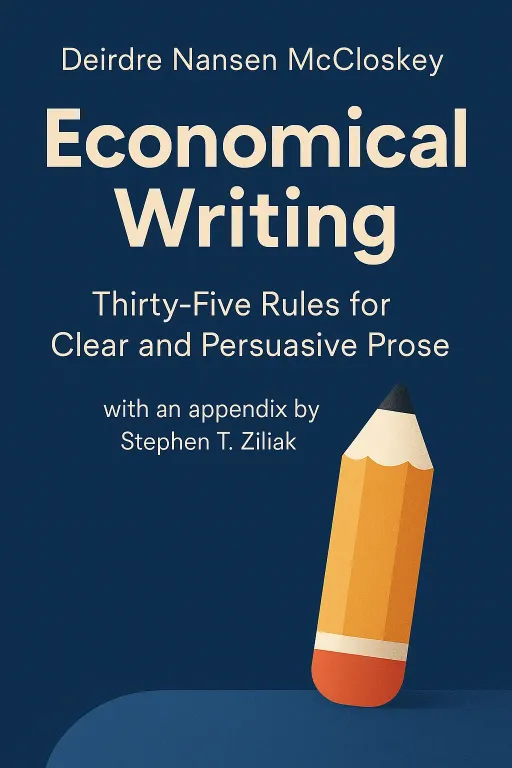
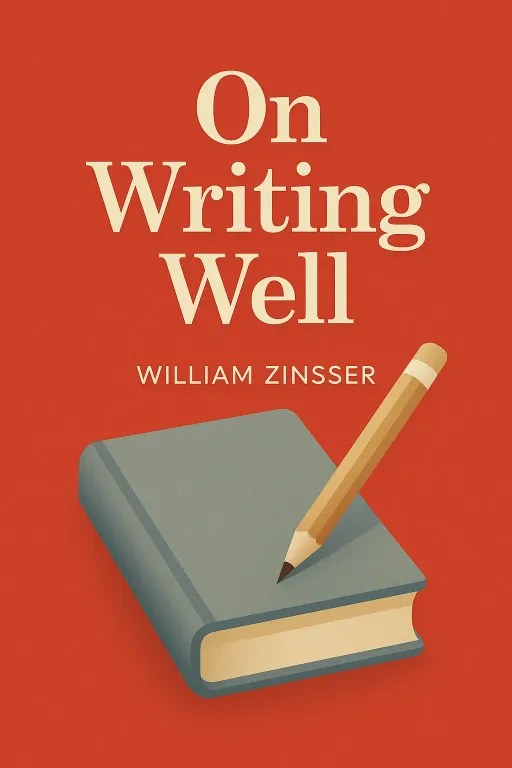
Nova: We're looking at the timeless insights of William Zinsser’s and Strunk & White’s. Zinsser, a former Yale professor and celebrated journalist, wasn't just teaching writing; he was teaching a philosophy of clarity through diligent editing. He believed good writing was a craft, honed by cutting away the superfluous. And Strunk & White, well, their book, expanded by the inimitable E. B. White, is often required reading in universities, a truly elegant and concise manual for precision.
Atlas: So, these aren't just academic exercises then. They're practical guides for anyone who cares about being understood, especially for professionals who need to connect globally and make their messages resonate. How do these seemingly academic texts translate to real-world impact for someone like that?
Nova: They translate directly, Atlas, by giving us both the philosophy and the mechanics. Let's start with Zinsser, who gives us the courage to make significant cuts.
The Zen of Brevity: Zinsser's Art of Self-Editing
SECTION
Nova: Zinsser’s core idea, the one that resonates so deeply, is this: "Clutter is the disease of American writing." He champions simplicity and brevity. He argues that good writing takes work, demanding constant self-editing to remove clutter and find the exact word.
Atlas: Clutter as a disease? I mean, I can definitely relate to feeling overwhelmed by information. But how do you even start identifying 'clutter' when you're in the thick of writing? It feels like every word is essential when you're putting your thoughts down. And isn't there a fear of sounding simplistic or, dare I say, dumbing down complex ideas if you cut too much?
Nova: That's the tension, isn't it? The fear that brevity equals shallowness. But Zinsser would argue the opposite: brevity is precision. It's about respecting your audience's time and intelligence. Think of our hypothetical project manager, let's call her Sarah. She was struggling. Her reports were dense, paragraphs stretching for pages, full of corporate jargon and passive voice. Deadlines were missed, teams were confused, and client communication felt like wading through mud.
Atlas: Oh, I know that feeling. The meeting after the meeting to clarify what the original meeting was about because the pre-read was impenetrable.
Nova: Exactly. Sarah realized she was speaking in circles. She started applying Zinsser's principle: ruthlessly cut 20 to 30 percent of her words. It began with simple things—stripping out unnecessary adverbs like 'very' or 'really,' replacing weak verbs like 'is' or 'was' with stronger, more active ones. She also learned to identify redundant phrases, those word pairs that say the same thing twice.
Atlas: So basically, she became a word surgeon. What was the impact? Because for professionals, time is money, and clarity is currency.
Nova: The impact was transformative. Her reports became concise, actionable bullet points. Team members understood their tasks instantly. Client communication, once a source of friction, became a clear, direct exchange. What she realized was that removing clutter wasn't about dumbing down; it was about sharpening her message. It made her sound more authoritative, more confident. The emotional relief of being understood, and the professional respect she gained, were immense. It showed her that less truly is more, especially when you're aiming for precision and impact.
Atlas: That's actually really inspiring. So it's not just about grammar; it's about a mindset, a discipline. But Zinsser focuses on the cutting, the subtraction. What about the building blocks, the foundational architecture of clear language?
Nova: And that naturally leads us to the second key idea we need to talk about, which often acts as a counterpoint to what we just discussed. While Zinsser teaches us to cut, Strunk and White give us the blueprint for what's left behind – the foundational architecture.
The Unbreakable Foundation: Strunk & White's Rules for Precision
SECTION
Nova: Strunk & White’s is all about those fundamental rules of usage and composition. They emphasize that precise language isn't just about avoiding grammatical errors; it's about building a robust framework for your thoughts, ensuring your message stands strong against misunderstanding.
Atlas: Okay, but wait, aren't rules a bit stifling for creativity? I mean, we're not all writing academic papers or formal essays. For a global connector, for instance, there's already so much nuance in cross-cultural communication. Does adhering to rigid rules really help, or does it just add another layer of complexity?
Nova: That’s a fair question, Atlas. It's not about stifling creativity; it's about providing a shared understanding. Think of it like this: if you're building a bridge for your ideas to cross, you need strong abutments and a clear span. Strunk & White provide those engineering principles. Take the example of a multinational tech company with teams spread across different continents. They were constantly running into misinterpretations in their written project specifications, leading to costly reworks and delays.
Atlas: Oh man, I know that feeling. Misplaced commas or unclear pronouns can lead to entirely different interpretations, especially when English isn't everyone's first language.
Nova: Exactly. In one instance, a critical feature was misinterpreted because of an awkwardly placed modifier, leading to an entirely different user interface being developed. The team leader, realizing the need for a common standard beyond just 'good enough' English, introduced Strunk & White's principles. Simple things like ensuring subject and verb agree, using active voice to clarify responsibility, or avoiding ambiguous pronouns.
Atlas: So, it became less about 'being correct' and more about 'being clear' for everyone, regardless of their native language?
Nova: Precisely. They started actively applying rules like "Place the emphatic words of a sentence at the end." Or "Use the active voice." They realized that these weren't just stylistic preferences; they were tools for preventing ambiguity. By focusing on these fundamental rules, they built a common linguistic ground. The team's written communication became dramatically clearer, reducing errors, accelerating project timelines, and fostering a much stronger sense of global connection and understanding. It liberates your thoughts when the structure is sound.
Atlas: That makes sense. It’s like, you can be creative within the confines of solid architecture, and that strength actually allows for more daring designs. So Zinsser teaches us to prune, and Strunk & White teach us to build correctly.
Synthesis & Takeaways
SECTION
Nova: Absolutely, Atlas. It's the dynamic interplay between ruthless subtraction and robust construction that creates truly clear, impactful communication. Zinsser gives us the courage to strip away anything that doesn't serve our core message, making it lean and powerful. Strunk & White provide the blueprint for what remains, ensuring every word, every sentence, every paragraph is structurally sound and unambiguously clear.
Atlas: So it's about finding the exact words, building the right structure, and then having the courage to strip away anything that doesn't serve that purpose. That's going to resonate with anyone who struggles with getting their message across in a high-stakes environment.
Nova: And the beauty is, when you do that, you're not just communicating clearly; you're showing respect for your audience's time and intelligence, which builds trust and connection. You're demonstrating that your thoughts are valuable, and you've taken the time to present them in the most effective way possible.
Atlas: That's a powerful way to frame it. So, what's a tiny step our listeners can take right now to start applying these principles? Because I’m thinking about all those emails I sent this morning.
Nova: Here’s your tiny step, straight from the heart of impactful expression: Take any recent email you sent and try to cut 20% of its words without losing meaning. Just pick one. See how much clearer it becomes.
Atlas: Oh, I love that. It’s tangible. And when you do that, you're not just communicating concisely; you're thinking more clearly. This isn't just about writing; it's about thinking precisely, and that's a muscle we can all build.
Nova: It is, Atlas. And it’s a muscle that pays dividends in every interaction, every connection, every impact you want to make.
Atlas: This is Aibrary. Congratulations on your growth!