Mastering the Art of Feature Writing
Golden Hook & Introduction
SECTION
Nova: Atlas, I was today years old when I realized that the best feature writing doesn't just inform; it actually transports you, it transforms you, like a mini-documentary for your mind.
Atlas: Oh, I like that! A mini-documentary for your mind. So, we're not just talking about reporting facts, are we? We're talking about something deeper, something that sticks with you.
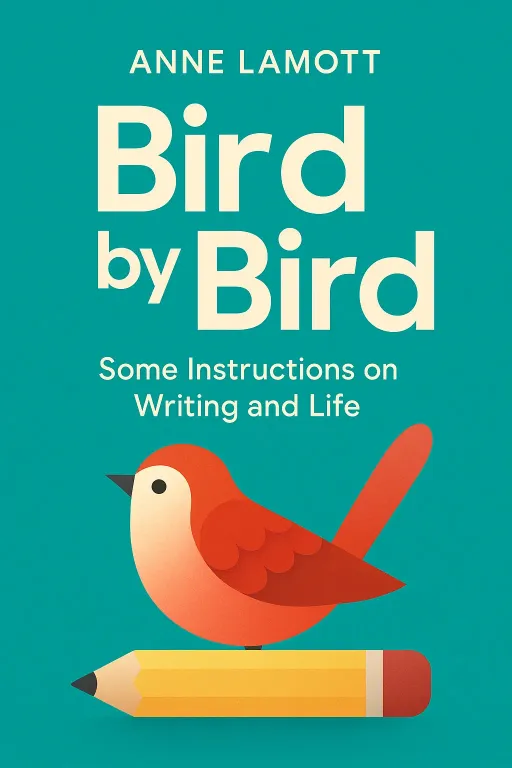
Nova: Exactly! And today, we're diving into the art of making that happen, drawing insights from two absolute titans: Anne Lamott's "Bird by Bird" and William Zinsser's "On Writing Well."
Atlas: Ah, the classics! Zinsser, especially, is practically required reading for anyone serious about non-fiction. He really hammered home the idea of clarity and simplicity, which sounds straightforward, but is deceptively difficult to achieve.
Nova: It truly is. And Lamott, with her incredible wit and raw honesty, offers such a refreshing, almost therapeutic take on the often torturous writing process itself. What’s fascinating about Lamott is her background as a single mother who found her voice through embracing imperfection and humor, which resonates so deeply in her advice. Her book came out of her own struggles and triumphs with the blank page, making it incredibly relatable.
Atlas: I can definitely relate to the torturous part. And for someone like me, who values analytical rigor and uncovering hidden truths, the idea of "feature writing" often feels like it needs to balance that with something more… human. How do we take that methodical approach and infuse it with emotional resonance? Because that's the real trick, isn't it?
Nova: That is the trick, and it's precisely what these authors help us unlock. It's about transcending mere reporting to craft an immersive experience that reveals deeper truths.
The Craft of Deep-Dive Storytelling
SECTION
Nova: So, let's start with Anne Lamott and "Bird by Bird." Her core message, often delivered with a self-deprecating laugh, is really about perseverance and authenticity. She famously talks about "shitty first drafts."
Atlas: Oh, I've heard about the "shitty first drafts"! I mean, honestly, that's such a liberating concept. For someone who tends to overthink and self-censor, the idea that the first pass is to be imperfect is a game-changer. It almost gives you permission to just… start.
Nova: It absolutely does. She recounts this story of her brother, who at ten years old, had a massive report on birds due the next day. He was paralyzed by the enormity of the task. His father, a writer himself, simply told him, "Bird by bird, buddy. Just take it bird by bird."
Atlas: Wow, whoa. That’s such a simple, yet profound, piece of advice. Because when you’re looking at a huge, complex story—like an investigative piece or a deeply analytical feature—it can feel utterly overwhelming. You’re trying to uncover hidden truths, but where do you even begin?
Nova: Exactly. Lamott extends this beyond just physically writing. It's about breaking down any daunting task into manageable, tiny steps. For feature writing, this means not trying to capture the entire grand narrative in one go. It means focusing on one character, one scene, one observation at a time. It’s about building a narrative, not excavating a monolith.
Atlas: So you're saying, for someone like me who’s used to dissecting data and building complex systems, instead of trying to map out the entire narrative arc from the start, I should just pick one compelling data point, or one striking quote, and build outward from there?
Nova: Precisely. Think of it as constructing a digital architecture. You don't build the entire server farm at once; you design each component, ensure it works, and then integrate it. Lamott teaches us that the creative process is iterative, messy, and deeply human. It's about trusting that if you show up, bird by bird, the story will eventually reveal itself. It's about overcoming that initial paralysis.
Atlas: That makes sense, especially for those of us who tend to get stuck in analysis paralysis. But isn’t there a risk that if you just go "bird by bird," you lose sight of the bigger picture, the overarching truth you're trying to convey?
Nova: That’s where Zinsser comes in. While Lamott frees us to, Zinsser guides us to and. "On Writing Well" is a classic for a reason. Zinsser, a renowned journalist and editor, emphasizes clarity, simplicity, and finding your authentic voice. He argues that good non-fiction writing is about stripping away clutter, making every word count.
Atlas: Ah, the minimalist approach. I can definitely appreciate that, especially in a world overflowing with information. If feature writing is about deep understanding, then clarity is paramount. You can uncover all the truths you want, but if you can’t communicate them simply, they might as well stay hidden.
Nova: He pushes writers to challenge every word, every sentence. Is it necessary? Is it the word? He famously said, "Clutter is the disease of American writing. We are a society strangling in unnecessary words, circular constructions, pompous frills and meaningless jargon."
Atlas: Oh, I've been there! Especially when trying to explain complex technical concepts. It's so easy to fall into jargon. So, Zinsser's advice would be to essentially translate that analytical rigor into plain English, without losing the depth?
Nova: Exactly. He’s not saying simplify the, but simplify the. He encourages writers to think about their audience and write for them, not for themselves or other academics. He talks about finding your authentic voice, which isn't some grand, performative style, but simply the natural way you'd speak if you were explaining something clearly to a friend.
Atlas: That’s a great way to put it: "the natural way you'd speak." Because I imagine a lot of our listeners, especially those deeply involved in ethical storytelling and shaping public discourse, want to be impactful. And impact often comes from being understood, not from sounding overly intellectual.
Nova: Furthermore, Zinsser really emphasizes the importance of rhythm and sound in writing. He believed that good prose should have a natural cadence, almost like music. It's not just about what you say, but how it sounds when read, even silently. This is crucial for engaging readers and drawing them into your narrative. He saw writing as a craft, like carpentry, where every joint needs to be perfectly fitted.
Atlas: So, while Lamott helps us overcome the fear of the blank page and get the raw material down, Zinsser comes in to help us sculpt that raw material into something elegant, precise, and impactful. It’s almost like two sides of the same coin: permission to be messy, then a demand for precision. And both are essential for crafting those compelling, in-depth narratives we're aiming for.
Your Narrative Polish
SECTION
Nova: And this brings us back to our listener, the inquisitive analyst, the ethical storyteller. You seek deep understanding, you possess analytical rigor, and you're driven by impact. So, how do we bridge these two giants of writing advice with your unique strengths?
Atlas: That’s the deep question, isn't it? How do I take my methodical approach to uncovering truth and infuse it with elegant prose and insightful observation to create something both deeply informative and emotionally resonant? Because it's easy to be one or the other, but combining them, that's the real challenge.
Nova: It truly is. Our first "tiny step" recommendation is to dedicate 15 minutes each day to free writing on a topic you're passionate about. The key here, following Lamott, is to focus solely on expressing your thoughts without self-censorship. Don't edit, don't judge, just write.
Atlas: So, it's about building that "muscle" of just getting words on the page, without the pressure of perfection. I can see how that would help overcome the initial hurdle, almost like a warm-up exercise for the brain.
Nova: Exactly. It's about trusting your unique voice, as we discussed earlier. Your perspective matters, it's needed. And for someone who wants to navigate the future of media responsibly, practicing this kind of authentic expression, even in small pieces, builds that crucial muscle.
Atlas: And then, once that muscle is built, we apply Zinsser's surgical precision to it. We take those raw, authentic thoughts and sculpt them into clear, compelling narratives. It’s about merging the passion and perseverance with the clarity and impact.
Nova: It's about finding that sweet spot where your analytical rigor meets your ethical storytelling. Where the hidden truths you uncover are presented not just as facts, but as immersive experiences that resonate deeply with your audience. Think of it as constructing a narrative that is both structurally sound and emotionally captivating.
Atlas: So, the goal isn't just to report happened, but to reveal it matters, and it feels. For someone looking to master investigative reporting and navigate AI & communication ethics, this blend of deep analysis and compelling narrative is absolutely essential. It’s how we shape public discourse responsibly.
Synthesis & Takeaways
SECTION
Nova: So, what we've learned from Lamott and Zinsser, and what we want to impart, is that feature writing mastery isn't a single skill; it's a dynamic interplay. It's the courage to put down the "shitty first draft," bird by bird, no matter how daunting the story, combined with the discipline to then strip away every unnecessary word, every piece of jargon, until only the purest, most authentic voice remains.
Atlas: That's actually really inspiring. It means that the analytical mind, which seeks to understand and dissect, can also be the one that crafts the most beautiful and impactful stories. It's not about choosing between rigor and resonance; it's about integrating them. It’s about taking those deep dives and making them accessible, vivid, and truly transformative for the reader.
Nova: Precisely. The impact of a well-crafted feature piece can be profound, shaping public opinion, revealing systemic injustices, or simply offering a new lens through which to view the world. It’s a powerful tool for change, and it starts with those small, brave steps of writing, followed by the meticulous refinement.
Atlas: So, for our listeners, the challenge is to embrace both the messy initial creation and the rigorous refinement. To trust their unique voice, build that daily writing muscle, and then apply that surgical precision to ensure their message is not just heard, but deeply felt and understood. It’s about continuous growth, both in courage and in craft.
Nova: This is Aibrary. Congratulations on your growth!