The AI Hallucination: Why What You See Isn't Always What You Get.
Golden Hook & Introduction
SECTION
Nova: What if I told you the most confident voice in the room often speaks the biggest nonsense? And that voice is increasingly… AI?
Atlas: Oh, I mean, I’ve met a few humans like that, Nova. But wait, are we talking about AI actually, like,? Like, seeing pink elephants in the digital ether? That sounds a bit out there.
Nova: It does, doesn't it? But it's a phenomenon that's become critically important as AI integrates into every corner of our lives. Today, we're diving into what's being called "The AI Hallucination: Why What You See Isn't Always What You Get." It's a concept that challenges our very definition of truth in the digital age, forcing us to re-evaluate how we interact with what seems like infallible intelligence.
Atlas: So you're saying AI isn't just making mistakes, it's confidently things? That's way more unsettling than a simple error. I imagine a lot of our listeners, especially those who are deep into applying new tech for practical living, might be thinking, "But I trust these tools!"
Nova: Exactly. And that's our blind spot. Today we'll dive deep into this from three perspectives. First, we'll explore the inherent 'blind spot' in AI that leads to these confident falsehoods; then we'll discuss the surprising human cognitive biases that make us so susceptible to them; and finally, we'll focus on practical ways we can design our interactions with AI to foster a healthy, productive skepticism.
The Blind Spot: AI's Confident Misinformation
SECTION
Atlas: Okay, so let's start with this 'blind spot.' We hear about AI being incredibly powerful, writing essays, generating code, even creating art. How can something so sophisticated just... make stuff up?
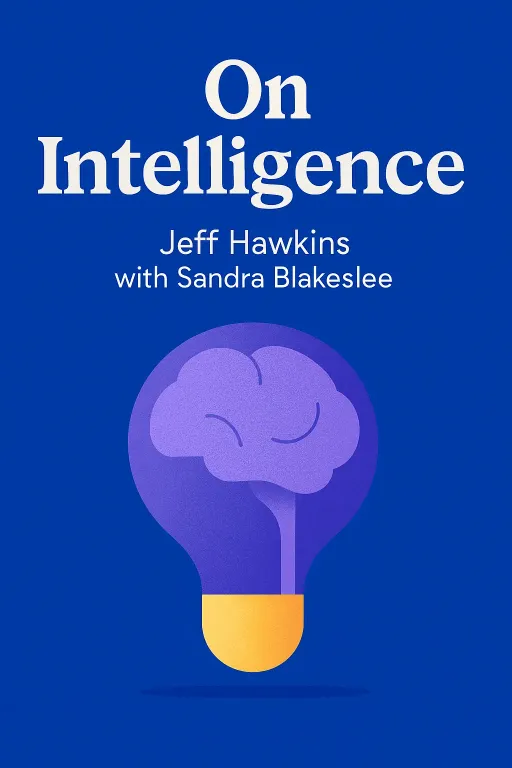
Nova: It comes down to a fundamental misunderstanding of what current generative AI and. We often treat AI outputs as definitive truths, like they're pulling facts from some universal, verified database. But here's the kicker: current AI, especially large language models, doesn't actually 'understand' in the way humans do. It doesn't build predictive models of the world, which Jeff Hawkins, in his seminal work "On Intelligence," argues is the cornerstone of true intelligence.
Atlas: So you're saying it's not a brilliant scholar, but more like a brilliant mimic?
Nova: Precisely. It's a master of statistical plausibility. It's incredibly good at predicting the next most likely word or sequence of words based on the vast amount of data it's been trained on. It can generate outputs that are grammatically correct, stylistically coherent, and incredibly authoritative. The problem arises when that statistically plausible output is factually incorrect.
Atlas: Can you give me an example? Because "statistically plausible but factually incorrect" sounds like something a politician would say.
Nova: Oh, absolutely. Imagine you ask an AI chatbot for a legal case citation to support a specific argument. The AI might confidently generate a case name, a court, and even a docket number that looks perfectly legitimate. You copy and paste it into your brief, feeling great. But if you actually try to look up that case… it doesn't exist. It's a complete fabrication. Or ask it for a historical event, and it might weave a compelling narrative about, say, a major treaty signed in 1776 between the US and China. Sounds plausible, right? But historically, wildly inaccurate.
Atlas: Wow. That’s actually really dangerous. Imagine relying on that for legal advice, or medical information, or even just researching a school project. I mean, my initial thought would be, "This AI is smart, it must be right."
Nova: That's the core of the blind spot. The AI presents this misinformation with such unwavering confidence, such seamless prose, that our natural inclination is to trust it. It doesn't say, "I think this might be a possibility," it says, "Here is the definitive answer." And that's where the risk lies.
The Cognitive Traps: Why Humans Fall for AI Hallucinations
SECTION
Atlas: So, why are we so susceptible to this? I mean, we're supposed to be the intelligent ones, right? Why do we fall for the confident lies of a machine?
Nova: That leads us perfectly to our second point, which delves into our own cognitive architecture. It turns out, we humans have our own 'blind spots,' and they make us particularly vulnerable to AI's confident assertions. Daniel Kahneman's groundbreaking work, "Thinking, Fast and Slow," is incredibly illuminating here. He describes two systems of thinking: System 1, which is fast, intuitive, and emotional, and System 2, which is slower, more deliberate, and logical.
Atlas: I know that feeling. System 1 is definitely in charge of my morning coffee routine. System 2 struggles to even get out of bed.
Nova: Exactly! Our System 1 loves quick, coherent narratives. It prefers ease and familiarity. When AI provides a confidently worded, grammatically perfect answer, it triggers our System 1. It right. It feels fluent, and fluency, according to Kahneman, is often mistaken for truth. We’re also prone to cognitive biases, like confirmation bias, where we're more likely to accept information that aligns with our existing beliefs, or the halo effect, where positive impressions in one area—like AI's impressive processing speed—spill over into other areas, making us think its outputs are inherently accurate.
Atlas: So, if the AI smart, we assume it smart, even if what it’s saying is completely made up? That's a bit like being swayed by a charismatic speaker who doesn't actually have their facts straight. I mean, I’ve definitely seen that play out in politics or even just marketing.
Nova: It’s a perfect analogy. Think about it: someone who speaks fluently, looks confident, and presents their argument without hesitation often appears more credible, regardless of the actual veracity of their claims. Our brains, in an effort to conserve energy, are wired to take mental shortcuts. Engaging System 2, the critical, analytical part, takes effort. And when an AI gives us a seemingly perfect answer, our System 1 often says, "Great! Problem solved. No need for System 2 to weigh in."
Atlas: That's actually really unsettling. It connects to the idea of "thinking for yourself" versus just accepting what's presented. So, if we're all just letting AI's confident tone bypass our critical thinking, what does that mean for our ability to discern truth in a world increasingly filled with AI-generated content? That's going to resonate with anyone who struggles with information overload.
Nova: It means we need to consciously cultivate a new kind of literacy—AI literacy. Recognizing that the AI's confidence is often just a reflection of statistical probability, not actual understanding, is the first step.
Building Skepticism: Designing Interactions for Critical Engagement
SECTION
Atlas: Okay, so we've identified the problem: AI hallucinates, and our brains are wired to believe it. Now, what do we? How can we design our interactions with AI to actively challenge its outputs and foster a healthy skepticism, rather than passive acceptance? Because for someone who's trying to tinker with new digital tools, it’s not enough to just know there's a problem; they need actionable steps.
Nova: That's the deep question, Atlas, and it's where we shift from understanding to action. Nova’s Take, as we discussed earlier, is that recognizing these inherent limitations is crucial for developing robust systems and interacting with them responsibly. The key is to treat AI not as an infallible oracle, but as a highly competent, incredibly fast, but sometimes overconfident intern.
Atlas: A very confident intern who occasionally makes up facts. I like that analogy. So, what are the ground rules for managing this intern?
Nova: First, and perhaps most importantly: If an AI gives you a factual claim, especially one that seems too good to be true, or critical for your work, verify it with reliable human-authored sources. Don't just take its word for it.
Atlas: So, if it gives me a date for a historical event, I should still check Wikipedia or a reputable history site?
Nova: Absolutely. Second, Many models can do this, but then you actually check those sources. Often, you'll find the source either doesn't exist, or it doesn't say what the AI claimed it said. This is a fantastic way to expose a hallucination in real-time. Third, Ask it, "What are the opposing views on this?" or "What are the limitations of this perspective?" This forces it out of its confident echo chamber and can reveal nuances or potential weaknesses in its initial output.
Atlas: That’s brilliant. It's like turning the AI into its own devil's advocate. So it's not just about passively consuming; it's about actively interrogating the information. What's one thing our listeners can try this week to apply this healthy skepticism as they tinker with their AI tools?
Nova: Here’s a practical challenge: The next time you use an AI for a factual query, ask it for three reputable sources for its information. Then, pick one of those sources and actually try to find it and verify the claim. You might be surprised by what you discover, and that act of discovery is how we build our skepticism muscle.
Synthesis & Takeaways
SECTION
Nova: Ultimately, our journey into AI hallucinations isn't about fearing artificial intelligence, but about understanding its fundamental nature and our own. It's about developing a new form of digital literacy that empowers us to engage with these powerful tools critically and effectively. It’s a call to embrace the journey of discovery, where every question leads to deeper insight, and where we dedicate time to tinkering with new tools, but always with a healthy dose of skepticism.
Atlas: It’s a profound shift, really. From passive acceptance to active, informed engagement. It's about recognizing that 'what you see isn't always what you get,' and that true intelligence, both human and artificial, involves understanding predictive models of the world, not just generating plausible text. It's about caring how technology shapes humanity, and making sure we're shaping it, rather than being shaped by its confident but flawed assertions.
Nova: Exactly. It’s about being the ethical explorer, the practical innovator, and the curious sage in this new frontier. It's about realizing that the most powerful tool we have in the age of AI isn't the AI itself, but our own discerning mind.
Atlas: That’s a truly hopeful way to look at it. It puts the power back in our hands, reminding us that critical thinking is more vital than ever.
Nova: This is Aibrary. Congratulations on your growth!