Unseen Forces: How Human Nature Shapes Markets and Decisions.
Golden Hook & Introduction
SECTION
Nova: Okay, Atlas, quick game. I say a word, you hit me with the first thing that comes to mind, no overthinking.
Atlas: You're on. Bring it. This sounds like my kind of intellectual improv.
Nova: Excellent. First word: "Market."
Atlas: Ooh, market. Uh... chaos? Order? Both? Definitely both.
Nova: Good. Next: "Decision."
Atlas: Decision... regret? Opportunity? The moment you realize you bought too many bananas.
Nova: Exactly! And finally: "Human."
Atlas: Human. Flawed. Brilliant. Predictable. Irresistible. All of the above, often at the same time.
Nova: Flawed, brilliant, predictable, irresistible. Atlas, those words are actually perfect for what we're unraveling today. We’re diving into a fascinating concept, spurred on by the book "Unseen Forces," which draws heavily from two foundational texts that utterly revolutionized how we think about human behavior, economics, and decision-making.
Atlas: Oh, I'm intrigued. What are we talking about?
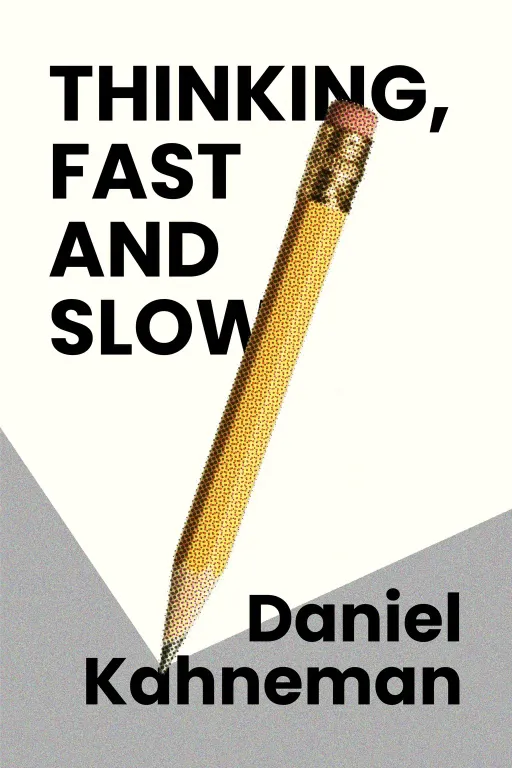
Nova: We're talking about "Thinking, Fast and Slow" by the legendary Daniel Kahneman, and "Nudge" by Richard H. Thaler and Cass R. Sunstein. What's truly remarkable about Kahneman is that he’s a psychologist who won the Nobel Memorial Prize in Economic Sciences. That's not a common occurrence. It shows just how profoundly he shifted the entire field by proving that economics isn't just about rational actors and supply-demand curves, but about the messy, fascinating psychology of people.
Atlas: A psychologist winning an economics Nobel? That's definitely not what you learn in Econ 101. It immediately tells me we're going to challenge some fundamental assumptions today. I'm all ears.
The Blind Spot of Rationality: Unpacking Cognitive Biases
SECTION
Nova: Exactly. And that brings us to our first core idea: "The Blind Spot of Rationality." For a long time, economic models were built on the assumption that humans are purely rational beings, always making logical decisions to maximize their self-interest. But Kahneman, with his partner Amos Tversky, showed us that we have a massive blind spot when it comes to our own decision-making.
Atlas: So, you're telling me that the idea of the perfectly rational consumer, the "homo economicus," is largely a myth? That’s going to resonate with anyone who’s impulse-bought something they didn’t need, myself included.
Nova: Absolutely. Kahneman introduces us to two systems of thinking: System 1 and System 2. Think of System 1 as your intuition—fast, automatic, emotional, and often unconscious. It's what allows you to recognize a friend's face instantly or slam on the brakes without thinking. System 2, on the other hand, is slow, deliberate, analytical, and requires effort. It's what you use to solve a complex math problem or plan a detailed itinerary.
Atlas: So, are you saying our brains are kind of lazy sometimes, preferring the easy System 1 route? Because that sounds really familiar.
Nova: They often are! And while System 1 is incredibly efficient, it's also prone to systematic errors, which Kahneman and Tversky termed "cognitive biases." These aren't random mistakes; they're predictable patterns of irrationality.
Atlas: Give me an example. Like, how does this play out in the wild?
Nova: Let's talk about the Anchoring Effect. Imagine you're at a market, and a vendor is selling a scarf. They initially price it at $100, which you think is high. Then they "generously" offer it to you for $50. Now, $50 might still be more than the scarf is worth, but because your System 1 anchored onto that initial $100, $50 suddenly feels like a bargain.
Atlas: Oh, I've definitely fallen for that. You get so focused on the discount from the initial high number, you forget to evaluate the actual value. So, the initial, often arbitrary, number completely skews our perception of what's fair or reasonable?
Nova: Precisely. Your System 1 latches onto the anchor, and your System 2 then tries to justify it, making slight adjustments rather than re-evaluating from scratch. This plays out everywhere, from salary negotiations to real estate prices. The first number mentioned, even if arbitrary, has an outsized influence on the final outcome.
Atlas: That makes me wonder, how much of our "free will" is actually just System 1 on autopilot, being unconsciously guided by these anchors? For our listeners managing high-pressure teams or making big business decisions, this must be huge. Where in your business strategy are you currently assuming purely rational behavior, Nova, and how might understanding human biases change your approach?
Nova: That’s the deep question, isn’t it? It forces us to acknowledge that our customers, our employees, and even we ourselves are not purely logical machines. Ignoring these biases means missing massive opportunities—or falling prey to them. It means that the way you frame a proposal, the initial price you suggest, or even the order in which you present options can profoundly impact the outcome, often more than the intrinsic value of the offering itself.
The Power of Nudges: Designing Better Choices
SECTION
Atlas: So if our brains are so prone to these shortcuts, these predictable irrationalities, is there a way to, I don't know, them for good? Can we use this knowledge to help people make better choices, rather than just exploiting their biases?
Nova: Absolutely! And that’s where our second core topic, "The Power of Nudges," comes in, drawing from Thaler and Sunstein's groundbreaking work. If Kahneman showed us how predictably irrational we are, Thaler and Sunstein show us how to work with that irrationality. They introduced the concept of "choice architecture"—the idea that the way choices are presented can subtly influence decisions without restricting people's freedom.
Atlas: Choice architecture. So it's not about forcing people, but about making the best choice the easiest choice? That sounds incredibly powerful, and also a bit... delicate.
Nova: Exactly. A classic example is retirement savings. Traditionally, people had to actively "opt-in" to a 401 plan. Despite clear benefits, many wouldn't sign up due to inertia or the perceived effort. Thaler and Sunstein's insight was to make the default "opt-out." So, new employees are automatically enrolled, but they have the freedom to opt out if they wish.
Atlas: Wait, so just changing the default from opt-in to opt-out dramatically increases participation? That's incredible. It’s like, our System 1 just goes with the flow, and System 2 is too busy to bother changing it unless there's a strong reason.
Nova: Precisely. The results were astounding. Participation rates soared. It’s not coercion; people can still choose not to save. But the subtle nudge of the default setting leverages our natural tendency towards inertia and makes the beneficial choice the path of least resistance.
Atlas: That gives me chills. On one hand, it's incredibly effective for things like organ donation or saving for the future. On the other, isn't that a bit manipulative? Where's the line between a helpful nudge and outright manipulation, or what some might call "dark patterns" in business?
Nova: That's a crucial distinction, Atlas, and it's something Thaler and Sunstein wrestled with. A true nudge, in their definition, must preserve freedom of choice. It doesn't restrict options or impose significant costs on choosing differently. The "dark patterns" you mention, like making it deliberately hard to cancel a subscription, are manipulative because they exploit biases to trap people, often by making the "opt-out" extremely difficult or hidden. A helpful nudge aims for outcomes that the individual would rationally prefer, if only their System 2 were fully engaged.
Atlas: So for someone building a product or service, or even crafting a policy, how might they apply this ethically? Like how can they design choices that guide people without being coercive?
Nova: It starts with understanding what people want if they were fully informed and rational, and then designing the environment to make that easier. Think about making healthy food options more visible in a cafeteria, or simplifying complex forms to reduce decision fatigue. It's about designing systems that respect human nature, rather than fighting against it. It’s about being a benevolent choice architect.
Synthesis & Takeaways
SECTION
Nova: So, whether we're talking about the Anchoring Effect subtly influencing our purchases or an opt-out system dramatically increasing retirement savings, the message from "Unseen Forces" is clear: human nature is deeply entwined with market dynamics and personal decisions, far more than traditional models ever acknowledged.
Atlas: It fundamentally shifts your understanding of markets by revealing the profound impact of psychology on economic behavior and decision-making. It’s not just about supply and demand; it’s about System 1 and System 2, and how those systems are presented with choices.
Nova: Exactly. These "unseen forces" aren't just abstract theories; they are powerful levers in our daily lives and the economy. True market understanding, and indeed, true self-awareness, requires looking beyond traditional, idealized models to the messy, predictable irrationality of human nature. It's about recognizing that our brains are marvels of efficiency, but that efficiency comes with built-in shortcuts and biases.
Atlas: And that knowledge gives us both a profound responsibility and an incredible opportunity. The responsibility to design systems ethically, and the opportunity to make better decisions for ourselves and to help others do the same.
Nova: Absolutely. So, knowing all this, how might you re-examine the "rational" assumptions you're making in your own decisions, or in the systems you're part of, to better account for these unseen, yet powerful, human forces?
Atlas: That’s the question I’m going to be pondering for a while. This has been truly illuminating, Nova.
Nova: Always a pleasure, Atlas.
Nova: This is Aibrary. Congratulations on your growth!