Unmasking the Decision Traps: The Guide to Clearer Thinking.
Golden Hook & Introduction
SECTION
Nova: What if I told you that most of your "rational" decisions aren't rational at all, but rather brilliant illusions your brain conjures to keep things simple?
Atlas: Oh man, illusions? That's a bold claim, especially for those of us who pride ourselves on systematic thinking, on digging deep to uncover root causes. We approach problems with logic, not... well, not illusions.
Nova: Exactly! It’s a challenge to that very notion of pure rationality, isn’t it? We’re talking about the profound insights from giants like Daniel Kahneman and Richard Thaler, whose groundbreaking work redefined our understanding of human judgment and decision-making.
Atlas: Ah, the Nobel laureates. That puts a different spin on "illusions."
Nova: Absolutely. Kahneman, a psychologist, won the Nobel Prize in Economics for showing how our minds consistently make predictable errors. It's not because we're unintelligent, Atlas, but because of how our brains are wired. And Thaler, another Nobel laureate, built on that by revealing how subtle design in choices can "nudge" us towards better outcomes, often without us even realizing we're being guided.
Atlas: So, it's not just about our internal wiring, but how the world around us is designed to play on that wiring? That's a fascinating double-whammy for anyone trying to make truly clear, unbiased decisions. Where do we even start to unmask these decision traps?
Nova: Well, let's start inside our own heads, shall we? Because the core of our podcast today is really an exploration of how both our internal mental shortcuts and the external environments we operate in conspire to shape our decisions, often without us even realizing it. Today we'll dive deep into this from two perspectives. First, we'll unmask the internal 'blind spots' in our own minds, then we'll discuss how external 'nudges' subtly shape our choices, and what we can do about it.
The Dual-Process Mind & Predictable Errors
SECTION
Atlas: Okay, so let's start with Kahneman's big idea: the two systems of thinking. How do these "brilliant illusions" actually work inside our heads, especially when we're trying to be analytical?
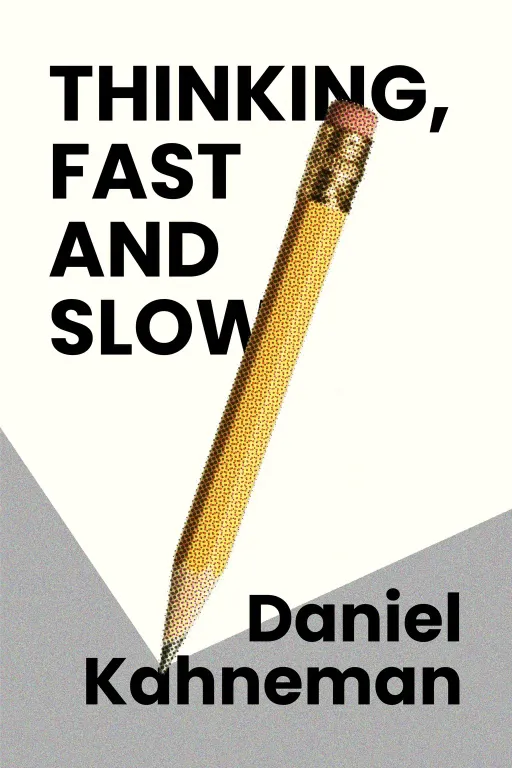
Nova: It’s a revelation, really. Kahneman's work, famously detailed in "Thinking, Fast and Slow," introduces us to System 1 and System 2. Think of System 1 as your brain's autopilot: fast, intuitive, emotional, and always on. It's what allows you to recognize a friend's face, or hit the brakes instantly when a car swerves. It operates effortlessly.
Atlas: Right, like driving a familiar route without really thinking about every turn. Your brain just... does it.
Nova: Precisely. But then there's System 2: slow, deliberate, logical, and effortful. This is the part of your brain that kicks in when you're solving a complex math problem, or meticulously planning a strategic initiative. It requires focus, energy, and conscious attention.
Atlas: I see. So, one is gut reaction, the other is deep thought. But how does this lead to "predictable errors?" If System 2 is there for the heavy lifting, why do we still get tricked?
Nova: Ah, because System 1 is incredibly efficient, and our brains are inherently lazy, preferring the path of least resistance. System 1 is constantly generating suggestions for System 2 – impressions, intuitions, intentions. And System 2, being the energy-guzzler it is, often just goes along with System 1's suggestions, especially when it’s busy or tired. This reliance, while efficient, opens the door to cognitive biases.
Atlas: So, are you saying my gut feeling is often wrong, even when it feels so right? That’s going to resonate with anyone who’s had to make a quick call under pressure.
Nova: It can be, yes. Consider the availability heuristic. It’s a bias where we overestimate the likelihood of events that are more easily recalled from memory. Say, after a vivid news report about a plane crash, people often become irrationally fearful of flying, even though statistically, driving is far more dangerous. System 1 brings that dramatic plane crash image immediately to mind, and System 2, without much effort, accepts that vividness as a proxy for frequency.
Atlas: Wow. So, the cause is the vivid memory, the process is System 1 overreacting, and the outcome is a biased decision that doesn't reflect reality. That’s a powerful example. But how does this play out in, say, a strategic planning meeting where data is supposed to rule?
Nova: In a strategic meeting, it could manifest as anchoring bias. If the first number mentioned in a budget discussion is, say, a very high figure, subsequent negotiations tend to anchor around that initial number, even if it's completely arbitrary. System 1 latches onto the anchor, and System 2 then works to rationalize adjustments from that point, rather than starting from a truly objective evaluation.
Atlas: That’s a perfect example. I’ve definitely seen that. So, System 1 isn't always a trap, but its efficiency can create these convenient fictions that System 2 often just accepts.
Nova: Exactly. System 1 is an evolutionary marvel, designed for speed and survival. But in our complex modern world, its shortcuts can lead to systematic deviations from logic, which is why understanding it is the first step to clearer thinking.
Shaping Choices: The Power of Nudges and Choice Architecture
SECTION
Nova: And what's fascinating is, once you understand how your internal systems work, you start to see how external forces subtly play on them. That brings us to Thaler's revolutionary concept of "nudges," which he explores in his book "Nudge."
Atlas: Nudges. That makes me wonder about subtle influences. Is this about manipulation, or something more benign? Because for a strategist, understanding how environments shape decisions is critical.
Nova: It’s about "choice architecture." Thaler argues that there's no such thing as a neutral choice environment. Every decision we make happens within a framework designed by someone, whether explicitly or implicitly. A nudge is any aspect of that choice architecture that alters people's behavior in a predictable way without forbidding any options or significantly changing their economic incentives.
Atlas: Okay, so this isn't about forcing choices; it's about making the "right" choice easier to make. Like, leading a horse to water without putting a gun to its head.
Nova: Precisely. Think about organ donation. In some countries, you have to actively "opt-in" to be an organ donor. In others, you're automatically a donor unless you "opt-out." The default option—the nudge—has a massive impact on donation rates. Countries with opt-out systems have significantly higher rates, not because people are suddenly more charitable, but because System 1 prefers the path of least resistance: doing nothing.
Atlas: That’s incredible. So, the default option acts as a powerful nudge, leveraging our System 1 tendency to stick with what’s already set. I can see how that would be a game-changer for public policy or even designing internal processes within an organization.
Nova: It is. Another classic example is the placement of food in school cafeterias. When healthy options are placed at eye-level and unhealthy ones are tucked away, students make healthier choices, again, not because they suddenly love broccoli, but because the environment nudges them towards it.
Atlas: So, it's about designing environments that work our cognitive tendencies, rather than expecting us to constantly engage our effortful System 2. But what if the "nudge" is actually leading us toward a less optimal outcome, or even a negative one? How do we recognize those?
Nova: That's the crucial part of mastery, isn't it? Becoming aware of the choice architecture around you. A negative nudge could be a subscription service that makes it incredibly difficult to cancel, or a website that uses dark patterns to trick you into sharing more data than you intend. The key is to ask: who designed this choice, and what outcome are they nudging me towards? For a strategist, this means not just recognizing these patterns, but ethically designing choice architectures that genuinely benefit your teams or customers.
Atlas: That’s a powerful insight. It means we're not just passive recipients of our own biases or external influences. We can become active architects of better decisions.
Synthesis & Takeaways
SECTION
Nova: Absolutely. True mastery in decision-making isn't about eradicating our biases entirely – that's often impossible, and System 1 has its uses. It's about recognizing when our fast, intuitive thinking might lead us astray and understanding how the environment around us is subtly influencing our choices.
Atlas: So, it's about building a better awareness of both our internal mental landscape and the external decision terrain. It truly empowers you to not just solve problems, but to prevent them by understanding their root causes.
Nova: Precisely. If you consider that we make thousands of small and large decisions every single day, the cumulative impact of these biases and nudges is enormous. Just understanding their existence can dramatically improve the quality of those choices over time.
Atlas: That gives me chills, honestly. It's like gaining a superpower to see the invisible forces at play. For our listeners who are constantly engaged in analysis and strategic planning, this isn't just theory; it's a call to action.
Nova: It really is. So, here's a challenge for you: for the next 15 minutes today, dedicate some time to simply observe. Where in your daily analysis or strategic planning might you have unconsciously relied on System 1? And where have you been subtly nudged by the choice architecture around you?
Atlas: Yeah, and once you start seeing them, you can’t unsee them. Then you can begin to design better systems, both internally and externally. We’d love to hear what you discover! Share your insights with us, and let’s keep this conversation going.
Nova: This is Aibrary. Congratulations on your growth!