The 'Value' Blind Spot: Seeing Beyond Price in Financial Decisions
Golden Hook & Introduction
SECTION
Nova: What if the biggest mistake you're making with your money has absolutely nothing to do with math?
Atlas: Hold on, Nova, that sounds almost heretical in the world of finance! We're taught it's all about spreadsheets and algorithms, right?
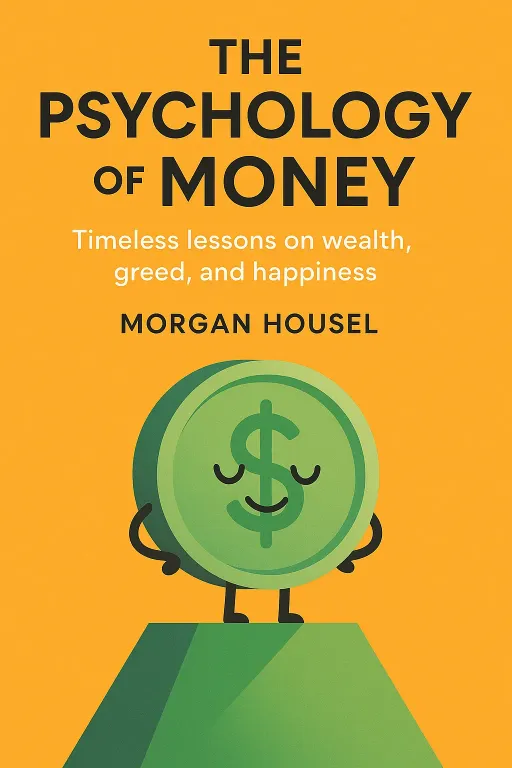
Nova: It does, doesn't it? But that's exactly the provocative, yet profoundly true, insight at the heart of "The Psychology of Money" by Morgan Housel.
Atlas: Oh, Housel! I love how he takes complex financial ideas and makes them feel like a brilliant fireside chat, rather than a dry lecture. He just makes it click.
Nova: Exactly. Housel, with his background as a financial columnist and venture capitalist, has this incredible knack for blending historical narratives with behavioral science. It makes his work deeply relatable and far from academic theory. Today, we're unraveling what he, and others like Richard Thaler and Cass Sunstein in their groundbreaking book "Nudge," call the "value blind spot."
Atlas: The "value blind spot." That phrase alone feels like it's pointing to something we all intuitively know but struggle to articulate. Tell me more, what exactly is this blind spot?
The "Value" Blind Spot: Beyond the Numbers
SECTION
Nova: Well, we often perceive finance as this purely mathematical endeavor, a game of numbers, charts, and cold, hard logic. The blind spot is underestimating the human element. It's failing to see that our emotions, our individual biases, our personal histories—they all play a massive, often dominant, role in how we manage money. Much more than pure rationality ever could.
Atlas: So, you're telling me it's not about how smart you are, or how many financial models you can run, but how you with money? That's quite a reframe, especially for anyone who prides themselves on being a strategist.
Nova: Precisely. And Housel illustrates this beautifully with a story that's stuck with me ever since I first read it. He talks about two individuals. One was a janitor named Ronald Read, who worked everyday jobs his entire life, never earning a huge salary. The other was a highly educated executive, let's call him "Richard," who went to an elite university, earned an MBA, and climbed the corporate ladder to a high-paying finance job.
Atlas: Okay, I'm already guessing where this is going. We're conditioned to expect the executive to be the financial wizard, the janitor to be… well, just getting by.
Nova: Exactly! But the reality was dramatically different. Ronald Read, the janitor, through consistent saving, relentless frugality, and incredible patience over decades, accumulated an astounding eight million dollars by the time he passed away. He invested in blue-chip stocks, held onto them, and let compounding do its magic. He donated most of it to his local library and hospital.
Atlas: Wow. That's actually really inspiring. Just a regular person, doing simple things, but consistently.
Nova: On the flip side, "Richard," the executive, despite his Ivy League education and high income, ended up bankrupt. He made excessive bets, lived an extravagant lifestyle, and ultimately lost it all.
Atlas: That's incredible. It completely upends the conventional wisdom that financial savvy is tied to intellect or education. So, the blind spot is thinking that Richard have been better off, just because he had all the traditional markers of success.
Nova: Absolutely. Housel's point is that financial success isn't a hard science. It's a soft skill. It's about temperament, patience, and understanding your own psychological makeup. He argues that things like personal history, the unique worldviews shaped by when and where you were born, and emotional biases often drive financial decisions far more than any spreadsheet ever could. It’s a profound realization: your financial outcomes are not solely determined by what you know, but by how you.
Atlas: That makes me wonder, how many of us, myself included, assume we're making purely logical financial choices when, in reality, we're standing on decades of ingrained beliefs, fears, and even childhood experiences about money? It’s a very deep question, what hidden assumptions about money have you held that might be influencing your current financial choices?
The Psychological Shift: Leveraging Behavioral Insights
SECTION
Nova: It's a powerful question, isn't it? And that naturally leads us to the second key idea we need to talk about: the profound shift that happens when we recognize these psychological forces at play. It's not just about identifying the blind spot; it's about using that awareness to make more rational and effective financial decisions. It's about understanding you do what you do, not just to do.
Atlas: I guess that makes sense. If our biases are so powerful, we can't just ignore them and hope they go away. We need a strategy to work them, or around them.
Nova: Exactly. And this is where the insights from "Nudge" by Richard Thaler and Cass Sunstein become incredibly valuable. They explain how subtle interventions, what they call "nudges," can gently guide people towards better choices. It’s not about coercion or mandates; it’s about understanding human behavior and designing environments that make the desired outcome the easier, more natural choice.
Atlas: So, it's not about manipulation, then? It’s more like setting up guardrails for ourselves, or for others, to help us align our actions with our longer-term goals, especially when our immediate emotions might pull us elsewhere.
Nova: Precisely. Think about it this way: our inherent biases can be both a hurdle a tool. If we know we're prone to procrastination, for instance, we can "nudge" ourselves by automating savings. A classic example Thaler often cites is how simply changing the default option in a company's retirement savings plan dramatically increases enrollment.
Atlas: Oh, I see. Instead of having to to save, you're automatically enrolled, and you have to if you don't want to save. That’s brilliant! It leverages our natural inertia in a positive way. That’s a perfect example of making the better choice the path of least resistance.
Nova: Exactly. That small design change, that "nudge," taps into our tendency to stick with defaults and our aversion to extra effort. It makes saving for retirement, which is often a long-term goal that battles with short-term desires, much easier to achieve.
Atlas: That’s actually really inspiring. For anyone who thinks deeply about integrating their beliefs into daily life, or building practical skills for financial literacy, this idea of "nudging" ourselves feels incredibly empowering. It’s not about willpower; it’s about smart design. It’s about creating systems that support our purpose, instead of constantly fighting against our own human nature.
Nova: It is. These insights help us move beyond simple, often ineffective, rules to a deeper understanding of financial behavior, both our own and others'. It’s about recognizing that financial wisdom isn't just about quantitative analysis; it's about qualitative understanding of human nature. It's about the soft skills Housel talks about – patience, self-control, and understanding complex emotions.
Atlas: That makes me think about how we can apply this to other areas of growth too. If we can "nudge" ourselves financially, what other hidden assumptions are we holding that are holding us back in other parts of our lives? It’s a powerful framework.
Synthesis & Takeaways
SECTION
Nova: It truly is. What Housel and Thaler and Sunstein collectively reveal is that financial decisions are deeply intertwined with our psychology, our history, and our inherent biases. The real game-changer isn't about finding the perfect stock or the most complex algorithm; it's about understanding ourselves better. It's about moving from a purely mathematical view of money to a more human, holistic perspective.
Atlas: So, it's about seeing that our mindset and behavior are actually the most powerful assets we have in our financial lives. It's about trusting our inner wisdom and taking those small, consistent steps, knowing they build powerful momentum, just like Ronald Read the janitor did.
Nova: Absolutely. And when you recognize that, you can start to intentionally design your financial habits, to "nudge" yourself towards better choices, aligning your money with your deepest values and purpose. It's about shifting from simply earning money to truly stewarding it.
Atlas: That’s a beautiful way to put it. It brings us back to that initial deep question: What hidden assumption about money have you held that might be influencing your current financial choices? It’s an invitation to introspection, to really look at how our personal histories and emotions shape our financial landscape.
Nova: And that introspection, that self-awareness, is the first and most crucial step towards true financial freedom and holistic growth.
Atlas: It sounds like a journey of faith integration, understanding national impact through civic economics, and building practical financial literacy all rolled into one. A truly holistic approach.
Nova: Indeed. This is Aibrary. Congratulations on your growth!