The Strategic Blind Spot: Why Intuition Alone Won't Build Your Future
Golden Hook & Introduction
SECTION
Nova: You know, Atlas, for years I thought my gut instinct was my superpower, especially when it came to making big, strategic decisions. I mean, everyone says "trust your gut," right?
Atlas: Oh, absolutely. That "follow your intuition" mantra is practically etched into the entrepreneurial playbook. It feels empowering, like you're tapping into some deep, innate wisdom.
Nova: Well, I was today years old when I learned that sometimes, our intuition isn't just wrong, it's actively, subtly sabotaging our future strategic thinking. It’s like having a blind spot in your mental rearview mirror.
Atlas: Whoa, actively sabotaging? That's a strong claim. You're telling me the very thing we rely on for quick judgment can actually be leading us down the wrong path? That's… unsettling.
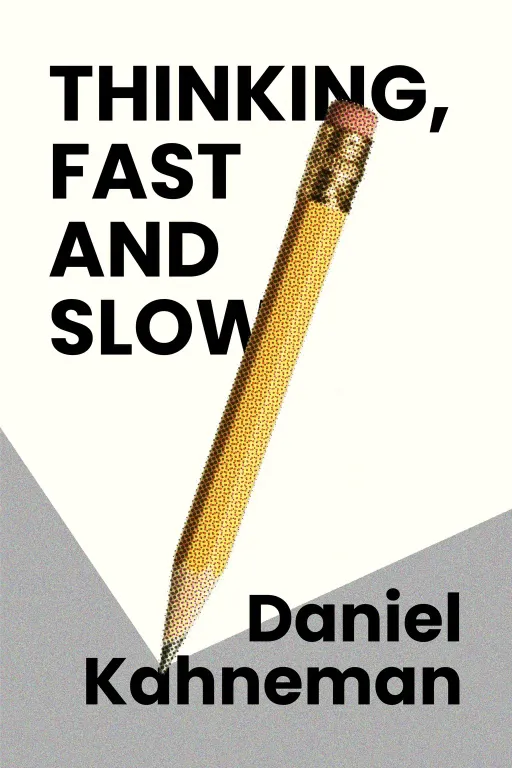
Nova: It really is. And it's a concept brilliantly dissected by two Nobel laureates who fundamentally changed our understanding of human decision-making. We're talking about Daniel Kahneman's groundbreaking work in, and then the equally transformative ideas in by Richard Thaler and Cass Sunstein. These aren't just academic texts; they're blueprints for understanding why we make the choices we do.
Atlas: Two Nobel laureates, one a psychologist who won the Economics prize, and the other a behavioral economist who popularized "nudges." That’s already fascinating. It suggests they're looking at the human mind through a very different lens than traditional psychology or economics alone.
Nova: Exactly. They peel back the layers of what we is rational thought, revealing the invisible forces at play. And that, Atlas, is where we find the intuition trap.
The Intuition Trap: How Our Minds Play Tricks
SECTION
Atlas: So, what exactly is this "intuition trap" that these brilliant minds uncovered? Lay it on me, Nova.
Nova: Kahneman, particularly, introduces us to two characters living inside our heads: System 1 and System 2. Think of System 1 as the fast, intuitive, emotional, almost automatic thinker. It’s the one that instantly recognizes a face or knows that 2+2=4. It’s incredibly efficient, a survival mechanism.
Atlas: The gut reaction, the snap judgment. We all rely on that constantly.
Nova: We do. But then there's System 2, the slow, deliberate, logical, effortful thinker. It’s the one that calculates 17 times 24, or carefully weighs the pros and cons of a major strategic pivot. System 2 is rational, but it's also lazy.
Atlas: Lazy? That feels like a personal attack on my intellectual curiosity! But I get it. It takes more energy to engage System 2.
Nova: Precisely. And because System 1 is so dominant and efficient, it often takes shortcuts, leading to what Kahneman calls "cognitive biases." These aren't flaws in our character; they're systematic errors in our thinking that can derail even the smartest strategists.
Atlas: Can you give me an example of how System 1 tricks us? Because for someone who thrives on quick, decisive action, this is a bit disconcerting.
Nova: Absolutely. The classic example is the "bat and ball" problem. A bat and a ball together cost $1.10. The bat costs $1.00 more than the ball. How much does the ball cost?
Atlas: Okay, a bat and a ball… $1.10 total… the bat costs a dollar more… So, the bat is $1.00, and the ball is $0.10. That makes sense. Total $1.10.
Nova: That's System 1 kicking in! The immediate, intuitive answer. But if the ball costs $0.10, and the bat costs $1.00 more, then the bat would be $1.10, making the total $1.20.
Atlas: Oh! Oh, wow. You’re right. My System 1 just jumped to the obvious answer without really thinking. The correct answer would be… the ball costs $0.05, and the bat costs $1.05. Total $1.10. That's a good one. It highlights how easily we can be led astray.
Nova: Right? And that’s a simple math problem. Now imagine applying that same System 1 shortcut to a multi-million dollar business decision, or to charting your entire career path. Biases like "anchoring," where we over-rely on the first piece of information we hear, or "availability bias," where we overestimate the likelihood of events that are easily recalled, can subtly warp our strategic vision.
Atlas: So, for a strategist trying to build a robust future, relying solely on that fast, intuitive response could mean missing critical data or making decisions based on incomplete mental models. It's like navigating with a map that has blank spots.
Nova: Exactly. Your mind is trying to be efficient, but that efficiency comes at a cost, creating these strategic blind spots.
Rewiring Rationality: Leveraging Behavioral Science for Better Strategy
SECTION
Nova: So, if our brains are wired for these shortcuts, what hope do we have? Are we just doomed to be victims of our own biases? That's where the idea of "nudges" comes in.
Atlas: Nudges. I've heard that term bandied about, usually in the context of government policy or marketing. But how does that connect to my personal strategic thinking? Isn't it just a fancy word for manipulation?
Nova: A fair question, and it's where Thaler and Sunstein's work in becomes so powerful. They define a nudge as any aspect of the choice architecture that alters people's behavior in a predictable way without forbidding any options or significantly changing their economic incentives. It's about subtle environmental cues. Think of it as gently steering, not forcing.
Atlas: Okay, so less about coercion and more about thoughtful design. Give me a concrete example.
Nova: Consider organ donation. In some countries, you have to actively to be an organ donor. Participation rates are often low. In others, you are automatically registered as a donor unless you actively. Suddenly, participation rates skyrocket. The choice is still there, but the default option, the "nudge," changes behavior dramatically.
Atlas: That's fascinating. It leverages our System 1's laziness, in a way, but for a positive outcome. So, how can an individual, a leader, a strategist, apply this to their own decision-making process to overcome their inherent biases? How do we design our nudges?
Nova: That's the key. Awareness of these cognitive biases, as Kahneman describes, empowers you to pause. But then, understanding nudges allows you to your environment and your processes to mitigate those biases. For instance, if you know you're prone to confirmation bias – only seeking out information that confirms your existing beliefs – you can implement a "self-nudge."
Atlas: A "self-nudge." I like that. What would that look like in practice for someone making a big strategic call?
Nova: It could be as simple as mandating a "devil's advocate" step in your decision-making process. Before finalizing a major strategic direction, you could commit to actively seeking out three credible dissenting opinions, or even scheduling a "pre-mortem" meeting where you imagine the project has failed and work backward to identify potential causes. You're consciously designing a system to force your System 2 to engage, to challenge your initial intuitive leanings.
Atlas: That's brilliant. It's not about trying to magically eliminate bias, because that's probably impossible. It’s about building guardrails, or designing the path so your System 1 is less likely to lead you astray, and your System 2 has a better chance to kick in. It turns the problem into a design challenge.
Nova: Exactly. It's about designing better systems for yourself and your team, rather than just hoping your intuition gets it right every time. It's the ultimate strategic move: understanding your own mind's limitations to build a more robust future.
Synthesis & Takeaways
SECTION
Nova: So, what we've really been talking about today is the profound insight that our minds, while incredibly powerful, have inherent blind spots. True strategic mastery isn't about ignoring your intuition; it's about understanding its limitations and consciously building systems—or "nudges"—to augment it with deliberate, System 2 thinking.
Atlas: It’s a powerful lesson. It reinforces the idea that clarity and purpose in our strategic planning aren't just about the external market or competition, but about the internal landscape of our own minds. The deep question from the book content really resonates: Where in your current strategic thinking might an unseen bias be quietly shaping your path?
Nova: That question is the gift these books give us. It's an invitation to self-reflection, to constantly interrogate our own thinking, and to build strategies that are not just intuitive, but truly informed and resilient. It’s about being thoughtful, dissecting ideas, and constantly seeking a deeper understanding of ourselves.
Atlas: And that's a journey worth taking. For all of our listeners out there, I encourage you to pause, reflect, and ask yourself that very question. Where might your own System 1 be taking the wheel when System 2 really needs to be driving?
Nova: A perfect challenge. Thanks for joining us today, Atlas.
Atlas: Always a pleasure, Nova.
Nova: This is Aibrary. Congratulations on your growth!