The Rationality Trap: Why Pure Logic Misses the Point of Human Choice.
Golden Hook & Introduction
SECTION
Nova: Most of us walk around believing we’re perfectly rational beings, making logical choices every single day. But what if that belief, that bedrock of self-perception, is actually one of the biggest delusions we entertain?
Atlas: That's a bold claim, Nova. I mean, we're taught to value logic, to think critically. Are you saying we're all just… wandering around in a fog of irrationality? Because for anyone who prides themselves on understanding the world, that’s a tough pill to swallow.
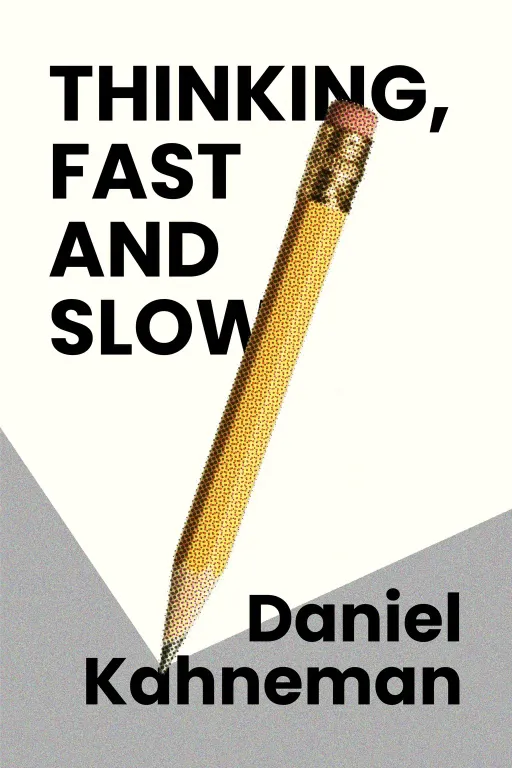
Nova: It is, Atlas. And it’s the profound, sometimes unsettling, truth at the heart of our discussion today, drawing heavily from the groundbreaking work that underpins what we’re calling 'The Rationality Trap: Why Pure Logic Misses the Point of Human Choice.' We're talking about the insights from Nobel Prize winners Daniel Kahneman, a psychologist whose work fundamentally reshaped economic theory, and Richard H. Thaler. Kahneman’s Nobel, in particular, was a seismic event, proving that human behavior couldn't be neatly fit into purely rational economic models.
Atlas: A psychologist winning the Nobel in? That alone tells you something significant shifted. It makes me wonder how much of what we consider 'rational' decision-making is actually just us justifying our gut feelings after the fact. What are we really diving into today with these ideas?
Nova: Exactly! Today, we're peeling back the layers on why our brains aren't always the perfect logical machines we imagine. We'll explore the internal cognitive shortcuts that lead us astray, and then we’ll look at how the external world subtly nudges our choices in ways we rarely notice. It's about understanding the hidden forces that truly shape human behavior, and by extension, our ethical decisions.
The Illusion of Pure Rationality: System 1 vs. System 2
SECTION
Nova: So let's start with what Daniel Kahneman famously introduced: the two systems of thinking. Imagine your brain has two modes of operation. System 1 is your fast, intuitive, emotional, almost automatic thinking. It's what lets you recognize a familiar face, understand a simple sentence, or slam on the brakes if a car suddenly stops in front of you. It's effortless, always on, and incredibly powerful.
Atlas: Oh, I like that. So, it's like our brain's autopilot, handling all the routine stuff without us really thinking about it. But then what's System 2 for? That's the one we we’re using all the time, right?
Nova: Precisely. System 2 is your slow, deliberate, logical, and effortful thinking. It's what you engage when you're solving a complex math problem, learning a new skill, or carefully weighing the pros and cons of a major life decision. It requires attention, focus, and energy. The critical insight from Kahneman is that we rely on System 1 far more than we realize, and System 2 is surprisingly lazy.
Atlas: Lazy System 2? That’s going to resonate with anyone who’s ever tried to stick to a new year's resolution! So, what happens when this fast, intuitive System 1 takes the wheel in situations where we really need System 2?
Nova: That's where the "rationality trap" springs. Our System 1 is brilliant for survival, but it's prone to predictable errors in judgment, especially when faced with novelty or complexity. Let me give you a classic example, a little brain teaser often used to illustrate this: The Bat and Ball Problem.
Atlas: Oh, I’m ready. Lay it on me.
Nova: A bat and a ball cost $1.10 in total. The bat costs $1.00 more than the ball. How much does the ball cost?
Atlas: Okay… hmm. My immediate thought is ten cents. That just right.
Nova: And that, Atlas, is your System 1 speaking loud and clear! Ten cents is the overwhelmingly common answer. It’s intuitive, it's fast, and it’s almost always wrong.
Atlas: Wait, hold on. If the ball is ten cents, and the bat costs a dollar more, that would be $1.10 for the bat… plus the ten cents for the ball, which makes $1.20 total. Aha! So it’s not ten cents. My System 2 just kicked in, but it took a little push.
Nova: Exactly! The correct answer is five cents. If the ball costs five cents, the bat costs $1.05, and together they total $1.10. Your System 1 quickly offered the plausible but incorrect answer, and your lazy System 2 didn't bother to check it until prompted. This isn't about being unintelligent; it's about how our brains are wired.
Atlas: That’s fascinating. It really highlights how quickly we jump to conclusions. But if our brains are wired for these shortcuts, how can we trust our own judgment, especially when faced with complex moral landscapes or making big strategic choices? For someone who seeks to understand and make sound decisions, this feels like a foundational crack.
Nova: It is a crack, but it also offers a vital path to wisdom. The key isn't to eliminate System 1 – that's impossible and undesirable; it’s essential for daily functioning. The key is awareness. Recognizing when System 1 is likely to lead us astray and consciously engaging System 2. When you’re making a truly important decision, a pause, a deliberate check, can make all the difference. It's about understanding that our intuitions, while powerful, are not infallible guides to truth. It’s a call for greater humility in our own rationality.
The Power of Nudges: Shaping Choices Beyond Rationality
SECTION
Atlas: So, if our internal wiring is a bit wonky, and our System 1 is so dominant, what happens when the outside world starts playing with those wires? What happens when environments are designed to capitalize on these cognitive shortcuts?
Nova: That’s a perfect segue, Atlas, into the work of Richard Thaler and Cass Sunstein, and their groundbreaking concept of 'nudges.' If Kahneman showed us the internal biases, Thaler and Sunstein showed how those biases can be ethically guided by what they call 'choice architecture.'
Atlas: Choice architecture? That sounds like something a strategist would design. Are we talking about subtle manipulation here? Because for someone who values independent thought, the idea of being 'nudged' without my conscious awareness feels a bit… unsettling.
Nova: It’s a crucial distinction, and it’s why the ethical considerations around nudging are so important. A nudge, as they define it, is any aspect of the choice environment that alters people's behavior in a predictable way without forbidding any options or significantly changing their economic incentives. It’s not about coercion; it’s about making certain choices easier or more salient.
Atlas: Give me an example. How does this actually work in the real world?
Nova: Think about a school cafeteria. In one famous experiment, researchers wanted to encourage healthier eating among students. Instead of banning unhealthy foods or directly telling kids what to eat, they simply rearranged the food display. They put the healthier options—fruits and vegetables—at eye level, right at the front of the serving line. The less healthy options were placed further back, or on lower shelves.
Atlas: And what happened? Did the kids suddenly love broccoli?
Nova: Not necessarily love, but they it more often. Consumption of fruits and vegetables increased significantly, while less healthy options decreased. No one was forced to eat anything; all the options were still available. But the simple act of making the healthy choice the or the choice had a profound impact.
Atlas: Wow. That's kind of incredible. It makes you realize how much of our decision-making isn't about deep deliberation, but about convenience and what's immediately presented to us. It really drives home the point that our environments shape us more than we often acknowledge.
Nova: Exactly. Another powerful example is organ donation. In some countries, the default is 'opt-in' – you have to actively sign up to be an organ donor. Participation rates are often low. In other countries, the default is 'opt-out' – you are automatically a donor unless you actively say no. The donation rates in 'opt-out' countries are dramatically higher, often over 90%. The choice architecture, the default setting, completely changes the outcome.
Atlas: That sounds like a powerful tool, but it also raises that critical question again: isn't this just manipulation? Where's the line between helpful guidance and insidious control, especially for someone trying to make rational, independent choices? What if the 'nudge' isn't for our own good?
Nova: That’s where Nova’s Take comes in, and why understanding these mechanisms is crucial for navigating ethical dilemmas with greater wisdom. Thaler and Sunstein argue for 'libertarian paternalism' – the idea that it's legitimate for institutions to try to influence behavior to make people's lives better, as long as liberty is preserved. The key ethical criteria are transparency, ease of opting out, and the nudge generally being welfare-enhancing for the individual. It's about designing systems that make it easier for people to make choices aligned with their long-term best interests, rather than exploiting their cognitive biases for less noble ends. Understanding the 'trap' means we can design better exits.
Synthesis & Takeaways
SECTION
Nova: So, what we've really explored today is a profound shift in how we understand human choice. Internally, our System 1 is a powerful force, often leading us to quick, intuitive, but flawed conclusions. Externally, 'nudges' can either trap us in suboptimal choices or gently guide us towards better ones.
Atlas: It’s a humbling thought, honestly. That our internal 'rationality' is so easily swayed, and that our environments are constantly influencing us, often without our awareness. It brings us back to that deep question: Where in your daily life might System 1 thinking be guiding your most important decisions without your conscious awareness? How can we, as listeners, start to uncover these hidden influences?
Nova: It starts with a mindful pause. Before a significant decision, especially one that feels urgent or emotionally charged, consciously engage your System 2. Ask yourself: "Is this my gut reaction, or have I truly thought this through?" And then, critically examine the default options presented to you, whether it's in your finances, your health, or even your daily consumption. Understand that someone designed that choice architecture.
Atlas: So, it’s about becoming more aware of both our internal shortcuts and the external influences. It’s about not just accepting the default, but questioning why it’s the default. That’s a powerful tool for anyone striving for more critical thinking and navigating the complex moral landscapes of our world.
Nova: Absolutely. It’s about realizing that true wisdom isn't about being perfectly rational all the time, but about understanding the limits of our rationality. It's an invitation to greater self-awareness and empathy for others, knowing we're all susceptible to these traps.
Atlas: And that’s a journey worth taking.
Nova: This is Aibrary. Congratulations on your growth!