The Oversight Trap: Why Data Isn't Enough for Fair Urban Planning
Golden Hook & Introduction
SECTION
Nova: Atlas, quick, what do you know about 'fair urban planning'? Give me your most succinct, witty take.
Atlas: Oh, I love this game! Fair urban planning? That's where everyone agrees on the plan, as long as it's fair for neighborhood, right? And usually, it ends up being fair for... well, the usual suspects.
Nova: Exactly! A delightful, cynical truth bomb to start our day. Because today, we're diving into how even the best intentions and the most robust data can get derailed by something far more insidious: our own brains, and the subtle ways our environments are designed.
Atlas: You’re telling me my own thoughts are conspiring against equitable cities? This sounds like a philosophical thriller!
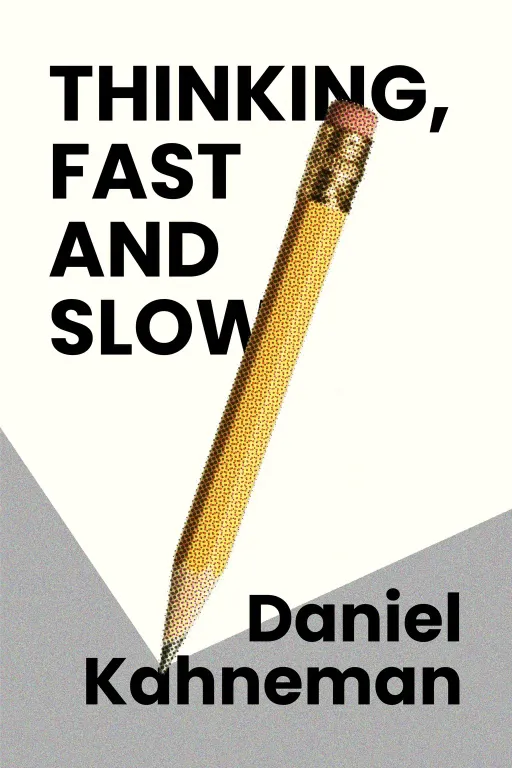
Nova: It absolutely is! And much of this understanding comes from two groundbreaking books: "Thinking, Fast and Slow" by the incomparable Daniel Kahneman, and "Nudge" by Richard H. Thaler and Cass R. Sunstein. Both Kahneman and Thaler were awarded the Nobel Memorial Prize in Economic Sciences for their work, essentially showing us how irrational we humans can be, but in a very predictable way.
Atlas: Wow, Nobel laureates tackling urban planning? I'm curious how these seemingly academic concepts, about how we think and make choices, connect to something as concrete as city streets, zoning laws, or even waste management. It feels like a huge leap.
Nova: It’s not a leap at all; it’s the invisible thread connecting every single policy decision and every urban interaction. Today, we're going to pull on two specific threads: first, the 'blind spot' of System 1 thinking, and how it biases our data-driven decisions. Then, we'll discuss the powerful, often invisible, effects of 'nudges' in shaping urban behavior and perpetuating inequality.
The Blind Spot – System 1 Thinking in Urban Planning
SECTION
Nova: So, let's start with Kahneman's brilliant distinction between System 1 and System 2 thinking. System 1 is our fast, intuitive, emotional brain – it makes snap judgments, jumps to conclusions, and is incredibly efficient. System 2 is the slow, deliberate, logical, calculating part of our mind. Sounds like System 2 is what urban planners use, right? The data seekers, the foundational thinkers?
Atlas: That makes sense, but... aren't planners trained to be objective? They analyze complex systems, they build sustainable solutions. They're all about the data, the spreadsheets, the GIS maps. Surely, they're operating in System 2 most of the time.
Nova: You'd think so, wouldn't you? But here's the kicker: System 1 often influences System 2 without us even realizing it. I’ll give you a hypothetical, but very real-world, example: code enforcement bias.
Atlas: Oh, I've heard stories about that.
Nova: Imagine a city department that's genuinely committed to fairness. They decide to use a new, data-driven algorithm to identify areas ripe for code enforcement – think overgrown yards, unpermitted renovations, things like that. The goal is to be completely objective, right? To remove human bias.
Atlas: Absolutely. That’s the dream for anyone trying to build sustainable solutions. Let the numbers do the talking.
Nova: Exactly. But this algorithm, like many, was trained on data. And where did that historical data come from? From previous code enforcement officers who, over years, perhaps decades, concentrated their efforts in certain neighborhoods more than others. Not necessarily because violations were objectively higher there, but because of a myriad of System 1 biases.
Atlas: So you're saying the algorithm learned the, not the objective truth?
Nova: Precisely. The data itself became a blind spot. Now, the new, 'objective' algorithm flags these historically targeted neighborhoods as 'high-risk.' When current officers go out, their own System 1 thinking kicks in – something like the 'availability heuristic,' where it's easier to recall and focus on areas already flagged. They see what the algorithm 'told' them to see, confirming its predictions.
Atlas: Wow, so even with all the data in the world, if the initial input or our interpretation is flawed, we're building inequity right into the system? That's going to resonate with anyone who's trying to build sustainable solutions. It creates a self-fulfilling prophecy.
Nova: It absolutely does. The outcome? Over-enforcement in historically marginalized neighborhoods, leading to disproportionate fines, property liens, and even displacement. All of this, despite the initial good intention of fairness and data use. It's a perfect example of how System 1 biases like confirmation bias – seeking data that confirms existing beliefs – or anchoring bias – over-relying on that first piece of information – can manifest.
Atlas: That gives me chills. It’s like the data, which is supposed to be our objective guide, is actually just reflecting our own historical prejudices back at us, amplified. So, what you’re saying is, we need to be incredibly vigilant about the data we feed these systems.
Unconscious Nudges – Shaping Urban Behavior Imperceptibly
SECTION
Nova: Vigilance is key. And that naturally leads us to another subtle, yet incredibly powerful force at play, one that Richard Thaler and Cass Sunstein masterfully unpack in "Nudge" – the idea that our environment itself can guide our choices without us even realizing it.
Atlas: Wait, are you saying our city is subtly manipulating us? That sounds a bit out there. Like, is there a secret committee deciding where I walk or what coffee shop I choose?
Nova: Not quite a secret committee, but more like 'choice architecture.' Thaler and Sunstein argue that there's no such thing as a neutral choice. Every decision we make is influenced by the way the choices are presented to us. Think about how the placement of healthy food in a cafeteria "nudges" people to choose it more often, without forbidding unhealthy options.
Atlas: Okay, I can see that on a small scale, like in a grocery store. But how does that scale up to an entire city?
Nova: Let's take waste management and public space design. A city wants to improve recycling rates and reduce litter in public parks. They invest in new, aesthetically pleasing bins – a noble goal, right?
Atlas: Sounds like a positive civic improvement.
Nova: It is! But initially, they just placed them where they always had, or in visually appealing spots that weren't necessarily convenient. People, operating on System 1 thinking – habit, laziness, whatever – often ignored the separate recycling bins if they were out of their direct path, or if the main 'trash' bin was more prominent. The 'nudge' was ineffective, or even counterproductive.
Atlas: So the good intentions were there, the data probably showed low recycling rates, but the design wasn't actually helping.
Nova: Exactly. So the city redesigns: they pair trash and recycling bins, making recycling the 'default' larger opening, and crucially, they place them at high-traffic 'decision points' – where people pause, like at the entrance to a path or near a bench. This subtle change, this powerful 'nudge,' significantly increases recycling without mandates. People just it, because it's the easiest, most obvious choice.
Atlas: That’s fascinating! So it's like the city is a giant psychological experiment? That actually gives me chills, thinking about how many 'nudges' I've probably experienced without even noticing. What can regular people, or especially urban planners, do about this? Because for someone driven by civic improvement, understanding these hidden levers could be transformative.
Nova: It’s incredibly powerful. But here's where it gets complex, and where the ethics come in. While nudges can be used for good – like encouraging recycling or healthier choices – they can also be used to subtly discourage certain behaviors or groups. For instance, if a city wanted to subtly discourage homeless encampments, they might remove benches in public areas, install uncomfortable seating, or reduce lighting. These are also 'nudges,' but with potentially negative, unintended consequences that erode fairness and equity.
Atlas: So it's not just about what we to do, but what our designs people to do, whether we realize it or not. The impact can be completely divorced from the intention.
Synthesis & Takeaways
SECTION
Nova: Precisely. And this is where the two ideas converge: System 1 biases and unconscious nudges often work hand-in-hand to create these blind spots in urban planning, perpetuating cycles of inequity despite the best intentions. It's about designing systems that are robust against our own human frailties, both cognitive and environmental.
Atlas: That’s actually really inspiring. So, the ultimate goal isn't just to gather more data, but to understand the human element influencing how that data is collected, interpreted, and then acted upon through our urban designs. It's about building in checks and balances against ourselves.
Nova: Absolutely. As our books today emphasize, recognizing these inherent human tendencies allows us to design systems that actively counteract bias, ensuring fairness is not just a goal, but a built-in feature of our urban plans. It moves beyond just fixing problems to building truly sustainable, equitable solutions from the ground up.
Atlas: So, to our listeners who are constantly seeking clarity and building sustainable solutions, we want to leave you with this: where in your current urban planning processes might System 1 thinking or unconscious nudges be subtly eroding fairness, despite your best efforts? It’s a question worth asking, every single day.
Nova: Absolutely. And if this conversation sparked new insights for you, we'd love to hear your thoughts. Share your perspectives and challenge conventional thinking with us.
Nova: This is Aibrary. Congratulations on your growth!