The Hidden Triggers: Understanding Consumer Decisions Beyond Logic
Golden Hook & Introduction
SECTION
Nova: What if I told you that most of your 'rational' decisions today were actually made by a tired, slightly impulsive toddler inside your brain, and you barely even noticed?
Atlas: Whoa, a toddler? I thought I was making a very mature, adult decision about my coffee this morning, carefully weighing the pros and cons of espresso versus a flat white. Was that my inner toddler demanding caffeine?
Nova: Honestly, probably! It's a powerful force, that internal toddler. We often pride ourselves on our logic, our careful considerations, our strategic foresight. But the truth is, human behavior is driven by powerful, often invisible biases. Ignoring these biases means missing massive opportunities for influence, for connection, and frankly, for understanding ourselves and our customers.
Atlas: That’s a bold claim. It makes me wonder, how much of what we think is logical is actually just a well-dressed impulse?
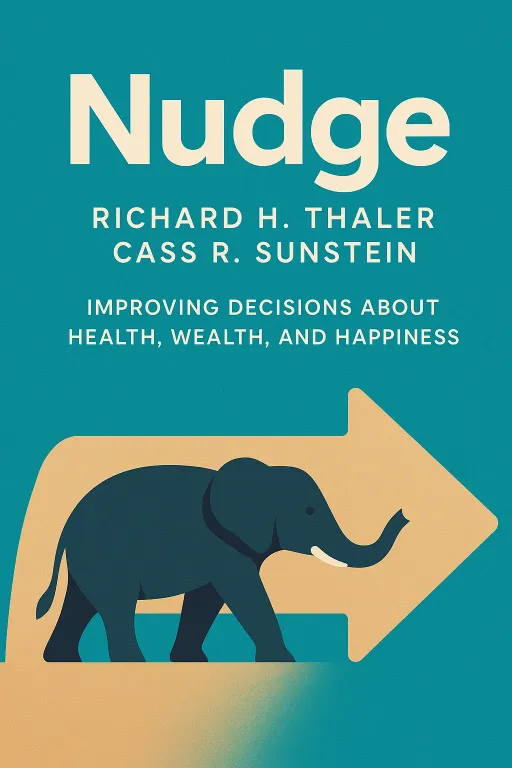
Nova: Precisely. And today, we're pulling back the curtain on those invisible forces, diving into two groundbreaking books that have absolutely reshaped our understanding: first, 'Nudge' by the brilliant Richard H. Thaler and Cass R. Sunstein, and then, 'Thinking, Fast and Slow' by the equally phenomenal Daniel Kahneman. Both Nobel laureates, by the way, for fundamentally changing how we understand human judgment and decision-making. Their work is truly foundational for anyone looking to understand consumer behavior or strategic influence.
Atlas: Nobel laureates, so they know a thing or two about our internal toddlers, I guess. But what does this mean for someone trying to make genuinely good decisions, or even influence them strategically? It sounds like we're saying control is an illusion.
Nova: Well, it means the game is far more nuanced, Atlas. And for strategists and innovators, understanding this nuance is where the real differentiation lies. We're going to explore how we can actually these insights to steer ourselves and others towards better outcomes, without even realizing we're being guided.
The Power of the Nudge: Shaping Choices Without Coercion
SECTION
Nova: So, let's start with 'Nudge.' Thaler and Sunstein introduce this incredible concept called 'choice architecture.' It's basically the idea that the way choices are presented to us profoundly impacts the decisions we make. They argue that by making small, subtle interventions – these 'nudges' – you can steer people towards better decisions without limiting their freedom of choice. It doesn't restrict options; it just subtly tilts the playing field.
Atlas: Okay, so it's not about forcing people, but making the 'right' choice easier. But isn't there a fine line between a helpful nudge and… well, outright manipulation? Especially for strategists looking to influence behavior, that line can get blurry.
Nova: Absolutely, and that's a crucial distinction. The authors are very clear: a true nudge preserves freedom of choice. You can always opt out. It's about designing an environment where the desired outcome is the path of least resistance. Think about the classic example of organ donation. In some countries, like the US, you have to 'opt-in' to be an organ donor. You check a box, you sign up. The default is 'no.'
Atlas: Right, and it's a big decision, so a lot of people just… don't get around to it, I suppose.
Nova: Exactly. Now, compare that to countries like Austria or Belgium, where the default is 'opt-out.' Everyone is automatically an organ donor unless they actively choose to say no. The difference in consent rates is staggering: in opt-in countries, it's often below 20%, while in opt-out countries, it can be over 90%. The choice is still there, but the default setting creates a massive difference in outcome. It’s a powerful testament to how a simple change in choice architecture can profoundly impact societal good.
Atlas: Wow. That's actually really inspiring, because it shows the immense power of subtle design. For someone trying to innovate or differentiate, this feels like a superpower—finding unique, subtle ways to add value or guide decisions without being heavy-handed. It’s about building environments where beneficial actions are just… easier.
Nova: It’s a game-changer. They also share a wonderfully quirky example: the fly in the urinal. In Amsterdam's Schiphol Airport, they etched the image of a small black housefly into the urinals. The goal was to reduce 'spillage,' which was a significant cleaning cost.
Atlas: A fly in the urinal? That just sounds… unhygienic. What was the nudge there?
Nova: The nudge was that men, almost instinctively, would aim for the fly. It gave them a target, diverting their attention and improving accuracy. They reduced spillage by 80%! No signs, no scolding, no coercion—just a tiny, strategically placed image. It's a brilliant example of how understanding human behavior, even unconscious aiming, can lead to massive practical benefits.
Atlas: That's a perfect example of accessible explanation. It's like our brains are hardwired for certain reactions, and if you understand those wires, you can gently guide the current. But it also makes me think about how much of our decision-making is truly conscious versus automatic.
Nova: And that naturally leads us to the second key idea we need to talk about, which illuminates the very core of those automatic reactions.
System 1 vs. System 2: Unmasking the Mind's Hidden Drivers
SECTION
Nova: The foundation for understanding why nudges work so effectively comes from Daniel Kahneman's work on our two systems of thinking, as laid out in 'Thinking, Fast and Slow.' He argues that our minds operate with two distinct systems. System 1 is fast, intuitive, emotional, and automatic. It's what allows you to recognize a face, understand simple sentences, or react instantly to a sudden noise. It’s effortless.
Atlas: So, System 1 is like my instant reaction when I see a puppy, or when I hit the brakes because the car in front of me stopped suddenly. Pure instinct.
Nova: Exactly. Then there's System 2. That's slow, deliberate, effortful, and logical. It's what you use to solve a complex math problem, learn a new language, or carefully weigh the pros and cons of a major life decision. It requires focus and energy.
Atlas: Okay, so System 1 is the impulsive toddler, and System 2 is the overworked parent trying to keep things in order. But how often is System 1 actually running the show, even when we System 2 is in control, making those 'rational' decisions?
Nova: That's the profound insight, Atlas. Kahneman shows us that System 1 is almost always running in the background, constantly generating impressions, intuitions, and feelings. And often, System 2, our more deliberate self, simply endorses what System 1 has already suggested, rationalizing it after the fact. We believe we're making a logical choice, but our gut feeling often called the shot first.
Atlas: That's incredible. It makes me wonder about all the times I thought I was being analytical, but was actually just confirming a hunch. Can you give an example of System 1 really taking the wheel?
Nova: Think about the 'halo effect,' for instance. This is a classic System 1 bias. If you perceive someone as attractive or charming, your System 1 quickly creates a positive overall impression. Then, your System 2 might then unconsciously attribute other positive qualities to them – like intelligence, competence, or trustworthiness – even without evidence. You see a well-dressed, confident person, and System 1 whispers, "They must be smart," and System 2 often just goes along with it. This can profoundly impact hiring decisions, investment choices, or even how we judge a new product.
Atlas: This is huge for anyone making strategic decisions, or trying to innovate. We often pride ourselves on logic and data-driven insights, but if our gut is secretly steering the ship, and that gut is prone to biases like the halo effect, we need to understand those hidden currents. It questions current thinking, which is exactly what innovators need to do. It’s not enough to just crunch numbers; you have to understand the human element behind them.
Nova: Exactly. Or consider the 'anchoring effect.' If I give you a number, say, 100, and then ask you to estimate the population of Turkey, your estimate will likely be lower than if I had started with a much higher anchor, say, 10,000,000. Your System 1 latches onto the first piece of information, the 'anchor,' and even though your System 2 tries to adjust, it rarely adjusts enough. This is why initial price points in negotiations or first offers in sales are so powerful.
Atlas: So, basically, our brains are constantly taking shortcuts and making assumptions, and these shortcuts are often invisible to us. And what's even more interesting is that these aren't flaws; they're just how our brains are wired.
Nova: Precisely. They're evolutionary shortcuts that allowed us to survive in a complex world. But in our modern environment, they can lead to systematic errors in judgment, from financial decisions to how we vote. Recognizing and strategically using these cognitive biases is key to truly understanding and influencing consumer behavior, and frankly, to making better decisions ourselves.
Synthesis & Takeaways
SECTION
Nova: So, bringing it all together, understanding both the power of nudges and the intricate dance between System 1 and System 2 isn't just academic curiosity. It's about being profoundly aware of the invisible forces that shape our world. Ignoring these biases means missing opportunities for influence, for positive change, and for truly connecting with people on a deeper level.
Atlas: So, for our listeners who are constantly questioning current thinking and driven to make confident contributions, this isn't just theory. It's about recognizing where we're assuming pure rationality, and instead, playing to the deeper, more human drivers. It's about making a real impact by understanding the invisible choreography of the mind. It’s about not just seeing the obvious, but understanding the subtle currents beneath the surface.
Nova: Exactly. It's about being the strategist, the innovator, who doesn't just see the chess pieces, but understands the psychology of the players, and even the subtle design of the board itself. It’s about moving beyond simplistic models of human behavior and embracing the rich complexity that actually drives us.
Atlas: That's such a hopeful way to look at it – that understanding these 'hidden triggers' isn't about manipulation, but about a more profound, and ultimately more effective, way to connect and contribute. So, where in your own strategic decisions might you be overlooking the power of the nudge, or the silent influence of System 1?
Nova: This is Aibrary. Congratulations on your growth!