The 'Hidden Scripts' Principle: Unpacking the Unspoken Rules of Human Behavior.
Golden Hook & Introduction
SECTION
Nova: Atlas, what’s the first thing that comes to mind when I say ‘hidden scripts’?
Atlas: Oh, easy. It’s what my brain uses to convince me that buying another houseplant is a 'strategic investment in my mental well-being.' It’s the internal monologue that justifies questionable life choices.
Nova: That’s actually not far off, and it's certainly more accurate than we often realize! Today, we’re unpacking the 'Hidden Scripts' principle, a fascinating concept that reveals how much of our decision-making isn't as rational as we like to believe. We’re drawing insights from two absolute titans in this field: Daniel Kahneman, a psychologist who revolutionized economics and won a Nobel Prize for it, and Richard Thaler, another Nobel laureate, whose work on behavioral economics literally changed how governments design policies.
Atlas: Two Nobel laureates in one episode? That's quite the brain trust. But 'hidden scripts,' 'unspoken rules'... it sounds a bit like we're all just puppets on strings, doesn't it? I mean, I like to think I’m making my own choices, especially about my strategic houseplant investments.
Nova: You're not wrong to feel that way, Atlas. The core idea here is that we often assume our choices are purely rational, but the truth is far more complex. Recognizing these 'hidden scripts' is crucial, not to feel like a puppet, but to understand yourself and others better. It leads to more effective communication and influence, and honestly, a deeper appreciation for the intricate dance of human behavior. Let’s start by looking inward, at the scripts running in our own minds.
The Illusion of Rational Choice: Unveiling System 1 and System 2 Thinking
SECTION
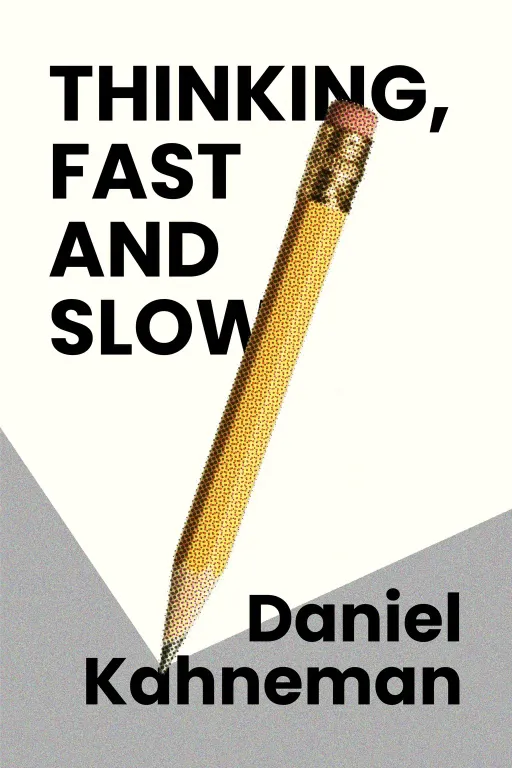
Nova: Daniel Kahneman, in his groundbreaking book "Thinking, Fast and Slow," introduces us to two systems of thought. System 1 is our fast, intuitive, emotional, and largely unconscious mode of thinking. It’s what gives us gut feelings and quick reactions. System 2, on the other hand, is slow, deliberate, logical, and requires effort. It's the part of our brain we is always in charge.
Atlas: Okay, System 1 and System 2. I can see that. My System 1 is definitely the one that says, 'Eat the cookie!' while System 2 eventually kicks in with, 'You said you were going to eat healthier today.' But how often is System 1 really running the show, especially when we believe we're being logical?
Nova: Far more often than we realize, and it can lead us significantly astray. Let me give you a classic example, a little brain teaser. Ready?
Atlas: Always ready for a brain teaser. Hit me.
Nova: A bat and a ball cost $1.10 in total. The bat costs $1.00 more than the ball. How much does the ball cost?
Atlas: Oh, I know this one! It’s ten cents. That’s System 1, right? Fast and intuitive.
Nova: Exactly! That’s your System 1 jumping to the most appealing, immediate answer. It feels right. But if the ball cost ten cents, and the bat cost a dollar more, the bat would be $1.10, making the total $1.20.
Atlas: Oh! Oh, wow. I totally fell for it. So the ball is five cents, and the bat is $1.05. That took my System 2 a moment to kick in. That’s incredible how quickly my brain just… decided.
Nova: It is. And that's the insidious power of System 1. It operates automatically and quickly, with little or no effort and no sense of voluntary control. It's fantastic for recognizing faces or driving a car on an empty road. But when it comes to problems that require a bit more deliberation, its biases can lead us down the wrong path. We see this with what Kahneman calls cognitive biases – things like confirmation bias, where we only seek out information that confirms what we already believe, or the availability heuristic, where we overestimate the likelihood of events that are easily recalled.
Atlas: So basically, my brain is constantly trying to take shortcuts, and sometimes those shortcuts drive me right into a wall. For someone who loves deep thinking and exploring new knowledge, this is almost… unsettling. It’s like discovering I’m not as much in control of my own intellect as I thought. How do I even begin to recognize these internal 'scripts' when they're so fast and subtle?
Nova: That's the million-dollar question, and the first step is simple awareness. Just knowing that System 1 exists and is prone to these biases is a game-changer. It encourages us to pause, to engage System 2, especially for important decisions. It means questioning our first instincts, seeking out disconfirming evidence, and actively considering alternative perspectives. It’s about becoming a detective in your own mind, looking for those moments where your gut reaction might be leading you astray. And speaking of leading us astray, or perhaps us, let's talk about the external forces at play.
The Power of Context: How 'Nudges' Shape Our Behavior Without Our Knowledge
SECTION
Nova: So, if Kahneman showed us the internal scripts, Thaler and Sunstein, in their book "Nudge," reveal the external ones. They explore how subtle changes in "choice architecture" – essentially, how choices are presented to us – can 'nudge' people towards better decisions without restricting their freedom.
Atlas: Nudges. So it’s not about forceful commands, but gentle pushes? That sounds a bit like manipulation, to be honest. Are we saying the world is just one big experiment in getting us to do things we might not otherwise do?
Nova: It can certainly feel that way, but the intention behind a nudge is often to help, not to manipulate. Think about a classic example: in some men's restrooms, they've etched the image of a fly into the urinal. It’s a tiny, almost invisible change, but it gives men a target, and it dramatically reduces spillage. That’s a nudge. No one is forced to aim at the fly, but the environment subtly encourages a certain behavior.
Atlas: Wow, that’s so simple, yet so effective. And a bit unsettling, yes. But that’s a small, almost trivial example. Can these nudges, these hidden scripts in our environment, influence truly significant decisions?
Nova: Absolutely. Consider the example of organ donation rates across different countries. In places where the default option is 'opt-in' – meaning you have to actively check a box to become an organ donor – the rates are often quite low. But in countries where the default is 'opt-out' – you are automatically a donor unless you actively uncheck a box – the rates are dramatically higher. We're talking 10-20% versus 90-99%.
Atlas: That’s a massive difference, and it’s all down to a simple check-box! That’s incredible. It makes you wonder how many choices I think I’m making freely are actually just me going along with the default setting someone else designed. For a curious learner, who's often looking for the optimal path, this is a huge insight. So, what’s the ethical line here? When does a helpful nudge become hidden persuasion or even outright manipulation?
Nova: That's a critical question, Atlas, and it's what Thaler and Sunstein call 'libertarian paternalism.' The 'libertarian' part means preserving people's freedom of choice, while 'paternalism' means guiding them towards choices that are generally better for them. The ethical line is often drawn at transparency and intent. A good nudge is usually transparent, easy to opt-out of, and designed to improve welfare, not just profit. Understanding nudges isn't just about spotting when are trying to influence you; it's also about how you can design your environment to nudge yourself towards better habits, better decisions.
Synthesis & Takeaways
SECTION
Nova: So, what we’ve seen today is that our decisions are a complex interplay of internal 'hidden scripts' – those fast, intuitive biases Kahneman described – and external 'nudges' in our environment, as Thaler and Sunstein revealed. They're two sides of the same coin, constantly shaping our reality, often without our conscious awareness.
Atlas: It really makes you rethink the idea of pure free will, doesn't it? I mean, my houseplant justification suddenly feels less like a personal quirk and more like a perfectly predictable System 1 response to an environment full of plant-influencers! But jokes aside, recognizing these forces feels incredibly empowering. It’s not about being a puppet, it’s about understanding the strings.
Nova: Exactly! It’s about gaining a profound insight into human behavior, including your own. The 'Tiny Step' we recommend for everyone, especially our curious listeners, is to observe a recent decision you made. Maybe it was something small, like what you chose for lunch, or something bigger, like a new subscription. Can you identify any 'hidden scripts' – those quick, biased thoughts – or any 'nudges' – how the options were presented – that might have influenced your choice?
Atlas: That's a brilliant way to start. Become a detective of your own decision-making. It’s not about self-judgment, but about self-awareness, which is the first step towards making more intentional choices. That’s a powerful takeaway.
Nova: It truly is. By understanding these unseen forces, we don't just react to the world; we can start to shape our own reactions and, perhaps, even shape the world around us for the better.
Atlas: That’s a fantastic way to put it. This has been a truly illuminating dive into the unseen architects of our minds and environments. Thank you, Nova.
Nova: Always a pleasure, Atlas.
Atlas: This is Aibrary. Congratulations on your growth!