The Hidden Forces: Understanding How People Really Make Decisions
Golden Hook & Introduction
SECTION
Nova: Atlas, I want you to name the last truly logical decision you made. The one where emotion, context, unconscious bias, absolutely zero hidden forces played a part. Go!
Atlas: Whoa, Nova! That's a tough one right out of the gate. I mean, my morning coffee choice felt logical – I needed caffeine. But was it logical? Was there a nostalgic pull for the smell of that specific roast? Was I subconsciously influenced by the barista’s smile? Okay, you got me. My gut says it was logical, but my brain, after that question, is now thinking it was a minefield of hidden influences.
Nova: Exactly! It’s almost impossible, isn’t it? And that’s the fascinating, sometimes frustrating, truth at the heart of our discussion today. We often operate under this assumption that people, ourselves included, are rational actors, making clear-headed decisions based on available facts. But that belief, as it turns out, is often our biggest blind spot.
Atlas: So, you’re saying my coffee choice, and probably every other choice I make, is less about pure reason and more about… subconscious puppet strings? That's a bit unsettling, but it certainly resonates with the idea of understanding human decision-making deeply, something our listeners, especially the strategists and innovators among them, are always seeking.
Nova: Absolutely. Today we’re dissecting. This isn’t a single book, but a concept that perfectly encapsulates the groundbreaking work of behavioral economists like Richard Thaler and psychologists like Daniel Kahneman. Their insights, which have fundamentally reshaped our understanding of human behavior, reveal that emotion, context, and those pesky unconscious biases don't just a role; they often the entire show.
Atlas: Right. And for anyone building the future, trying to make an impact, or just trying to optimize their own cognitive processes, ignoring these forces is like trying to navigate a ship with a faulty compass. You think you’re heading straight, but you’re drifting.
The Myth of Pure Logic: Unmasking Hidden Forces
SECTION
Nova: Precisely. The core idea, which Kahneman so brilliantly articulates in, is that we have two systems of thinking. There’s System 2: slow, deliberate, analytical, the one we we use all the time. But then there’s System 1: fast, intuitive, emotional, and largely unconscious. And that System 1? It’s running the show way more often than we realize.
Atlas: Oh, I like that. So, my coffee decision, that was System 1 saying, "Caffeine now, brain!" without a full cost-benefit analysis.
Nova: Exactly! Think about a classic example: imagine you're in a grocery store, and there are two identical jars of jam. One is priced at $5, the other at $7. Logically, you'd pick the $5 one, right? But what if the $7 jar has a fancy label, a story about its artisanal origin, or is placed on a higher, more prominent shelf? Suddenly, people often gravitate towards the more expensive one, perceiving it as 'better' or 'higher quality,' even if they're identical.
Atlas: Wait, so people pay more for the same jam just because of a label or where it sits on a shelf? That sounds… irrational. And kind of frustrating for anyone trying to make a truly objective choice.
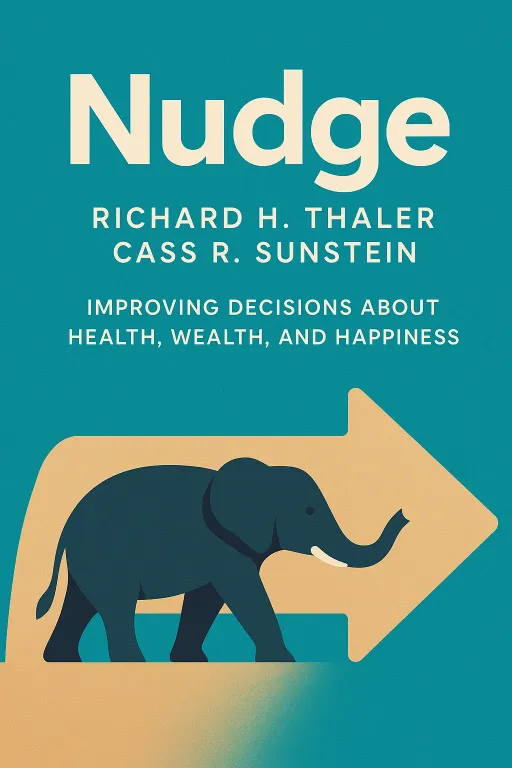
Nova: It is. The context – the 'choice architecture' as Thaler and Sunstein would call it – subtly nudges our System 1. We make a snap judgment based on aesthetics or perceived status, rather than a slow, deliberate comparison of ingredients. We assume the higher price denotes superior value. And we do this all the time, from what we buy, to who we vote for, to how we invest.
Atlas: So, it's like our brains are constantly looking for shortcuts, and those shortcuts aren't always leading us to the most optimal or logical destination. For someone who's driven by impact and seeking seamlessness in their approach, this is a critical insight. It means even our own 'foresight' could be colored by these hidden biases.
Nova: Absolutely. And it’s not a flaw; it’s just how our brains are wired to conserve energy. System 1 is efficient. But understanding its influence is key. Think about the 'deep question' we posed: Can you identify an emotional factor or unconscious bias that might have influenced a recent decision you made, even without realizing it? Most people can, once they start looking. It might be the fear of missing out driving a quick investment decision, or the desire for social approval dictating a choice in a team meeting.
Atlas: That makes me wonder, then, if we're so susceptible to these hidden forces and biases, are we just doomed to make irrational choices? Is there any way to actually 'optimize' our cognitive processes if we're constantly being swayed?
Architecting Better Choices: From Nudges to Systems
SECTION
Nova: That’s a brilliant question, and it leads us directly to "The Shift." The good news – and this is where Thaler and Sunstein's concept of "nudges" becomes so powerful – is that once we recognize these cognitive shortcuts, we can actually design better systems. We can create environments that guide people towards better decisions, for themselves and for our projects, often without them even realizing they're being guided.
Atlas: Okay, so we're not just passively observing our irrationality; we can actively do something about it. Like, if I know I'm prone to impulse buys, I can design my environment, say, by unsubscribing from marketing emails.
Nova: Exactly! That’s a personal nudge. On a larger scale, think about the classic example of automatic enrollment in retirement savings plans. Before, people had to actively opt-in, and many didn't, even though it was clearly in their long-term interest. The default was 'not enrolled.'
Atlas: Right, because System 1 says, "Too much paperwork, I'll do it later," and "later" never comes.
Nova: Precisely. Then, governments and companies shifted the default. Now, you’re automatically enrolled, but you can opt-out. The outcome? Participation rates skyrocketed. It’s the same choice, but a subtle change in the 'choice architecture' – the default option – created a massive positive impact. No mandates, no bans, just a gentle nudge leveraging our System 1's tendency to stick with the default.
Atlas: That’s fascinating. It's like gently steering a ship rather than trying to force it against the current. For our listeners who are leaders, building new companies, or even just trying to improve their personal habits, this concept of designing the environment feels incredibly powerful. It’s about leading with presence and purpose, but also with an understanding of human psychology.
Nova: It truly is. Another vivid example: in many countries, organ donation rates are dramatically different, even among culturally similar populations. Why? In some countries, you have to to be an organ donor – you check a box. In others, you’re automatically a donor unless you. The difference in rates is staggering, purely because of the default. This isn't about people being inherently more generous in one country; it's about the power of the default setting.
Atlas: Wow, that’s actually really inspiring. It means we don't have to fight against human nature; we can work it. It's about designing for the human, not for some idealized, purely logical being. That's a huge takeaway for anyone trying to build something that lasts or lead effectively. It moves beyond just understanding behavior to it for the better.
Synthesis & Takeaways
SECTION
Nova: And that’s the profound insight here. Recognizing these cognitive shortcuts isn't about highlighting our flaws; it's about giving us a superpower to design better outcomes. It's about consciously creating environments – whether it's your personal workspace, your team's decision-making process, or a global policy – that guide people towards choices that serve their long-term interests and the greater good.
Atlas: So, it’s not about trying to force ourselves or others to be perfectly logical, which is an impossible task. It’s about understanding that we human, with all our biases and emotions, and then building systems, processes, and even physical spaces that account for that. It's truly about mindful leadership and cognitive optimization in action.
Nova: Exactly. It’s an empowering shift from wishing people were different to understanding how they really are, and then leveraging that knowledge strategically. The impact potential is enormous.
Atlas: That makes me think about our deep question for today: Think about a recent decision you made. Can you identify an emotional factor or an unconscious bias that might have influenced your choice, even without you realizing it? Take a moment, truly reflect on that. You might be surprised by what you uncover.
Nova: And once you do, consider how you might 'nudge' yourself or your environment to make a different, more aligned choice next time. This is Aibrary. Congratulations on your growth!