The Hidden Cost of Speed: Why Rushing Decisions Can Undermine Your Strategy.
Golden Hook & Introduction
SECTION
Nova: What if the very speed you pride yourself on in decision-making is actually costing you your best strategic moves? We’re not talking about minor errors, but fundamental flaws baked into how our brains operate.
Atlas: Whoa, that's a bold claim, Nova. I think a lot of our listeners, especially those in high-pressure strategic roles, probably see speed as an asset, not a liability. We're constantly told to be agile, to move fast.
Nova: Absolutely, Atlas. And that's precisely the "hidden cost" we're diving into today. The pressure to make quick decisions is constant, but relying on that gut intuition, while sometimes effective, can lead to costly biases and missed opportunities in complex strategic planning.
Atlas: Okay, so you’re saying there's a dark side to our quick thinking? That’s intriguing. What are we unpacking to shed light on this?
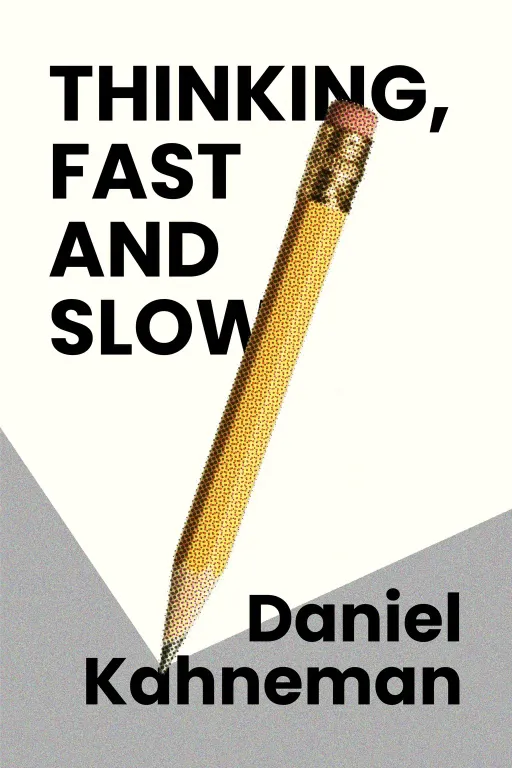
Nova: Today, we're drawing insights from two seminal works. First, Daniel Kahneman’s Nobel Prize-winning "Thinking, Fast and Slow," which utterly reshaped our understanding of human cognition. He's a psychologist who won a Nobel in Economic Sciences for this work, which tells you just how impactful it was.
Atlas: That's incredible. A psychologist influencing economics at that level means he hit on something universally true about how we operate.
Nova: Exactly. And building on that, we'll look at "Nudge" by Richard Thaler and Cass Sunstein. This book took those deep cognitive insights and showed how they could be applied to real-world problems, from public policy to personal finance, demonstrating the immense power of subtle environmental design. It's about making it easier for people to make good choices, often without them even realizing it.
Atlas: Now that you mention it, that sounds incredibly relevant for anyone trying to orchestrate strategy or uplift teams. Leaders want to empower their people, not dictate, but also ensure they’re making the calls.
The Dual Engines of Decision-Making: System 1 vs. System 2
SECTION
Nova: That's right, Atlas. And to truly understand this, we need to talk about Kahneman's core idea: our brains operate with two distinct systems of thought. He calls them System 1 and System 2.
Atlas: Okay, so two systems in one brain. Tell me more about System 1. Is that the "gut feeling" one?
Nova: Precisely. System 1 is our fast, intuitive, automatic, and often emotional thinking. It’s what allows you to instantly recognize a face, react to a sudden noise, or understand a simple sentence without effort. It's incredibly efficient, and it’s constantly running in the background, generating impressions and feelings.
Atlas: So, it’s our brain’s autopilot. It’s efficient, but I'm guessing that efficiency comes with some trade-offs.
Nova: You got it. While brilliant for survival, System 1 is also prone to biases. It loves shortcuts. For example, confirmation bias—it favors information that confirms what we already believe. Or the availability heuristic, where we overestimate the likelihood of events based on how easily examples come to mind. These are the blind spots that can undermine strategic decisions.
Atlas: I imagine a lot of our listeners, especially those leading teams, have felt the pull of that quick judgment. Maybe interviewing someone who just "feels right" or making a market forecast based on a recent success story. But what about System 2?
Nova: System 2 is the slow, deliberative, effortful, and logical thinking. This is what you engage when you're solving a complex math problem, learning a new skill, or, crucially, engaging in deep strategic planning. It requires attention and mental energy.
Atlas: So, it's the conscious processor. The one that analyzes, compares, and evaluates.
Nova: Exactly. The challenge is, System 2 is lazy. It prefers to defer to System 1 whenever possible to conserve energy. This is where the "hidden cost of speed" truly emerges. In a fast-moving strategic environment, we often default to System 1 thinking, even for complex problems that demand System 2.
Atlas: Can you give us an example of how this plays out in a real-world, high-stakes scenario? Because for a strategic orchestrator, these aren't just academic concepts.
Nova: Absolutely. Imagine a hospitality leader, under immense pressure to quickly roll out a new loyalty program to counter a competitor. System 1 kicks in, driven by the urgency and a desire to be first. The leader might recall a similar, successful program from a previous company, quickly approving a design that good. They might be swayed by the charismatic pitch of a vendor, or gloss over some of the fine print in the data analysis.
Atlas: So, they're relying on pattern recognition and an emotional response to the urgency, rather than deep analysis.
Nova: Precisely. The cause is the intense pressure and the leader's natural inclination to trust their "gut" in what like a familiar situation. The process is a rapid approval based on surface-level appeal and confirmation bias – looking for reasons to say yes, rather than critically evaluating potential pitfalls. The outcome? The program launches, but it's poorly integrated with existing systems, has hidden costs, and ultimately alienates a segment of their most valuable guests because their unique needs weren't deliberated upon. It was a speedy decision that led to a costly strategic blunder, all because System 1 dominated where System 2 was desperately needed.
Atlas: Wow, that’s a powerful example. It’s not just about getting it wrong, but about we get it wrong. But wait, Nova, isn't intuition sometimes a superpower for experienced leaders? I mean, shouldn't we trust our instincts, especially when we have years of experience?
Nova: That's a fantastic point, Atlas, and it's a critical nuance. Intuition be a superpower, but primarily in predictable environments where you receive clear, immediate feedback. Think of a chess grandmaster or a firefighter. They've seen thousands of patterns, and their "gut" is actually highly trained System 1 recognition. However, in truly novel, complex strategic situations – where the rules are changing, or feedback is delayed and ambiguous – relying solely on that same intuition can be dangerous. It's about knowing when your intuition is a finely tuned instrument, and when it's just guessing.
Nudging Towards Better Choices: Engineering Strategic Environments
SECTION
Atlas: So, if our brains are wired this way, and System 2 is lazy, what do we do about it? How do we stop making these expensive, System 1-driven mistakes, especially when the clock is ticking?
Nova: That's where "Nudge" comes in, and it's truly transformative. Thaler and Sunstein argue that simply understanding these biases isn't enough. We need to actively design our environments—what they call "choice architecture"—to make it easier for ourselves and our teams to engage System 2 and make more optimal decisions.
Atlas: Okay, so it’s about engineering the environment, not just trying to willpower our way into better thinking. Like, making the healthy food option more visible at a buffet?
Nova: Exactly! That’s a perfect example of a nudge. It doesn't restrict choice; you can still grab the unhealthy option. But by changing the default or the presentation, you subtly guide people towards a better decision. For strategic leaders, this is incredibly powerful.
Atlas: I'm curious how a leader can design their team's "choice architecture" to get more deliberative thinking, especially in a fast-paced industry like hospitality. Because I imagine a lot of our listeners want to foster critical thinking, but without creating bottlenecks.
Nova: Let’s take another example. Remember the loyalty program blunder from earlier? A leader could implement a "strategic pause" nudge. Instead of immediately approving a new initiative, the default process could be a mandatory 48-hour cool-down period for any major strategic decision. During this time, the team is required to review a pre-defined checklist of potential biases – "Are we falling for confirmation bias here? Is the anchoring effect at play?"
Atlas: Oh, I see. So the nudge isn't about telling them to decide, but to decide. It forces System 2 to engage before System 1 can run away with it.
Nova: Precisely. Another nudge could be a "devil's advocate" role assigned rotationally within the strategic team for every major proposal. It's not about being negative, but about proactively seeking out flaws and alternative perspectives. It’s a subtle intervention that makes critical thought a default part of the process, rather than an afterthought.
Atlas: That's brilliant. It's like building speed bumps into the decision-making highway, but they're not there to stop you, just to make you slow down and look around. My only concern is, isn't this a bit manipulative? Are we just tricking people into doing what we want?
Nova: That's a valid and important question, Atlas. Thaler and Sunstein are very clear on this: nudges should be transparent and easily avoidable. The goal isn't to coerce, but to make the path of least resistance align with the objectively better choice. It's what they call "libertarian paternalism"—preserving freedom of choice while guiding people towards outcomes that are demonstrably in their best interest. For a strategic orchestrator, it's about helping your team achieve better outcomes for the organization and for your guests, not about control.
Synthesis & Takeaways
SECTION
Nova: So, what we've discovered today is that true strategic mastery isn't about eliminating speed entirely. It's about understanding when to embrace the lightning-fast efficiency of System 1, and when to deliberately engage the more thoughtful, analytical power of System 2. It’s about building those internal mental models and external environmental nudges that support deeper thinking.
Atlas: That's a profound insight, Nova. It really reframes the whole idea of efficiency. It's not just about doing things quickly; it's about doing the things thoughtfully, and creating systems that enable that. It’s about designing for deliberative excellence.
Nova: Exactly. The hidden cost of speed comes when we let System 1 drive decisions that demand System 2, leading to biases, blind spots, and ultimately, undermined strategy. But by understanding our cognitive architecture and designing our choice architecture, we can turn speed into an ally, not a hidden cost.
Atlas: That makes me think about a recent quick decision I made. I'm sure many of our listeners can relate. So, for everyone out there, reflect on a recent quick decision you made: What underlying assumptions or biases might have influenced your choice, and how could a 'nudge' have helped? Maybe a strategic pause, or a mandatory devil's advocate?
Nova: We'd love to hear your insights and examples! Share your reflections with us on social media. Let's continue this conversation about making smarter, more impactful strategic choices.
Atlas: This is Aibrary. Congratulations on your growth!