The Hidden Cost of Decision-Making: Rethinking Rationality for Impact.
Golden Hook & Introduction
SECTION
Nova: You think you're rational? Think again. The biggest decisions of your life, the ones you swear were purely logical, might actually be rooted in a fleeting emotion or a mental shortcut you didn't even know existed. And that hidden cost? It's far greater than you imagine.
Atlas: Whoa, Nova, you're coming out swinging today! You're saying my meticulous spreadsheets and strategic plans might just be… a façade? That my 'rational' choices are actually driven by something I'm not even aware of? That sounds almost unsettling for anyone who prides themselves on logical thought.
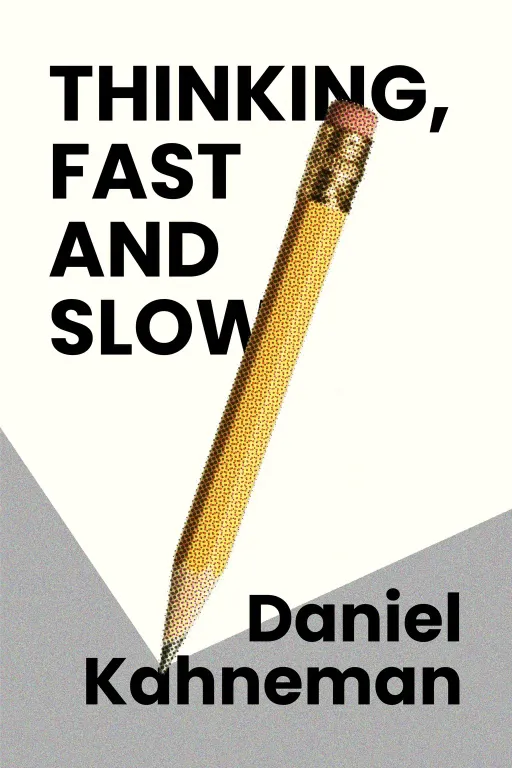
Nova: Unsettling, yes, but also incredibly liberating once you understand it. Today, we're diving into "The Hidden Cost of Decision-Making: Rethinking Rationality for Impact." This isn't just a catchy title; it's a deep exploration of the groundbreaking work by two Nobel laureates, Daniel Kahneman and Richard Thaler. Their insights fundamentally reshaped how we understand human choice, effectively creating the entire field of behavioral economics.
Atlas: Nobel Prize winners, huh? That's serious intellectual firepower. It makes me curious how such acclaimed work could challenge something as fundamental as our belief in our own rationality. For strategists and innovators, understanding the 'why' behind our decisions is paramount.
Deep Dive into Core Topic 1: The Blind Spot (Kahneman's Systems & Biases)
SECTION
Nova: Exactly. Kahneman, in particular, introduced us to the idea that our brains operate on two distinct systems. Imagine you’re driving a car. System 1 is like cruising down an empty highway—fast, automatic, effortless. You’re not consciously thinking about every turn of the wheel or every gear shift. It's our intuition, our gut reactions.
Atlas: So, that's the 'fast' thinking? The snap judgments, the immediate feelings we get about something or someone?
Nova: Precisely. Now, System 2 is when you hit rush hour traffic in a complicated city. It's slow, deliberate, effortful. You're consciously navigating, planning, calculating. This is where logic, analysis, and deep problem-solving happen. The problem is, we System 2 is always in charge, but System 1 often calls the shots without us even knowing.
Atlas: I guess that makes sense. But are you saying our gut feelings aren't always our friends? What about those 'instincts' that strategists often rely on when building foundations or making quick calls in a crisis? There’s a lot of talk about trusting your gut.
Nova: Oh, System 1 is brilliant for many things – recognizing faces, reacting to danger, even complex skills once they're mastered. The danger comes when it encounters situations it's not designed for, or when it’s influenced by what Kahneman called 'cognitive biases.' Take, for example, the 'sunk cost fallacy.'
Atlas: The sunk cost fallacy… I know that phrase, but what does it really look like in the wild?
Nova: Imagine a high-tech startup. They've poured millions into developing a new product, let's call it "Project Phoenix," for two years. They’ve invested countless hours, resources, and their reputation. Now, recent market analysis clearly shows the product is obsolete and won't succeed. A purely rational System 2 decision would be to cut losses and pivot.
Atlas: But… they don't, do they?
Nova: Often not. The team, the leaders, they’ve invested so much emotionally and financially, that System 1 kicks in. They think, "We can't just abandon all that effort! We're so close!" They double down, pouring money into a failing venture, driven by the desire not to 'waste' what's already been spent, rather than the logical assessment of future prospects. The 'hidden cost' here isn't just the initial investment, but the millions and years lost that could have been invested in a viable project.
Atlas: Oh man, that's actually really inspiringly frustrating. I can immediately think of a recent strategic decision we made where we debated heavily whether to continue with a certain initiative. It makes me wonder how much of that initial momentum, that 'we've come so far' feeling, was System 1 trying to take the wheel. But how do you even these biases when they're supposed to be 'hidden'? For someone trying to build solid, impact-driven plans, this feels like trying to fight a ghost.
Deep Dive into Core Topic 2: The Shift (Thaler's Nudge & Designing for Impact)
SECTION
Nova: Well, Atlas, that’s where our second big idea comes in, and it’s a brilliant pivot from just understanding the problem to actively designing solutions. If we can't always trust our own brains to make perfectly rational choices, especially under pressure, maybe we can design the world around us to help. This is where Richard Thaler's Nobel-winning work on 'nudge theory' becomes incredibly powerful.
Atlas: 'Nudge'? That sounds… a bit manipulative. Is this about tricking people into doing what we want, or is there a genuine ethical dimension here for innovators and architects who care about making a lasting, positive impact? I'm thinking about our listeners who are trying to build trust and long-term relationships.
Nova: That's a crucial question, and Thaler is very clear: a nudge is any aspect of the choice architecture that alters people's behavior in a predictable way without forbidding any options or significantly changing their economic incentives. It's not about manipulation; it's about, rather than against it. It's about choice architecture.
Atlas: Okay, so give me an example of a good 'nudge' that doesn't feel like coercion.
Nova: Think about organ donation. In some countries, you have to actively to be an organ donor. The default is 'no.' Unsurprisingly, donation rates are low. In other countries, you are automatically opted-in, and you have to if you don't want to be a donor. The default is 'yes.' The result? Significantly higher donation rates. No one's freedom is restricted; you can still choose not to donate. But the default option, the 'nudge,' guides people towards a choice that benefits society.
Atlas: Wow, that's incredible. It's like building the path of least resistance towards a better outcome. So, for an innovator or an architect, this is less about forcing decisions and more about designing the to better decisions. It's about building a foundation where good choices are easier to make, almost inevitable. How can a strategist use this to make their teams or their customers make better choices, without them even realizing they're being 'nudged'?
Nova: Exactly! For a strategist, it means anticipating human behavior. Instead of just telling your team, "Be more innovative," you might 'nudge' them by scheduling dedicated, distraction-free innovation blocks into their calendars, making it the default. Or, for customers, if you want them to adopt a new, more sustainable product, make it the default option they see first, or bundle it with incentives that make the 'easy' choice also the 'best' choice for them. It’s about understanding the biases and then designing systems that work them, not against them, to achieve the desired impact.
Synthesis & Takeaways
SECTION
Nova: So, what we've really been talking about today is this profound shift: true rationality isn't about trying to perfectly suppress our intuitive System 1, which is practically impossible. Instead, it's about acknowledging its power and its pitfalls, then using our deliberate System 2 to proactively design environments and choices that lead us to better outcomes.
Atlas: That gives me chills, actually. It means the real impact comes not from trying to be perfectly rational in every moment, but from understanding our beautiful, messy brains, and then building systems and plans that account for them. It's about designing for human nature.
Nova: Absolutely. The hidden cost of decision-making isn't just about the mistakes we make; it's about the lost potential for truly impactful solutions when we don't understand the mechanisms behind our choices. Recognizing these mental shortcuts is vital for anyone trying to design solutions that anticipate human behavior and make more robust, impact-driven choices.
Atlas: And for our listeners who are architects of their own future, building their business blueprints or innovating for impact, remember that the best plans aren't just about structure and logic. They're about understanding the human element that will interact with them. It’s about building a world where good decisions are simply easier to make.
Nova: Precisely. Before you make your next big decision, take a moment and ask yourself: Is System 1 or System 2 driving this choice? This is Aibrary. Congratulations on your growth!