The Heuristic Trap: Why You Need Clear Decision Rules.
Golden Hook & Introduction
SECTION
Nova: Atlas, quick! Give me the first thing that comes to mind: 'gut feeling.'
Atlas: Trouble.
Nova: 'Data point.'
Atlas: More trouble.
Nova: 'Decision.'
Atlas: Panic!
Nova: Exactly! And today we're going to unpack why. Because for all our listeners who are navigating complex situations, making high-stakes choices, and always seeking to master their craft, that gut feeling, those data points, and the decisions that follow, often lead us down a path we didn't intend.
Atlas: Oh, I know that feeling. It's like your brain is trying to help, but it's actually just throwing shortcuts at you when you need a detailed map. So we're saying our own brains are working against us sometimes?
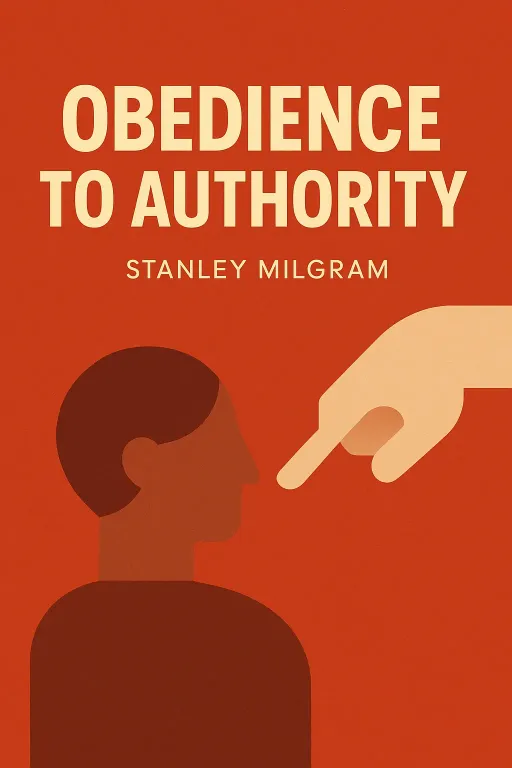
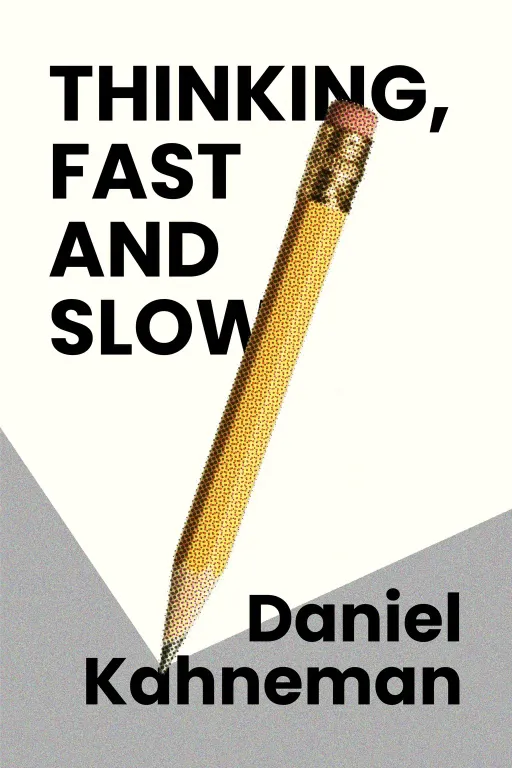
Nova: In a way, yes! We're diving into what we call 'The Heuristic Trap,' why you need clear decision rules. And the insights today are really drawing from some foundational thinkers: Daniel Kahneman, the Nobel laureate who quite literally wrote the book on how our brains make decisions, and Richard Thaler, another Nobel winner, who showed us how subtle environmental cues can 'nudge' us. These aren't just academic theories, Atlas; these are the blueprints to our mental shortcuts, the hidden wiring of our minds.
Atlas: Okay, so this isn't just about 'thinking harder,' it's about understanding the actual wiring and why it sometimes misfires. That’s going to resonate with anyone who struggles with making truly informed decisions, especially when the stakes are high.
The Heuristic Trap: System 1 vs. System 2 Thinking
SECTION
Nova: Absolutely. And Kahneman gives us this incredible framework for understanding that wiring: System 1 and System 2 thinking. Think of System 1 as your brain on autopilot – fast, intuitive, emotional, always looking for a quick answer. It's what lets you recognize a friend's face or slam on the brakes without thinking. It's incredibly efficient.
Atlas: That makes sense. It’s like the brain’s default setting, right? Super useful for everyday stuff, like walking or making a cup of coffee.
Nova: Exactly. But then you have System 2, which is slow, logical, effortful. This is the part of your brain that engages when you're doing complex math, learning a new language, or, crucially, dissecting a detailed report. It requires energy and focus. The trap, the 'heuristic trap,' emerges when we let System 1 handle situations that really demand System 2.
Atlas: Hold on, so System 1 is like the quick-draw cowboy, and System 2 is the meticulous detective? Give me an example of how that quick-draw cowboy, System 1, gets us into trouble, especially when numbers are involved. For someone who's always dissecting data, this feels critical.
Nova: A classic example is the anchoring bias. Imagine you’re negotiating a price for something, say a car or a project bid. The first number mentioned, even if it's completely arbitrary, tends to 'anchor' the subsequent discussion. So, if a seller starts with an outrageously high price, even if you negotiate them down significantly, your final offer will likely still be higher than it would have been if they'd started with a more reasonable figure. Your System 1 latches onto that initial anchor.
Atlas: That’s insidious! I can definitely see how that plays out in business negotiations. But wait, isn't a 'gut feeling' sometimes right? For a pragmatic analyst, waiting for System 2 to kick in, to do all that heavy lifting, can feel incredibly inefficient. How do we know when to trust that initial instinct and when to really slow down?
Nova: That’s the million-dollar question, isn't it? System 1 is excellent for familiar patterns, situations where you have a lot of experience and the environment is stable. A firefighter's 'gut feeling' in a burning building, for instance, is often System 1 expertise. But in novel, complex, or high-stakes situations, especially where raw data needs careful interpretation, that's where System 2 be engaged. It's about recognizing the. Is this a routine problem, or a unique challenge?
Atlas: So it's like having two different operating systems, and we need to know which one to run for which task, almost consciously. That’s a powerful distinction.
Architecting Decisions: Nudges and Choice Environments
SECTION
Nova: Speaking of operating systems, what if we could design the around us to make better decisions almost automatically? That's where Richard Thaler's groundbreaking work on 'nudge' comes in. He argues that by subtly changing the 'choice architecture' – how options are presented – we can guide decisions without restricting freedom.
Atlas: Okay, 'nudge' – that sounds a bit like manipulation. Are we talking about subliminal messages or something more ethical? Because I imagine a lot of our listeners care about guiding teams towards better outcomes, not tricking them.
Nova: That's a crucial distinction. Thaler emphasizes that a nudge is any aspect of the choice architecture that alters people's behavior in a predictable way without forbidding any options or significantly changing their economic incentives. It's not about manipulation; it's about making the ideal choice the choice.
Atlas: Can you give me a really vivid example of how a 'nudge' works in the real world? Something that clearly shows its impact.
Nova: Absolutely. Think about organ donation. In some countries, you have to actively 'opt-in' to be an organ donor – you check a box on a form. The participation rates are often quite low. But in other countries, the default is 'opt-out' – you are automatically a donor unless you explicitly check a box to be. The difference in donation rates is staggering, often over 90% for opt-out versus 15-20% for opt-in. The choice architecture, that simple default setting, completely changes behavior.
Atlas: Wow, that’s incredible. So it's about making the 'right' choice the path of least resistance. That’s going to resonate with anyone trying to implement new strategies or guide human behavior. How can someone apply this in their own life or in designing a system? What's a personal 'nudge' I can set up for myself, especially if I'm trying to master a new habit or break an old one?
Nova: For personal application, it's about designing your own environment. If you want to eat healthier, don't just 'try harder.' Nudge yourself! Put healthy snacks at eye level in the fridge and hide the less healthy ones. If you want to save money, set up an automatic transfer to your savings account the day your paycheck comes in. That's a proactive, personal nudge. For organizations, it means thinking about default settings in software, the layout of a cafeteria, or the pre-selected options in a benefits plan. These small, often invisible choices have massive impacts.
Atlas: So it's about proactively shaping the decision landscape, rather than just reacting to it. That sounds much more strategic, especially for someone who aims for tangible impact. It's a layer of control you don't even realize you have.
Synthesis & Takeaways
SECTION
Nova: Exactly. So, what we've really explored today is this dual approach to making truly informed and impactful decisions. First, understanding our own internal cognitive biases, knowing when our fast System 1 is leading us astray and when to engage our slow, deliberate System 2. And second, realizing that our external environment is constantly 'nudging' us, and we have the power to become architects of that environment, designing it for better outcomes.
Atlas: So, if I'm facing a really critical decision, one that needs real impact, and I'm staring at a spreadsheet full of numbers, what's the absolute first thing I should do? What's that tiny, actionable step to cut through the noise and avoid the heuristic trap?
Nova: The tiny step is this: pause. Seriously, just pause. And then, ask yourself two questions: "What's my System 1 telling me right now? What's my gut instinct, my immediate reaction?" And then, "What data does System 2 need to verify, challenge, or refine that initial System 1 thought?" And as an added layer, write down three potential biases that might be at play in this specific decision. Are you anchoring to an old belief? Are you only seeing data that confirms what you already suspect?
Atlas: That’s brilliant. It's about building in that friction, that pause, to really engage the right system. And thinking about the biases upfront... that's like putting on intellectual armor before you step into the decision arena. It feels like a small habit with massive implications for anyone who values precise, effective decision-making.
Nova: Absolutely. It’s a small habit, but the impact on the quality of your decisions, especially when numbers are on the line and you're seeking real-world value, can be profound. It truly is about understanding your own mind and then mastering the environment around you.
Atlas: A powerful reminder that mastery often comes from understanding our own limitations first, and then strategically overcoming them. This was incredibly insightful.
Nova: Absolutely. And for all our listeners who crave unique insights and challenge conventional thinking, we hope this episode sparked some deep reflection on how you make your most important choices.
Nova: This is Aibrary. Congratulations on your growth!