The Empathy Gap: Why Data Alone Fails to Capture the Human Experience
Golden Hook & Introduction
SECTION
Nova: You know, Atlas, we often pride ourselves on being rational beings, making logical decisions based on clear data. But what if I told you that most of what drives our choices, our preferences, even our deepest beliefs, is actually happening below the surface, in a realm of instinct and emotion?
Atlas: Oh, I know that feeling. It’s like when I I should go to bed early, but suddenly it’s 2 AM and I’m watching a documentary about competitive cheese rolling. My rational brain is screaming, but my intuitive self is just… along for the ride.
Nova: Exactly! That's the perfect illustration of what we're diving into today: "The Empathy Gap: Why Data Alone Fails to Capture the Human Experience." We're going to explore why our perfectly logical, data-driven approaches often miss the mark when it comes to human behavior, and how understanding our inherent irrationality can actually be our greatest strategic advantage.
Atlas: That's a great way to put it. So, we're talking about the science behind why we do the things we do, even when they don't make logical sense?
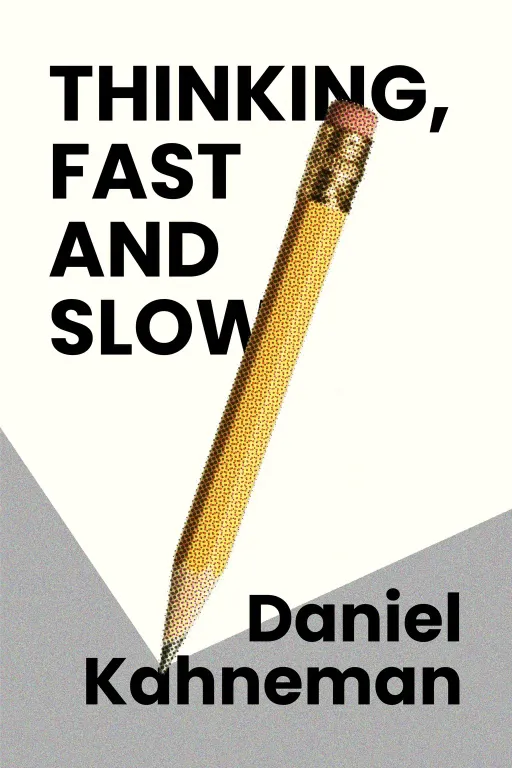
Nova: Precisely. And our guides today are two seminal works that completely reshaped our understanding of human decision-making: "Thinking, Fast and Slow" by the brilliant Daniel Kahneman, and "Nudge" by Richard H. Thaler and Cass R. Sunstein. Both Kahneman and Thaler are Nobel laureates for their groundbreaking work in behavioral economics, fundamentally proving that psychology and economics are intimately intertwined.
Atlas: Wow, Nobel laureates. That immediately tells me this isn't just pop psychology; this is serious science.
Nova: Absolutely. And their insights fundamentally shift our perspective from expecting pure rationality to understanding the inherent irrationality in human behavior. That understanding, Atlas, is crucial for effective product design and communication, especially for anyone looking to make a real impact.
The Blind Spot: Why Data Alone Fails the Human Experience
SECTION
Nova: So, let's start with Kahneman's work. He introduces us to two systems of thinking: System 1, which is fast, intuitive, emotional, and largely unconscious; and System 2, which is slow, deliberate, rational, and effortful. Most of our daily decisions, Atlas, are made by System 1.
Atlas: So you’re saying that when I'm quickly deciding what to eat for lunch, that's System 1, but when I'm meticulously planning a complex project, that's System 2?
Nova: That’s a perfect example. And the problem is, System 1, while efficient, is prone to biases and shortcuts. Take the 'anchoring effect,' for instance. It's a cognitive bias where our decisions are disproportionately influenced by the first piece of information we encounter, even if it's irrelevant.
Atlas: Hold on, so even with all our data and analytical tools, we're still susceptible to these mental shortcuts? That sounds rough for anyone in product design trying to get unbiased feedback.
Nova: It absolutely is. Imagine a tech company launching a new health app. They've poured over user data, A/B tested features, run surveys. But if their initial pricing page subtly anchors users to a much higher-priced premium tier, even if they eventually choose a cheaper option, their perceived value of the cheaper option might be skewed. They might feel like they're getting a deal, when in fact, the anchor created an artificial perception of value. The data might show "users chose the mid-tier," but it wouldn't tell you they chose it in relation to that initial anchor.
Atlas: That makes me wonder, how does this play out in a real product design scenario for, say, a new sleep product? A scientist or an innovator would naturally focus on the objective benefits: "This mattress reduces pressure points by 30%," "This light therapy device emits optimal wavelengths for melatonin production." But if System 1 is in charge, those logical arguments might just bounce right off.
Nova: Exactly! For a sleep product, a purely data-driven approach might highlight sleep cycle graphs and REM percentages. But System 1 doesn't care about percentages; it cares about comfort, peace of mind, and the of a good night's sleep. If the product packaging uses calming colors and evokes a sense of tranquility, that's System 1 working. If the marketing focuses on "reclaiming your mornings" rather than "optimizing your sleep architecture," that's understanding the emotional shortcut.
Atlas: So, the blind spot isn't just about missing data; it's about missing the data, the emotional and intuitive responses that drive actual behavior. The 'why' behind the 'what.'
The Shift: Leveraging Behavioral Insights for Better Design and Communication
SECTION
Nova: But understanding these biases isn't just about identifying flaws; it's about empowerment. This is where Thaler and Sunstein’s "Nudge" comes in. They argue that if we understand how System 1 works, we can design environments—what they call "choice architecture"—that subtly guide people towards better decisions without restricting their freedom of choice.
Atlas: That’s fascinating. So, we're not forcing people, but we're making the healthier or more beneficial choice the easiest or most obvious one? Like, instead of saying "eat your vegetables," you put the vegetables at eye level in the cafeteria line?
Nova: Precisely! One classic example from "Nudge" is the organ donation system. In countries where people have to to be organ donors, rates are much lower. But in countries where the default is —meaning you're a donor unless you specifically choose not to be—donation rates skyrocket. It's the same choice, but the default "nudge" makes a massive difference because System 1 prefers the path of least resistance.
Atlas: Wow, that’s so powerful. It makes me think about the deep question we're grappling with: how might you design a sleep product or communication strategy that 'nudges' users towards healthier habits, rather than relying solely on logical arguments?
Nova: Let's take that sleep product example. Instead of just listing scientific benefits, perhaps the product itself incorporates a "nudge." Imagine an alarm clock that doesn't just blare, but gently increases the light in your room over 30 minutes, simulating a natural sunrise. Or a smart pillow that subtly vibrates to shift your position if it detects snoring, rather than a jarring sound.
Atlas: That’s a great example. You're leveraging our natural physiological responses rather than trying to overpower them with willpower. But isn't there a fine line between nudging and manipulation? For an innovator driven by impact and well-being, that ethical consideration is paramount.
Nova: Absolutely. Thaler and Sunstein are very clear on this: a true nudge is transparent, easy to opt out of, and genuinely benefits the individual. It's about designing for human flourishing, not exploiting vulnerabilities. For that sleep product, the 'nudge' is making the choice the choice. It's not tricking you; it’s making it effortless to adopt a better habit. And in communication, it means framing the message not just with data, but with stories, analogies, and emotional resonance that speak directly to System 1 while still being grounded in truth.
Atlas: So, for the scientist, the strategist, the innovator, it’s about moving beyond just the data, to truly the human at the other end of that data. It's about empathy amplifying data, as our growth recommendations suggest. It's designing human nature, not against it.
Synthesis & Takeaways
SECTION
Nova: That’s it exactly, Atlas. The profound insight here is that true innovation and lasting impact don't just come from scientific rigor or objective data alone; they come from combining that rigor with a deep, empathetic understanding of human psychology. It’s about recognizing that our brains are wired for shortcuts, for emotions, for narratives, and then designing products and strategies that respect and guide that wiring.
Atlas: So, for the data-driven innovator trying to make a real difference, what's the most powerful lesson here?
Nova: The most powerful lesson is to embrace the beautiful, messy irrationality of being human. Don't fight it; design it. Because when you design with empathy for how people think and feel, rather than how you wish they would, you unlock a far greater potential for transformation and well-being. It's about creating choice architectures that make the healthy, beneficial choices feel effortless, almost invisible. That's where science meets soul.
Atlas: That gives me chills. It’s about building a better world, one subtle, human-centric nudge at a time.
Nova: Precisely.
Atlas: This is Aibrary. Congratulations on your growth!