The Cognitive Trap: Why Your Brain Plays Tricks and How to Win
Golden Hook & Introduction
SECTION
Nova: Atlas, give me your five-word review of the human brain. Go!
Atlas: Oh, I love this! Okay, five words… I’d say: Brilliant, lazy, confident, flawed, and… predictable.
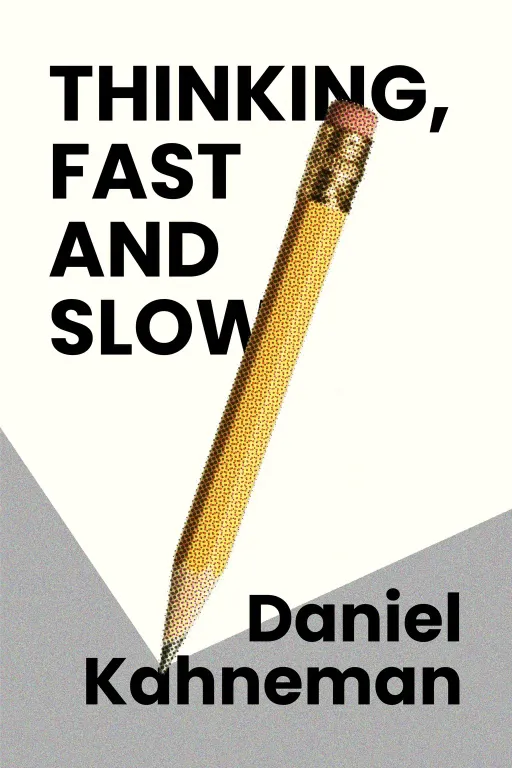
Nova: Predictable! That’s the perfect, absolutely perfect segue into our topic today. We’re diving into 'The Cognitive Trap: Why Your Brain Plays Tricks and How to Win.' And at the heart of this, we have the groundbreaking work of Daniel Kahneman, a psychologist who, remarkably, won the Nobel Prize in Economics.
Atlas: A psychologist winning an economics prize? That alone feels like my brain playing tricks on me! That sounds a bit out there.
Nova: Exactly! It fundamentally shifted how we understand decision-making. Kahneman, along with Amos Tversky, really showed us just how predictably irrational we can be, revealing the powerful, often unseen, forces at play within our minds that influence everything from our grocery choices to global policy.
Atlas: So, what are these 'tricks' our brilliant, yet lazy, brains are falling for?
The Blind Spot: Unmasking Cognitive Biases
SECTION
Nova: Well, the first big idea is what we call 'The Blind Spot.' We often trust our intuition completely, believing our minds are always rational, always logical. But our brains, in their efficiency, have built-in shortcuts – what we call cognitive biases – that can lead us astray. They’re like automatic filters, and often, we don’t even realize they’re there.
Atlas: Wait, so my gut feeling about things is often just… wrong? But it so right when I’m making a snap judgment. I imagine a lot of our listeners feel that way, especially when they're making quick decisions in a fast-paced environment.
Nova: Absolutely. Take the availability heuristic, for example. It’s when we judge the likelihood of an event based on how easily examples come to mind. If you’ve just seen a dramatic news report about a plane crash, you might suddenly feel more anxious about flying, even though statistically, driving is far more dangerous. The vividness of the image, the emotional impact, makes it feel more probable, more 'available' to your memory.
Atlas: So it's like our brain prioritizes a dramatic headline over boring facts and statistics. That’s going to resonate with anyone who’s ever made a hasty decision based on a strong, but perhaps misleading, feeling. Like, I’ve heard about someone making a big investment choice based on a single, compelling anecdote they heard, rather than looking at the broader market data.
Nova: Precisely. The vivid story, the emotional resonance, it activates what Kahneman calls System 1 thinking – our fast, intuitive, emotional brain. It’s brilliant for quick reactions, for recognizing a friend’s face, for driving a car on a familiar route. But it’s also prone to these biases. And another classic is confirmation bias.
Atlas: Oh man, confirmation bias. I’ve been thinking about this a lot. That’s where you actively seek out information that supports your existing beliefs and ignore anything that contradicts them, right?
Nova: Exactly. Imagine you have a strong opinion about a certain political issue. You're much more likely to read articles, watch news channels, and talk to people who already agree with you. Your brain is efficiently confirming what it already 'knows,' making it harder to learn new things or even consider alternative perspectives.
Atlas: But isn't that just human nature? We like to be right. It’s kind of comforting to have your beliefs affirmed. How do you even 'win' against something so ingrained in our mental wiring? It sounds like we're fighting an uphill battle against our own minds.
The Shift: System 1 vs. System 2 Thinking and Nudging Better Decisions
SECTION
Nova: That’s a fantastic question, Atlas, because it leads us directly to the 'how to win' part. Kahneman's work, especially in 'Thinking, Fast and Slow,' introduces us to two distinct modes of thought: System 1 and System 2. We already touched on System 1 – that fast, automatic, emotional, almost unconscious way of thinking. It’s your brain recognizing a pattern, or reacting to a sudden sound.
Atlas: Okay, so System 1 is like my brain on autopilot, handling all the routine stuff without me really thinking about it. And System 2 is when I'm actually trying to – like solving a complex math problem or deliberately choosing my words carefully.
Nova: You got it. System 2 is slow, effortful, logical, and deliberate. The challenge is, System 1 often dominates, especially when we’re tired, distracted, or simply not paying attention. It’s efficient, but it leads to predictable errors like the biases we just discussed. So, the 'win' isn't about eradicating System 1, it's about understanding when to engage System 2, and how to design our environment to help us.
Atlas: So you're saying it's not just about brute-forcing our way to better decisions with willpower, but about being clever about we make those decisions?
Nova: Precisely. And that’s where the insights from 'Nudge' by Richard Thaler and Cass Sunstein become so powerful. Building on behavioral economics, they show how small, subtle interventions – 'nudges' – can influence human behavior without restricting choices. It highlights how our environment can be designed to help us make better decisions, acknowledging our inherent biases.
Atlas: Like how? Give me a real-world example, because that sounds almost too easy. I imagine a lot of our listeners are thinking, 'How can something so subtle actually work?'
Nova: Think about a school cafeteria. If the healthier food options – the salads, the fruits – are placed at eye level, prominently displayed, and easily accessible, while the less healthy options are tucked away slightly, people will naturally choose the healthier options more often. Nobody is to eat salad, they still have the choice of fries, but the environment has been 'nudged' to make the better choice easier and more salient.
Atlas: So it's like rearranging the candy aisle to put the apples front and center? That’s actually brilliant! It’s not about forcing me to eat an apple, it’s just making the apple easier to grab. I imagine a lot of our listeners in high-pressure environments could use this, not just to influence others, but to 'nudge' themselves into better habits – like setting up their workspace to minimize distractions, or planning their day to prioritize deep work.
Nova: Exactly! It’s about leveraging our understanding of System 1’s preferences and System 2’s potential to make better choices almost effortlessly. These insights fundamentally shift how we view our own decision-making, moving from a battle of willpower to a strategic design challenge.
Atlas: That completely shifts the idea of willpower from a brute force battle to a smart design challenge. So, what's one practical takeaway people can use right now?
Synthesis & Takeaways
SECTION
Nova: The profound insight here, Atlas, is that our brains are not always our best advisors, especially when running on autopilot. The first step to winning this cognitive trap is simply awareness. Recognizing that you have these blind spots, that System 1 is always looking for shortcuts, is incredibly empowering. It allows you to pause, engage System 2, and question your initial intuitions.
Atlas: That makes me wonder… the book asked a deep question: "Think of a recent decision you made. Can you identify any cognitive biases that might have influenced your choice?" I think that’s a powerful challenge for our listeners. It's not about self-criticism, but self-awareness.
Nova: Absolutely. So, for our listeners, here’s a concrete step you can take: Next time you make a significant decision, especially one with high stakes, pause and ask yourself if you’re relying too heavily on your immediate gut feeling. Try to actively seek out information that might contradict your initial thought. Play devil's advocate with your own brain for a moment.
Atlas: That's actually really inspiring. It’s taking control back from those subconscious shortcuts. It’s about being more intentional in a world that constantly bombards us with information designed to trigger those biases. I encourage everyone to try that this week.
Nova: It’s a small shift, but it has profound implications for clearer thinking and better outcomes.
Atlas: What a journey into the mechanics of our own minds!
Nova: Indeed.
Atlas: This is Aibrary. Congratulations on your growth!