The Cognitive Bias Trap: Why Your Brain Tricks You Into Bad Decisions
Golden Hook & Introduction
SECTION
Nova: Atlas, quick! I say "decision," you give me the first word that comes to mind. Ready?
Atlas: Oh, I'm always ready. Hit me.
Nova: "Decision."
Atlas: Regret.
Nova: Ouch! That hit deeper than I expected. But it's actually the perfect, albeit slightly painful, entry point into our topic today: "The Cognitive Bias Trap: Why Your Brain Tricks You Into Bad Decisions."
Atlas: Honestly, that sounds like my Monday mornings. I've definitely made decisions that left me wondering, 'What was I thinking?'
Nova: You're not alone. What we're diving into today is truly groundbreaking work, primarily from two Nobel laureates. We're talking about Daniel Kahneman, a psychologist who won the Nobel Prize in Economic Sciences for fundamentally changing how we understand human judgment and decision-making, and Richard Thaler, another Nobel winner whose work in behavioral economics, especially with Cass Sunstein, showed us how to practically apply these insights.
Atlas: So this isn't just theory then, this is the kind of stuff that has real-world impact, even on how entire countries design their policies?
Nova: Absolutely. Their work has illuminated how our minds, for all their brilliance, have these predictable blind spots. It's about recognizing these patterns to make sharper choices.
The Blind Spot: System 1 vs. System 2 Thinking
SECTION
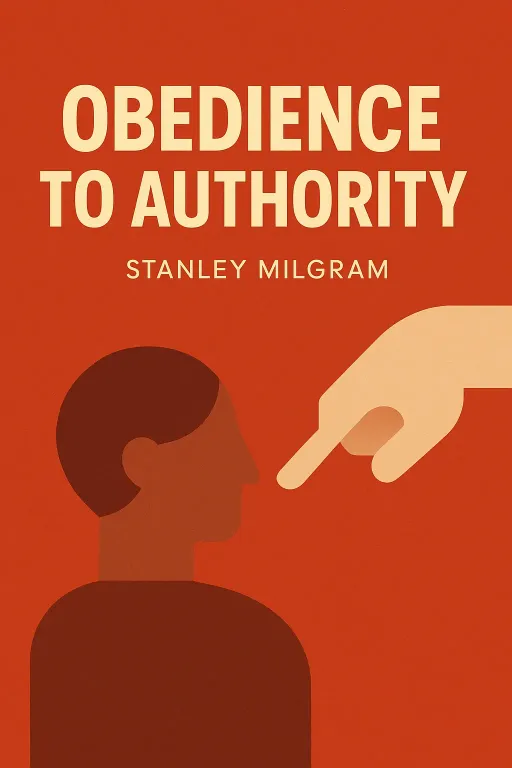
Nova: Most of us like to believe we're rational, logical beings, especially when it comes to important choices. But Kahneman, with his decades of research, revealed a different story about our brains. He introduced us to two distinct systems of thinking: System 1 and System 2.
Atlas: Okay, so what exactly is the difference, and why does it matter so much?
Nova: Think of it like this: System 1 is your brain on autopilot. It's fast, intuitive, emotional, and largely unconscious. It's what helps you recognize a friend's face, or duck when a ball flies at you. System 2, on the other hand, is your brain when it's really trying. It's slow, deliberate, logical, and takes effort. It’s what you use to solve a complex math problem or plan a detailed itinerary.
Atlas: So System 1 is the quick, gut reaction, and System 2 is the deep thought. I'm curious, how does the quick System 1 lead us astray if it's so efficient?
Nova: Because efficiency often comes at the cost of accuracy, especially in complex situations. System 1 relies on mental shortcuts, or heuristics, and while these are useful most of the time, they can lead to predictable errors. One of the most famous examples is.
Atlas: Anchoring? Like a boat?
Nova: Exactly! Imagine researchers doing an experiment. They ask people to estimate the percentage of African countries that are members of the United Nations. But before asking, they spin a wheel that's rigged to land on either 10 or 65.
Atlas: Wait, so the number on the wheel is completely arbitrary, right? It has nothing to do with UN membership.
Nova: Exactly! Yet, people who saw the wheel land on 10 gave significantly lower estimates for African UN members than those who saw it land on 65. The irrelevant number, the 'anchor,' subconsciously influenced their final judgment.
Atlas: That’s incredible. So, we literally get stuck on the first piece of information we encounter, even if it's completely irrelevant? I can see how that would be a huge problem for someone in negotiations or trying to evaluate a complex proposal.
Nova: It impacts everything from how we price products to how we judge a person's character based on a first impression. Another powerful bias is the. This is when we overestimate the likelihood of events that are easily recalled or come to mind vividly.
Atlas: Like how after seeing a news report about a plane crash, you might feel more nervous about flying, even though statistically, driving is far more dangerous?
Nova: Precisely. Plane crashes are dramatic, they get extensive media coverage, and they're easy to visualize. Car accidents, while far more common, are less individually sensational, so our System 1 gives them less weight in our mental risk assessment. This shapes our fears and our choices, often without us realizing it.
Atlas: So it's not just about being misinformed; it's that our brains are actively filtering and prioritizing information in a way that can lead to skewed perceptions.
Nova: It’s about how easily information comes to mind. If something is emotionally charged or frequently reported, System 1 makes it feel more probable, regardless of the actual statistics. It's a fundamental insight: true critical thinking begins with self-awareness of these inherent cognitive vulnerabilities.
The Nudge: Framing Effects and Designing Better Choices
SECTION
Nova: Now, if our internal thinking systems are so prone to these biases, how much more susceptible are we to external influences? Atlas, do you think your decisions are always purely logical, unswayed by how choices are presented to you?
Atlas: I'd like to think so, but after what you just said about anchoring, I'm starting to worry. I mean, small changes in context influencing me? That sounds a bit out there.
Nova: Well, Richard Thaler and Cass Sunstein, in their hugely influential book "Nudge," show us exactly how these small changes, what they call 'nudges,' can powerfully steer our decisions. They highlight our susceptibility to.
Atlas: Framing effects? Like putting a picture in a different frame?
Nova: Exactly! Imagine the classic example of organ donation rates across different countries. In some countries, the default option is 'opt-in,' meaning you have to actively check a box to become an organ donor. In others, it's 'opt-out,' meaning you are a donor by default unless you actively check a box to be one.
Atlas: Oh, I see where this is going. People are lazy, so they just stick with the default.
Nova: And the numbers are stark. Opt-in countries often have donation rates as low as 10-20%. Opt-out countries? They hover around 90-99%. The actual decision is the same – do you want to be a donor or not – but the way the choice is framed leads to vastly different outcomes.
Atlas: Wow, that’s incredible. So it's not even about convincing people; it's about making the decision process frictionless in the desired direction. But isn't that a bit manipulative?
Nova: That’s a critical question. Thaler and Sunstein argue that a true 'nudge' is about freedom-preserving choice architecture. It's not about forcing people; it's about designing environments where the 'better' choice is easier or the default, while still allowing people to choose otherwise. It acknowledges that we're all susceptible to defaults and frames.
Atlas: So it's about making the healthy or beneficial choice the path of least resistance. Like how food labels can influence what we pick?
Nova: Precisely. Think about how meat labeled "75% lean" is almost always perceived more positively and chosen more often than meat labeled "25% fat," even though they describe the exact same product. The positive frame is far more appealing to System 1 than the negative one.
Atlas: That makes me wonder how many of my own consumer choices are influenced by these subtle frames. It’s like we're constantly being nudged, whether we realize it or not. So, how can listeners protect themselves when the world is designed to subtly influence them?
Nova: The first step is awareness. Understanding that your decisions are not always purely logical, but heavily influenced by context and your brain's shortcuts, is incredibly empowering. It allows you to pause, activate that slower System 2, and question the frame.
Synthesis & Takeaways
SECTION
Nova: So, what we've seen today is a powerful one-two punch: our internal cognitive blind spots, like anchoring and availability, make us susceptible to error, and external 'nudges' and framing effects leverage those very biases to guide our choices.
Atlas: It really shifts my perspective. It's not just about trying harder to be rational; it's about understanding the underlying mechanisms that make us irrational in the first place. For our listeners who are aspiring analysts or just want to make more informed decisions, what's the core message here?
Nova: The core message is this: true critical thinking isn't about eradicating bias entirely – that's impossible. It's about recognizing its pervasive influence, both from within our minds and from the environments we operate in. It’s about building awareness, pausing, and actively designing better decision-making environments for ourselves. Like Kahneman and Thaler show, even small changes in our approach can lead to profoundly better outcomes. What recent decision might you approach differently now, armed with this knowledge?
Atlas: That’s such a hopeful way to look at it. It gives us agency, not just as individuals, but also in how we communicate complex ideas. If we understand how people are influenced, we can frame information more effectively for better outcomes. I imagine a lot of our listeners are feeling that lightbulb moment right now. If this conversation sparked a new insight for you, share it with us. We love hearing how these ideas resonate in your world.
Nova: Absolutely. Your insights fuel our curiosity. This is Aibrary. Congratulations on your growth!