The Art of Clear Thinking: Navigating the Noise of Decision-Making.
Golden Hook & Introduction
SECTION
Nova: Most of us believe we're rational decision-makers, especially when the stakes are high. We trust our judgment, our experience, our gut. But what if your brain is constantly playing tricks on you, making crucial choices based on gut feelings and hidden biases you're not even aware of?
Atlas: Oh, man. You just described about half of my Monday morning meetings. I always I’m making the most logical calls, especially when building a product or leading a team, but then there's that nagging feeling later.
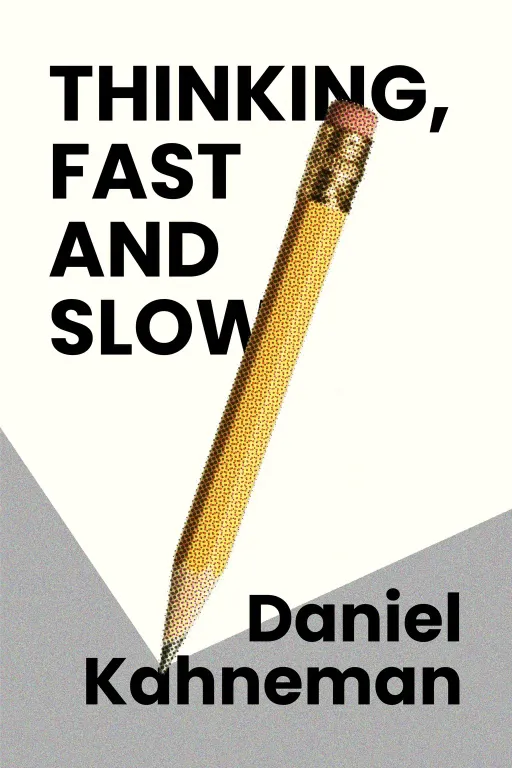
Nova: That nagging feeling, Atlas, is often your brain's System 2 trying to catch up with its System 1. And today, we're diving into the absolute brilliance of that concept, drawing heavily from, particularly the foundational work of Daniel Kahneman's and Richard H. Thaler's.
Atlas: Kahneman, right? The psychologist who won a Nobel Prize in economics. That always blew my mind – a psychologist getting an economics prize.
Nova: Absolutely. He, along with Amos Tversky, fundamentally reshaped our understanding of human decision-making, proving that we're not the perfectly rational actors traditional economics assumed us to be. It was revolutionary. And Thaler, a fellow Nobel laureate, then took those insights and showed us how to practically guide behavior.
Atlas: That makes me wonder, how do these revelations about our irrationality actually help us make better decisions in the real world, especially for founders constantly dealing with uncertainty?
The Illusion of Rationality: Unmasking System 1 Thinking
SECTION
Nova: That's the perfect question, because understanding the 'how' is the first step. Kahneman introduced the idea of two systems of thinking: System 1 and System 2. System 1 is fast, intuitive, emotional – it operates automatically. System 2 is slow, deliberate, analytical – it requires effort. Most of the time, we're happily cruising along on System 1, and it's incredibly efficient.
Atlas: Right, like recognizing a face or knowing 2+2 is 4. No effort required.
Nova: Exactly. But it also leads us seriously astray with cognitive biases. Take the anchoring bias, for example. In one classic experiment, people were asked to estimate the percentage of African nations in the UN. Before they gave their answer, they spun a wheel that would arbitrarily land on either the number 10 or 65.
Atlas: Okay... so the wheel is totally random. It has nothing to do with the actual number.
Nova: Precisely. But those who landed on 10 gave significantly lower estimates for the percentage of African nations than those who landed on 65. The initial, irrelevant number acted as an 'anchor,' pulling their judgment in that direction.
Atlas: That's wild! So, you're saying if I, as a founder, walk into a negotiation with a potential investor and throw out a ridiculously high valuation first, even if it's completely made up, it could actually pull their counter-offer higher than if I hadn't set that initial anchor?
Nova: Very likely. Or if you're setting product pricing, the first number you mention, even in an internal discussion, can unknowingly 'anchor' the entire team's perception of value. Founders, despite their analytical prowess, are just as susceptible. It's like our brains use that first piece of information as a starting point and then adjust, but not quite enough.
Atlas: Wow. So our 'gut feeling' about a fair price or a good deal is actually just a sophisticated guess influenced by whatever we heard first, even if it was totally arbitrary? That’s kind of alarming.
Nova: It is. And that's just one of many shortcuts. Another one is the availability heuristic. This is where we overestimate the likelihood of events that are easy to recall or vivid in our memory.
Atlas: Like seeing a dramatic news report about a plane crash and then being afraid to fly, even though car accidents are statistically far more common?
Nova: Exactly. Your brain quickly 'available' examples, not necessarily the most probable ones. So, if a founder just read a horror story about a startup failing because of a specific issue – say, a data breach – they might over-invest time and resources in preventing that one specific, vivid thing, even if it's statistically rare for their industry, while potentially ignoring more common, less dramatic threats.
Atlas: Oh, I see! It's not about objective data, it's about what's top-of-mind. That's a huge blind spot when you're trying to prioritize risks and allocate resources. It's prioritizing fear over logic.
Strategic Nudges: Engineering Better Decisions
SECTION
Nova: It is, and recognizing these blind spots is crucial. But the good news is, once we understand how our brains are wired, we can start to design around those flaws. This is where Richard Thaler's work on 'nudges' comes in, building on Kahneman's insights. It's about strategic choice architecture.
Atlas: Okay, so we know our brains are wonky and prone to these shortcuts. How do we fix it without just trying harder to 'think rationally' all the time, which clearly doesn't work? Because honestly, as a founder, I don't have endless mental energy to apply System 2 to every single decision.
Nova: You don't have to. That's the beauty of nudges. It's not about forcing willpower or restricting choices; it's about subtly designing the environment to make the desired behavior the easiest, most frictionless choice. Think of it as guiding people without pushing.
Atlas: Give me an example. Something really impactful.
Nova: A classic example is organ donation rates. In countries with 'opt-in' systems, where you have to actively check a box to become a donor, rates are often very low. But in 'opt-out' systems, where you're automatically a donor unless you actively uncheck a box, rates skyrocket.
Atlas: Whoa, that's a huge difference for such a small change! So, for a founder, this could mean setting the default for team meetings to 'no phones allowed' instead of just asking everyone to put them away? Or making 'healthy snack options' the default order for the office, rather than leaving it up to individual choice?
Nova: Exactly. Or, for a team building a new feature, making the default setting for user privacy 'high' and requiring conscious effort to lower it. It leverages our System 1 preference for the path of least resistance. We tend to stick with the default.
Atlas: That’s brilliant! So, instead of telling my product team 'don't make the UI confusing,' I could 'nudge' them by defaulting all new design elements to a 'simple mode' that they then have to consciously override if they want complexity? This is about making the 'good' choice the easy choice.
Nova: Precisely. Another example Thaler discusses is in cafeterias. Simply by placing healthier food options, like fruits and salads, at eye level or at the beginning of the serving line, and moving less healthy options further away, people are 'nudged' towards healthier eating without being told what to eat. Even renaming dishes, like 'Twisted Citrus Carrots' instead of just 'Carrots', can make them more appealing.
Atlas: That’s fascinating. It’s like being a benevolent architect of decisions. For anyone trying to encourage a certain behavior in their users or their team, this is incredibly powerful. It’s about understanding human psychology and then designing systems that align with it, rather than fighting against it.
Synthesis & Takeaways
SECTION
Nova: Absolutely. The core message from Kahneman and Thaler is two-fold: first, our minds are inherently biased, and we make surprisingly irrational decisions much of the time. And second, we can strategically design our environments and choices to counteract those biases, leading to consistently better outcomes.
Atlas: So, the big takeaway for founders, especially those building products and teams, is that 'thinking clearly' isn't just about raw intelligence or willpower. It's about understanding the invisible cognitive forces at play and then being a smart architect of your own decision environment, and the environment for your users and team.
Nova: Exactly. It's a fundamental shift from passively being tricked by your brain to actively shaping your choices. Recognizing your blind spots, and then strategically nudging yourself and your team towards clearer thinking. It’s about acknowledging human nature and working with it, not against it.
Atlas: I imagine a lot of our listeners, especially early-stage founders, are going to feel a huge sense of relief, realizing they can actually their way to better decisions, rather than just hoping for perfect rationality. It’s about building in those System 2 check-ins, as our deep question suggested, but doing it in a smart, almost automated way.
Nova: It’s about creating mental speed bumps where it matters most, guiding the intuitive System 1 towards more optimal paths, and reserving System 2 for truly novel and complex problems.
Atlas: That's incredibly empowering. It moves the conversation from 'try harder' to 'design smarter.'
Nova: And that's why these books are so crucial. They don't just point out the problems; they offer a roadmap for building a better decision-making infrastructure, whether it's for your personal life, your product, or your entire organization.
Atlas: This is Aibrary. Congratulations on your growth!