Stop Guessing, Start Measuring: The Scientific Way to Better Decisions.
Golden Hook & Introduction
SECTION
Nova: Atlas, five words. "Stop Guessing, Start Measuring." What's your five-word review of that title?
Atlas: Oh man, my brain. Is. Always. Wrong. Help!
Nova: Ha! That's a perfect encapsulation, actually. Because today, we're diving deep into the fascinating, sometimes frustrating, reality of how we make decisions. It's about moving beyond just gut feelings and truly understanding the mechanics of our own minds and the environments around us to make better, more informed choices.
Atlas: That sounds like a superpower, especially for anyone navigating complex projects or aiming for breakthroughs in science and technology. I imagine a lot of our listeners are constantly making high-stakes calls.
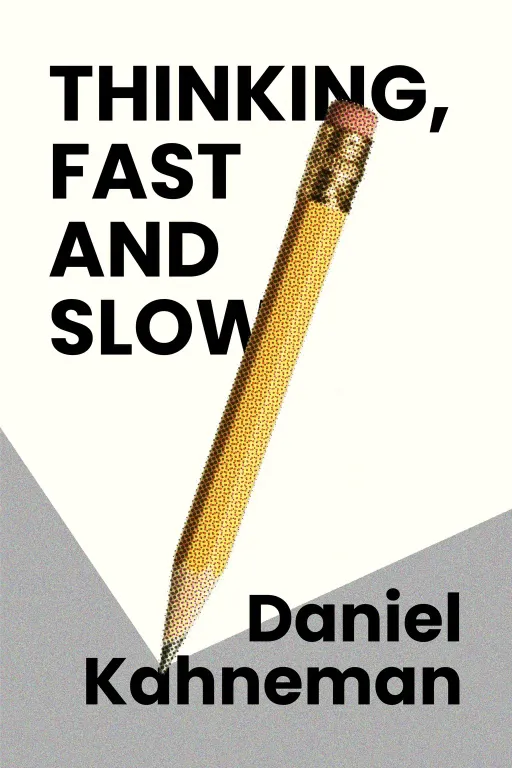
Nova: Absolutely. And to guide us, we're drawing insights from two monumental works. First, "Thinking, Fast and Slow" by the Nobel laureate Daniel Kahneman. His work fundamentally reshaped our understanding of human judgment and decision-making, earning him the Nobel Memorial Prize in Economic Sciences, which is a pretty clear indicator this isn't just pop psychology, this is rigorously scientific insight.
Atlas: Wow, Nobel Prize-winning thinking about how my brain tricks me. That's a concept I can get behind.
Nova: Exactly. And then, we'll explore "Nudge" by Richard H. Thaler and Cass R. Sunstein. Their groundbreaking ideas around behavioral economics have had a profound impact, even influencing public policy around the world, showing how small changes can lead to huge shifts in behavior without coercion.
Atlas: So, we're talking about not just understanding our own internal quirks, but also how to design a world that helps us make better choices. I'm curious, how do these seemingly academic ideas translate into actionable strategies for someone building the next big thing, or leading a team in a demanding research environment?
The Tricky Brain: System 1 vs. System 2 Thinking
SECTION
Nova: That's a brilliant question, Atlas, and it's precisely where Kahneman's work becomes so powerful. He introduces us to two systems that essentially run our cognitive show: System 1 and System 2. Think of System 1 as the fast, intuitive, emotional, almost automatic part of your brain. It's what allows you to recognize a friend's face instantly, or slam on the brakes if a car swerves. It’s efficient, but it’s also prone to biases.
Atlas: Okay, so it’s like my brain’s autopilot. Quick, but sometimes a bit reckless?
Nova: Exactly! And then there's System 2. This is your slow, logical, effortful thinking. It's what you engage when you're solving a complex math problem, or carefully weighing the pros and cons of a major investment. It’s deliberate, but it’s also lazy; it prefers to conserve energy.
Atlas: That makes sense. I can see how that would be helpful for complex tasks, but isn't intuition often praised? We hear about visionary leaders trusting their gut. How can something so 'fast' be wrong, especially in those quick decision-making scenarios, like in a fast-paced tech startup environment, where speed is everything?
Nova: That's a great point. Intuition be incredibly valuable, especially for experts in their domain, but often, what feels like intuition is actually System 1 taking a shortcut, leading to predictable errors. Let me give you a classic example Kahneman uses: The Bat and Ball Problem.
Atlas: Oh, I know this one!
Nova: For those who don't, it goes like this: a bat and a ball cost $1.10 in total. The bat costs $1.00 more than the ball. How much does the ball cost?
Atlas: My System 1 just screamed, "Ten cents!"
Nova: Most people's does! And that's System 1 in action: it sees the numbers, it quickly computes a plausible answer, and it feels right. It's efficient. But it's wrong.
Atlas: Wait, hold on. Why is it wrong? If the ball is ten cents, and the bat is a dollar more, that would be $1.10. Oh! No, that would be $1.10 for the bat, and ten cents for the ball, which adds up to $1.20!
Nova: Precisely! The correct answer is five cents for the ball, and $1.05 for the bat. It adds up to $1.10, and the bat is a dollar more than the ball. What happened there is your System 1 quickly generated a plausible but incorrect answer, and your System 2, being lazy, didn't bother to check it.
Atlas: Wow, that's incredible. It's like my brain was trying to be efficient but ended up being sloppy. So, for someone constantly making high-stakes decisions, or trying to innovate, how do you even begin to identify these biases in the moment? It feels like fighting your own brain!
Nova: It can feel that way. The key is self-awareness and deliberately engaging System 2. When a decision feels too easy, or an answer pops into your head too quickly, that’s a cue to pause. Ask yourself, "What assumptions am I making? Is there another way to look at this?" It's not about eradicating System 1—it's essential for survival—but about recognizing its pitfalls and giving System 2 a chance to weigh in.
Atlas: I totally know that feeling. Making a snap judgment only to realize later I missed crucial details. It's honestly a bit humbling to realize how often our minds can play tricks on us, even when we think we’re being objective. It’s a constant battle for clarity.
Architecting Choices: Nudging Towards Better Decisions
SECTION
Nova: It truly is. And understanding our internal cognitive architecture is half the battle, but what if we could design our external world to help us make better choices, even when our System 1 is running rampant? This brings us to "Nudge" by Thaler and Sunstein.
Atlas: So, beyond just fixing our own brains, we can fix the environment? How does that work without feeling like Big Brother is watching?
Nova: That’s the beauty of a "nudge." It's not about coercion or restricting choices. It's about small, subtle changes in the "choice architecture" that influence behavior in a predictable way without taking away any options. Think of it as a gentle push in the right direction.
Atlas: Can you give an example? Like how?
Nova: The classic example is in cafeterias. When healthy food options are placed at eye level, or made more easily accessible, people tend to choose them more often, even if the unhealthy options are still available. No one is telling you what to eat, but the environment is subtly guiding you. Another powerful one is default options in retirement savings plans. When employees are automatically enrolled but can opt out, participation rates skyrocket compared to requiring them to actively opt in.
Atlas: Hold on. Isn't that a bit manipulative? If we're so easily 'nudged,' does that mean we don't really have free will in our decisions? How does this apply ethically in, say, product design, where you're trying to get users to do something specific?
Nova: That’s a crucial distinction, and Thaler and Sunstein are very clear on the ethics. A good nudge should be transparent, easy to avoid, and designed to improve welfare. It's about helping people make choices they would likely make anyway, if they had perfect information and unlimited willpower. In product design, for example, a company might default privacy settings to the most secure option, subtly nudging users towards better data protection, rather than making them actively seek it out.
Atlas: That’s a perfect example. So the process is setting a default, the cause is human inertia and the System 1 preference for the path of least resistance, and the outcome is better privacy for users. That’s really clever.
Nova: Exactly. It leverages our cognitive tendencies, rather than fighting them.
Atlas: So, for our listeners in research and development, or anyone designing systems, this isn't just about understanding human error; it's about building solutions that account for it. How can a project lead 'nudge' their team towards better data analysis or more collaborative decisions?
Nova: Oh, there are so many ways. You could 'nudge' teams towards better data analysis by, say, making certain data visualization tools the default in their reporting templates, or by structuring meetings so that the first ten minutes are always dedicated to reviewing raw data before diving into conclusions. For collaboration, you could design physical office spaces or virtual platforms that inherently encourage interaction, or default meeting invites to include a brainstorming session at the start. It’s about making the desired behavior the easiest, most obvious path.
Atlas: I can definitely relate to that. It's kind of like setting up your kitchen so the healthy snacks are right there on the counter, and the junk food is hidden away in a cupboard. You're not stopping yourself from eating the cookies, you're just making the good choice easier and the bad choice a bit more effortful.
Synthesis & Takeaways
SECTION
Nova: That's a great analogy, Atlas. And it perfectly synthesizes our discussion today. On one hand, Kahneman shows us the internal cognitive architecture—the two systems in our minds that often lead us astray. On the other, Thaler and Sunstein give us the tools to design external choice architectures—the 'nudges'—that can guide us towards better decisions.
Atlas: It's really about taking control, not just of our conscious thoughts, but of the very environment that shapes them. It's a powerful tool for anyone looking to innovate, optimize processes, or just live a more intentional life. It's the ultimate blend of self-awareness and strategic design.
Nova: Absolutely. Awareness that our minds often play tricks on us is the first step, but the real power comes from actively designing our environments and processes to support more rational, evidence-based choices. It's about being proactive in the face of our own human fallibility.
Atlas: For our listeners who love deep thinking and exploring new knowledge, this isn't just theory. It's an invitation to become an architect of your own mind and your own world, to stop guessing and truly start measuring.
Nova: So, for your next important decision, don't just go with your gut. Take a moment to list three potential cognitive biases that might be influencing you. And then, think about how you could 'nudge' yourself towards a more logical, evidence-based path.
Atlas: We'd love to hear how you're applying these ideas in your own life and work. Share your insights with us!
Nova: This is Aibrary. Congratulations on your growth!