Stop Guessing, Start Leading: The Guide to Data-Driven Influence.
Golden Hook & Introduction
SECTION
Nova: Atlas, five words. "Stop Guessing, Start Leading: The Guide to Data-Driven Influence." What comes to mind immediately?
Atlas: Data. Influence. Smart. Decisions. Essential.
Nova: Absolutely essential, couldn't agree more! Because today we're unraveling the profound insights from this truly powerful guide, "Stop Guessing, Start Leading." It's a book that doesn't just offer tips; it fundamentally challenges our most ingrained decision-making habits, particularly our often-misplaced reliance on gut feelings.
Atlas: That’s going to resonate with anyone who’s ever made a big call based on a hunch, only to realize later the data was screaming something else entirely.
Nova: Exactly! And that immediate gut reaction, that feeling of certainty, is precisely what the book helps us understand and, more importantly, transcend. It dives deep into why our intuition, while powerful, can also be our biggest blind spot when we're aiming for data-driven goals.
The Peril of the Gut: Why System 1 Thinking Undermines Data-Driven Goals
SECTION
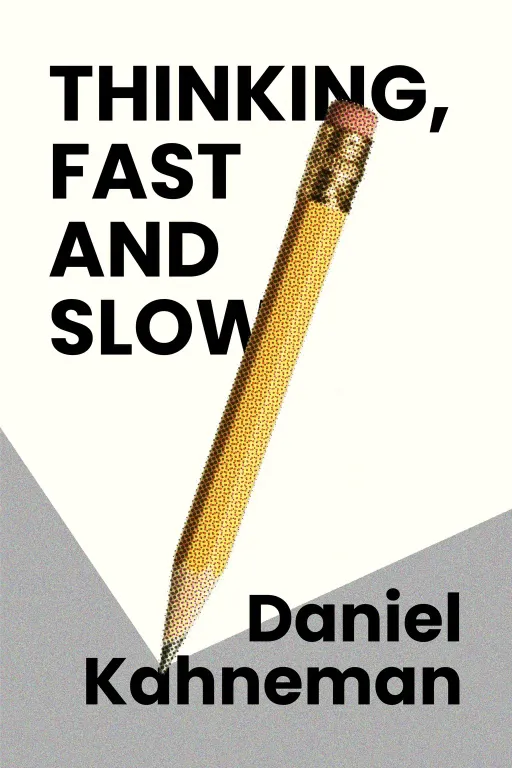
Nova: And to truly grasp this, we have to talk about a foundational concept from Daniel Kahneman's seminal work, "Thinking, Fast and Slow." Kahneman introduced us to two systems of thought: System 1, which is fast, intuitive, emotional, and largely unconscious. And then there's System 2, which is slow, logical, deliberate, and requires effort.
Atlas: So you're saying our brains are basically running on two different operating systems, and one's a lot quicker to jump to conclusions?
Nova: Precisely. System 1 is our default. It’s brilliant for quick decisions – like slamming on the brakes or recognizing a familiar face. But it’s also prone to biases. When we face complex decisions, especially in strategic planning or interpreting analytics, our System 1 often kicks in, leading to what the book calls 'predictable errors.'
Atlas: But wait, isn't intuition often praised in leadership? We hear stories of visionary leaders making bold moves based on a gut feeling that paid off. How can it be a blind spot if it sometimes works?
Nova: That’s the classic trap, isn't it? We remember the hits, not the misses. The book highlights how an over-reliance on System 1 can subtly undermine our data-driven goals. Imagine a marketing team, full of enthusiasm, launching a new product based on a 'gut feeling' about an emerging trend. They've seen a few articles, heard a few buzzwords, and their System 1 says, "This is it!"
Atlas: And they probably have a success story from a few years ago that feels similar, right?
Nova: Exactly! That’s the availability heuristic at play – relying on easily recalled, but not necessarily representative, past successes. They might even glance at some early market data, but their System 1, driven by excitement and existing beliefs, filters that data through a confirmation bias. They see what they to see, not what the data is actually telling them.
Atlas: Oh, I know that feeling. It's like when you're convinced a new AI strategy will work because you saw one viral LinkedIn post, even if your internal metrics are quietly whispering otherwise. So, how do we actively that System 1 override?
Nova: It requires a conscious, deliberate effort to engage System 2. It’s about pausing, questioning your initial assumption, and actively seeking out contradictory evidence. It's not just about collecting data, but about it, forcing yourself to look beyond the obvious narrative your gut is presenting. The book argues that mastery in leadership starts with mastering your own cognitive processes.
Atlas: So the strategic innovator, the one who's always looking for the next big thing, needs to combine that visionary spark with a rigorous, almost skeptical, data review process. It's about building a robust understanding of you believe something.
Ethical Nudging: Guiding Decisions with Data, Not Coercion
SECTION
Nova: And once you begin to understand your own internal biases, it opens the door to understanding how others make decisions. Which naturally leads us to the second crucial insight from the book, drawing heavily from "Nudge" by Richard Thaler and Cass Sunstein. This is about understanding how human psychology allows you to design choices that guide people toward better outcomes.
Atlas: Oh, I like that. So, instead of just hoping people make good decisions, you can actually set up the environment to encourage them?
Nova: Precisely. This is what they call 'choice architecture.' It's about designing the context in which people make decisions. The book emphasizes that this is a critical skill for ethical leadership and influencing customer behavior.
Atlas: Wait, 'nudge' sounds a bit like manipulation. For ethical leaders, where's the line between guiding and subtly forcing people into a choice they might not actually want?
Nova: That's a vital distinction, and one the book explores deeply. Ethical nudging isn't about taking away freedom of choice or tricking people. It's about presenting options in a way that makes the beneficial choice easier, more obvious, or more attractive, while still preserving the ability to choose otherwise. Think of it like a compassionate architect designing a building. They want people to move efficiently and safely, so they design the flow, the lighting, the signage, making the best path the most natural one.
Atlas: Can you give an example of this in action, maybe for a team or a company?
Nova: Absolutely. Imagine a company that wants to improve employee well-being and productivity. Instead of mandating strict diet plans or exercise regimes, they use data – perhaps from anonymous surveys and cafeteria sales – to understand existing habits. They discover employees tend to grab whatever's easiest. So, they subtly rearrange the cafeteria layout. Healthier options are placed at eye level, more prominently displayed, and easier to access. Less healthy options are still available but require a bit more effort to reach.
Atlas: So, you're not removing the less healthy choice, but you're making the healthier choice the path of least resistance. That's clever.
Nova: Exactly! The data informs the design of the choice environment. The outcome is improved employee health and potentially productivity, achieved not through rules or coercion, but by understanding human psychology and designing a system that gently 'nudges' people towards a better outcome. It builds trust and encourages long-term engagement, which is paramount for effective, ethical leadership.
Atlas: That’s a great example! It’s like when you’re trying to encourage a team to adopt a new, more efficient software. You don't just say 'use it,' you design the onboarding process to be so intuitive and beneficial that it becomes the obvious, easy choice. So it's about empowering better choices through smart design, not taking choices away.
Nova: And that’s the essence of data-driven influence. It's about moving from prescriptive commands to insightful design, allowing data to inform how you create environments where good decisions are simply easier to make.
Synthesis & Takeaways
SECTION
Nova: So, what we've really explored today is a powerful two-step process for influence. First, it’s about recognizing and overcoming our own internal biases, those System 1 shortcuts that can derail our data-driven goals. And second, once we understand how decisions are truly made, it's about ethically applying that knowledge to design better 'choice architectures' for others.
Atlas: It’s like stress-testing your own cognitive foundations before you build anything on top of them, and then using that knowledge to build better structures for everyone else. That gives me chills, thinking about the ripple effect that could have.
Nova: It’s about becoming a leader who not only understands data but also understands the human element that interacts with that data. It's about influencing through clarity and design, not just command.
Atlas: So, for our listeners who are trying to lead with data and make a real impact, what's one immediate thing they can do to start applying these ideas?
Nova: Here’s a powerful, actionable step: Dedicate 15 minutes daily to actively question your initial assumptions about a project or data set. Write down why you something is true, and then deliberately seek out contradictory evidence. It's about training your System 2 muscle and consciously engaging that slower, more logical part of your brain.
Atlas: That’s a powerful exercise. It forces you to confront the very blind spots we discussed. Honestly, that sounds like a game-changer for anyone making high-stakes decisions.
Nova: It truly is. It's how you stop guessing and start leading with genuine, data-driven influence.
Nova: This is Aibrary. Congratulations on your growth!