Stop Guessing, Start Building: The Guide to Enduring Organizations.
Golden Hook & Introduction
SECTION
Nova: Atlas, five words. Describe the biggest challenge in building a truly lasting organization. Go.
Atlas: Oh, easy. Humans. Too many. Biases. Everywhere.
Nova: You know, Atlas, that's not just a witty quip; it's practically the core thesis of the book we're dissecting today. We often pride ourselves on quick thinking, on gut decisions, especially in the fast-paced world of strategic planning. But what if those very instincts are creating blind spots, making us miss crucial details for long-term organizational health?
Atlas: That’s a tough pill to swallow for anyone who’s ever had to make a high-stakes call on the fly. We're told to trust our instincts, right? But then you're saying our instincts might be leading us astray when we're trying to build something that lasts?
Nova: Exactly! And that's what makes "Stop Guessing, Start Building: The Guide to Enduring Organizations" such a powerful read. This book isn't just another management theory; it distills decades of groundbreaking behavioral science research into a practical blueprint for leaders. It offers a fresh perspective on why so many well-intentioned strategic plans falter, moving us beyond mere gut feelings and into deliberate, informed design.
Atlas: So it's about upgrading our organizational operating system, then? Not just patching it up, but fundamentally rethinking how we make decisions?
Nova: Precisely. Today, we're diving deep into this. First, we'll explore those cognitive blind spots that sabotage even the best intentions, the unseen risks lurking in our strategic processes. Then, we'll discuss how we can consciously architect choices, using subtle environmental design, to build genuinely enduring organizations.
The Cognitive Blind Spot: System 1 vs. System 2 Thinking in Organizations
SECTION
Nova: Atlas, have you ever seen a brilliant strategy, meticulously planned, with all the right intentions, just completely falter for reasons no one could quite put their finger on? Like a ship with a tiny, unnoticed leak?
Atlas: Oh, absolutely. I imagine a lot of our listeners who are in leadership positions have felt that frustration. You dot all the i’s, cross all the t’s, and still, something just… doesn't click. It feels like there's an invisible force working against you.
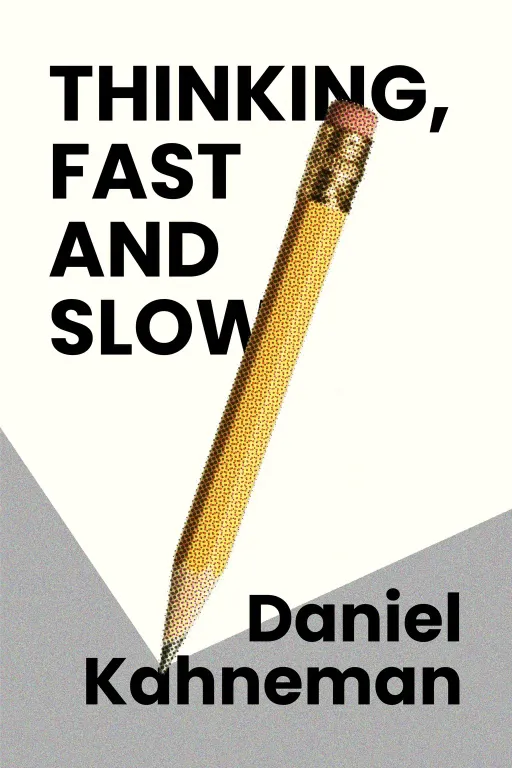
Nova: That invisible force, often enough, is our own brain. This book really leans into the groundbreaking work of Daniel Kahneman, particularly his revelation of System 1 and System 2 thinking. Think of System 1 as your brain’s autopilot—fast, intuitive, emotional, and always on. It's fantastic for recognizing a friend's face or slamming on the brakes.
Atlas: Okay, so quick reactions, gut feelings. That’s System 1. But how does that play out in a boardroom, where you're supposed to be making calculated decisions?
Nova: That's where the blind spot emerges. Imagine a company, let's call it 'RapidGrow Tech,' in the early 2000s. The CEO, incredibly charismatic, had a stellar track record of successful, fast-paced acquisitions. When a new, seemingly disruptive market emerged, his System 1 immediately fired, "Opportunity! Move fast, dominate early!" He felt a surge of excitement, a 'gut feeling' that this was the next big thing.
Atlas: So, the classic entrepreneur's intuition, right? That's often celebrated.
Nova: It is. But in this case, his intuition, his System 1, was overriding what Kahneman would call System 2—the slow, deliberate, logical, and effortful thinking. His team conduct extensive market research, which flagged several critical long-term risks: regulatory hurdles, unstable infrastructure in the target regions, and a highly competitive, fragmented landscape.
Atlas: So the data was there, the warnings were there.
Nova: Precisely. But the CEO, fueled by past successes and the sheer momentum of his System 1 conviction, dismissed the System 2 analysis as "overthinking" and "lacking vision." He pushed for rapid expansion, acquiring several smaller players at inflated prices. The cause was a leader's overreliance on intuition in a complex, novel situation. The process was a swift, emotionally charged decision, sidelining rigorous analysis.
Atlas: And the outcome? I can guess.
Nova: Significant losses, Atlas. Within three years, 'RapidGrow Tech' had to divest most of its new ventures at a fraction of the cost, taking a massive hit to its reputation and balance sheet. The CEO's System 1, which served him well in simpler, familiar scenarios, created a massive blind spot when the situation demanded slow, deliberate System 2 engagement.
Atlas: That’s actually really sobering. So, for a strategist, a disciplinarian who’s trying to build something enduring, how do you actually engage System 2 when the pressure is on and your brain is screaming 'Go, go, go!'? How do you even recognize when your System 1 is running the show and potentially leading you off a cliff?
Nova: That’s the million-dollar question, isn't it? It requires conscious effort, a kind of meta-cognition. You need to build processes that System 2 engagement. It's about recognizing the cues—high stakes, novelty, complexity—and then deliberately pausing. For RapidGrow Tech, it would have been asking, "What data are we ignoring? Who on our team is playing devil's advocate, and are we truly listening to them?" It’s about creating moments for reflection, for structured debate, for seeking out disconfirming evidence.
Architecting Choices: Nudging for Enduring Organizational Design
SECTION
Nova: But wait, looking at this from a strategic perspective, System 2 thinking, with all its deliberation, can be slow. In today's dynamic environment, you can't always hit the brakes. What if we could design the so that even fast decisions, or everyday operational choices, are better decisions? What if we could 'nudge' people towards better outcomes without them even realizing it?
Atlas: Nudge? That sounds a bit… manipulative, doesn't it? Like you're tricking people into doing what you want, rather than fostering genuine ownership and rational decision-making. For someone focused on building enduring structures, you want people to why they're doing something, not just be subtly guided.
Nova: That's a fair point, and it's a common misconception about 'nudging.' Richard Thaler and Cass Sunstein, the authors of "Nudge," make it clear that it's about choice architecture, not coercion. They define a nudge as any aspect of the choice architecture that alters people's behavior in a predictable way without forbidding any options or significantly changing their economic incentives.
Atlas: So, it’s not about taking away choices, or making them more expensive, but making the 'right' choice easier or more obvious? Give me an example outside of a cafeteria, because I imagine our listeners are thinking about complex organizational structures, not where to put the salad bar.
Nova: Absolutely. Let's think about a hypothetical organization, 'Synergy Solutions,' that was struggling with low employee engagement in long-term innovation projects. They had brilliant engineers, but many were gravitating towards short-term, high-visibility tasks, leaving the deep, complex innovation projects understaffed and often incomplete. The cause was a human tendency to prioritize immediate gratification and visible progress over delayed, uncertain rewards.
Atlas: I can completely relate to that. It’s hard to stay motivated when the payoff is years down the line. How do you 'nudge' someone to stick with a multi-year project without, you know, forcing them?
Nova: 'Synergy Solutions' didn't mandate more meetings or create new performance metrics. Instead, they subtly redesigned their internal collaboration software. They changed the default settings for project updates to automatically highlight long-term project milestones that had been achieved, even small ones. They also implemented a 'peer recognition' feature that specifically celebrated contributions to these longer-term, often less visible innovation efforts.
Atlas: So, instead of a manager telling them, "Focus on long-term," the was subtly reinforcing that value.
Nova: Exactly. The cause was a bias towards immediate feedback; the process was a subtle redesign of digital interfaces and recognition mechanisms. The outcome was measurable: within a year, 'Synergy Solutions' saw a significant increase in both engagement and completion rates for their strategic long-term projects. The 'nudge' wasn't about manipulation; it was about aligning the environment with the organization's strategic goals, making it easier for System 2 thinking—deliberate, long-term planning—to flourish, even when System 1 was looking for quick wins.
Atlas: That’s a great example. It highlights how powerful these seemingly small changes can be. So, for a leader who wants to build enduring structures, how do you start spotting these 'nudge' opportunities? It feels like you need to be a behavioral psychologist just to design a good organizational chart.
Nova: Not at all! It starts with curiosity. Ask yourself, "Where are people consistently making choices that aren't aligning with our long-term vision?" Then, instead of blaming individuals, ask, "How is the influencing that choice?" Is the default setting wrong? Is the feedback loop too slow? Is the path of least resistance leading us in the wrong direction? It’s about stepping back and becoming an architect of choice, rather than just a reactive manager. It’s about building systems that support rational decision-making, rather than being derailed by intuitive pitfalls.
Synthesis & Takeaways
SECTION
Nova: So, what we've really uncovered today is that building enduring organizations isn't just about having a brilliant vision or talented people. It's about understanding the invisible forces at play—the cognitive biases that can derail us and the subtle environmental cues that can guide us.
Atlas: It's almost like the organization itself needs a good operating manual for the human brain that runs it. You're not just managing people; you're managing the context in which they think and decide.
Nova: Absolutely. The real power lies in proactively designing around human nature, not against it. It's about recognizing when System 1 is creating unseen risks, and then consciously architecting nudges that empower System 2 to build genuinely lasting impact. Enduring organizations aren't built by individuals making perfect decisions every time, but by systems that support better collective decisions, day in and day out.
Atlas: And that's a profound shift in how we approach leadership and strategy. It makes you wonder, where in your own strategic process might System 1 thinking be creating unseen risks or overlooked opportunities? What small, subtle 'nudge' could you introduce this week to help your team make better, more enduring choices?
Nova: We'd love to hear your thoughts on this. Share your insights or examples of successful 'nudges' you've seen in your organizations. Let's keep this conversation going.
Atlas: This is Aibrary. Congratulations on your growth!