

Mastering the Art of Decision-Making: Beyond Intuition and Data.
Golden Hook & Introduction
SECTION
Nova: What if I told you that the smartest person in the room, the one who always trusts their gut, might actually be the most susceptible to making terrible decisions?
Atlas: Hold on. Aren’t we taught to "trust our instincts"? That's a bold claim, Nova. Are you saying my gut is lying to me, especially when I’m trying to make a quick call in a complex system?
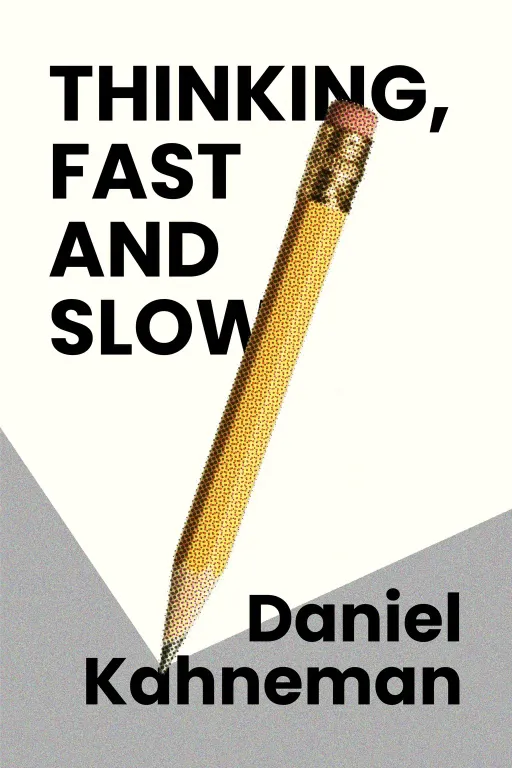
Nova: Not lying, Atlas, but it’s definitely not giving you the full picture. Today, we're diving into the fascinating world of decision-making, drawing profound insights from two groundbreaking books: Daniel Kahneman's seminal work, "Thinking, Fast and Slow," and "Nudge" by Richard H. Thaler and Cass R. Sunstein.
Atlas: Those are some heavy hitters. Kahneman won a Nobel Prize in Economics for his work on cognitive biases, didn't he? And Thaler followed up with his own Nobel for behavioral economics. That's serious academic firepower.
Nova: Absolutely. Kahneman's pioneering research, often with Amos Tversky, fundamentally changed our understanding of human judgment and decision-making, revealing the systematic errors in our thinking. Thaler then took those insights and showed us how to design environments that help people make better choices, sometimes without them even realizing it. Their work isn't just academic; it's profoundly practical for anyone trying to build or strategize in complex environments.
Atlas: I can see how understanding those biases would be critical for a strategist. It makes me wonder how much of what I perceive as "data-driven" is actually influenced by some hidden mental shortcut.
Nova: Exactly. And that naturally leads us into our first deep dive: "The Blind Spot."
The Blind Spot: Why Our Brains Trick Us in Decision-Making
SECTION
Nova: We all like to believe we’re rational, logical beings, especially when faced with data. But Kahneman's work, and decades of research since, show us that our brains are efficiency machines. They take shortcuts, and these shortcuts, while often useful for rapid survival decisions, are riddled with biases.
Atlas: Okay, but how does that play out in a real-world scenario? Say, for someone designing an intelligent system, or even just evaluating a new technology? Where’s the hidden trap?
Nova: Let’s take the "anchoring effect." Imagine you're negotiating a budget for a new control system. The opposing team throws out an initial, ridiculously high number – let's say, ten million dollars. Even if you know it’s inflated, that number becomes an "anchor" in your mind. Your counter-offer, even if significantly lower, will likely be higher than if no anchor had been set.
Atlas: Wow. So even if I logically reject their absurd starting point, my brain still clings to it? That’s insidious. I can see that happening in reviewing a project proposal, where the first number mentioned, even if it's a wild guess, subtly influences subsequent estimations.
Nova: Precisely. Or consider "confirmation bias." As a problem-solver, you’re often looking to validate a hypothesis or a solution. If you've got a strong conviction about a particular approach to, say, optimizing a smart grid, you might unconsciously seek out and interpret data that confirms your belief, while dismissing or downplaying evidence that contradicts it.
Atlas: Oh, I've been there! It’s like when you're convinced a certain algorithm is the best, and you only notice the successful cases, not the subtle failures. It's not malicious; it's just… how our brains work. That’s actually really inspiring, because it means we can design it.
Nova: Exactly. The biggest blind spot is often not knowing you have one. And it’s not just our gut feelings. We often rely solely on data, but if that data is presented in a certain way, or we interpret it through a biased lens, we’re still making flawed decisions. The raw numbers don't inoculate us against our own psychology.
Atlas: So basically you’re saying that even with all the data in the world, if I'm not aware of these cognitive shortcuts, I'm still at risk of making choices that aren't truly optimal for the system I'm building or the strategy I'm implementing? That’s kind of heartbreaking. It feels like a constant battle against my own brain.
Nova: It can feel that way, but recognizing these biases is the first and most crucial step. It’s about understanding the "how" and "why" behind our decision-making, which is crucial for any innovator. And that brings us to our next point: how we can actually shift this dynamic.
The Power Shift: Harnessing System 1, System 2, and Nudge Theory for Better Choices
SECTION
Nova: So, if our brains are wired for these blind spots, how do we actually make decisions? This is where Kahneman and Thaler offer us a powerful toolkit. Kahneman introduced the world to System 1 and System 2 thinking. System 1 is fast, intuitive, emotional, and largely unconscious. It’s what tells you 2+2=4.
Atlas: Like when I instinctively swerve to avoid a pothole? That’s System 1 in action, I guess. Quick, automatic.
Nova: Exactly. System 2, on the other hand, is slow, deliberate, logical, and effortful. It’s what you use when you're solving a complex calculus problem or meticulously planning the architecture of a new intelligent system. It requires focus and energy.
Atlas: So, the pothole is System 1, but designing the entire autonomous driving system that potholes is definitely System 2. I can see how over-relying on System 1 in the latter situation would be disastrous.
Nova: Right. The key is knowing to engage System 2. We often default to System 1 because it's easy, but for complex problems – like optimizing a smart grid for efficiency and resilience – System 2 is truly needed. It’s about pausing, questioning your initial intuition, and deliberately analyzing the problem.
Atlas: What about Thaler's "Nudge" theory? How does that tie into this, especially for someone who wants to design systems that promote better choices for their users or operators?
Nova: Nudge theory, which earned Thaler his Nobel, builds beautifully on Kahneman’s work. Thaler and Sunstein show that since humans are prone to these biases, we can design environments – they call it "choice architecture" – to gently "nudge" people towards better decisions without restricting their freedom of choice.
Atlas: Can you give an example? Like how would that work in something like a renewable energy system?
Nova: Think about designing an interface for a power plant operator. Instead of just presenting raw data and hoping they make the optimal choice under pressure, you could subtly highlight the most energy-efficient option as a default. Or, for a user of a smart home system, the default setting for their thermostat could be optimized for energy saving, with the option to change it, of course.
Atlas: So, it’s not about forcing a decision, but making the best decision the decision. That’s actually really clever, especially for complex systems where operators might be overwhelmed with information. It’s designing for human psychology, not against it. But wait, isn't there an ethical line there? How do you ensure you're nudging for good, and not, say, manipulating?
Nova: That’s a critical question, Atlas, and it’s one that Thaler and Sunstein deeply explore. They advocate for nudges that are transparent and easily opt-outable, always aiming to benefit the individual and society, not just the designer. It's about empowering better choices, not coercing them. For an innovator, this means designing systems that are not just functionally robust, but also psychologically robust, helping users navigate complexity towards optimal outcomes.
Atlas: That makes me wonder, if I'm building a new AI control system, how do I design the interface to "nudge" the human operator to trust its recommendations appropriately, or to intervene when System 2 is truly needed, instead of just blindly following its fastest output? That’s a whole new layer of problem-solving.
Nova: It absolutely is. And that’s the power of these frameworks. They empower us to be architects of better decisions, not just responders to them.
Synthesis & Takeaways
SECTION
Nova: So, what we’ve really explored today is that mastering decision-making isn't just about gathering more data or trusting your gut more. It's about understanding the invisible forces at play – our internal cognitive biases and the external environment around us.
Atlas: And that understanding gives us the power to not just identify our blind spots, but to actively design better processes and systems. It’s not about being perfectly rational all the time, but about knowing to engage that slow, deliberate thinking, and how to set ourselves and others up for success through thoughtful choice architecture.
Nova: Precisely. The biggest blind spot we can have is the belief that we don't have any. The power shift comes from actively seeking out those areas in our work where we might be over-relying on System 1 thinking when System 2 is truly essential. It's about designing our lives, and the intelligent systems we create, with human psychology in mind.
Atlas: That's a great way to put it. For all our listeners who are innovating, strategizing, and solving complex problems, I'd challenge you to think: in what area of your work might you be subconsciously defaulting to System 1, when a more deliberate, System 2 approach is truly needed for a breakthrough? Where can you design a better "nudge" for yourself or for your users?
Nova: A fantastic question to reflect on. This journey of understanding how we make decisions is a continuous one, but with these insights, we can definitely build smarter, more impactful futures.
Atlas: Absolutely.
Nova: This is Aibrary. Congratulations on your growth!









