

Mastering Decision-Making: The Art of Strategic Clarity
Golden Hook & Introduction
SECTION
Nova: Most of us think we're pretty good decision-makers, right? Like, we weigh the pros and cons, we think logically. But what if I told you that a huge chunk of your daily choices are actually made by a lightning-fast, often illogical squatter in your brain?
Atlas: Oh, I'm already feeling personally attacked, Nova. You're saying my morning coffee decision, which felt incredibly strategic, was just... a whim? Because if so, my entire professional life might be built on whims. That sounds a bit out there.
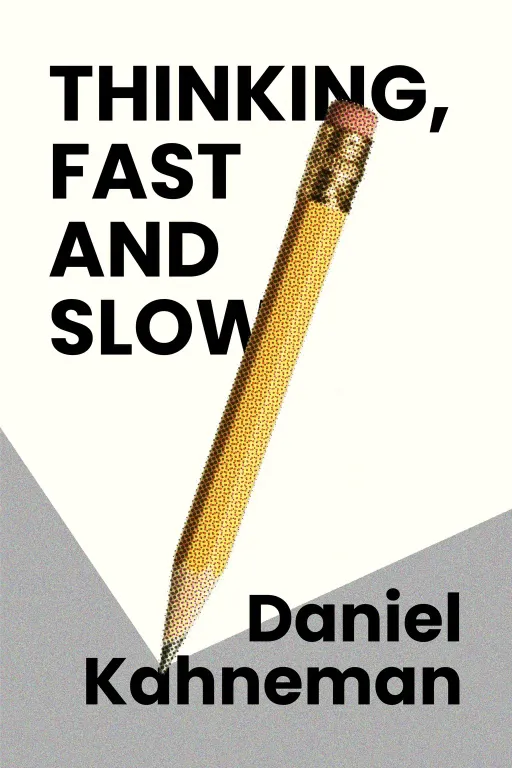
Nova: Well, it’s less about whims and more about systems. Today, we're dissecting the very fabric of how we choose, drawing heavily from the monumental work of Daniel Kahneman, specifically his highly acclaimed book,. Kahneman, a Nobel laureate in Economic Sciences, wasn't originally an economist but a psychologist. His work, often with his long-time collaborator Amos Tversky, fundamentally reshaped our understanding of human judgment and decision-making, showing us that even the most rational among us are prone to predictable irrationalities.
Atlas: Wow. A psychologist winning a Nobel in Economics. That's a fascinating backstory. It makes you wonder how much of our perceived "economic rationality" is actually just... well, psychology.
Nova: Exactly! And he didn't just point out the flaws; he gave us a framework. He introduced us to these two main characters in our cognitive play: System 1 and System 2.
The Dual Systems of Thought
SECTION
Atlas: So, System 1 and System 2. I imagine a buddy cop movie where one's the reckless hothead and the other's the by-the-book veteran. Is that close?
Nova: You're not far off! System 1 is indeed the hothead. It's fast, intuitive, emotional, automatic, and works without much effort. Think about recognizing a friend's face, understanding a simple sentence, or reacting to a sudden loud noise. It's constantly running in the background, making snap judgments and predictions. It’s what allows you to drive a familiar route without consciously thinking about every turn.
Atlas: Right. Like when I instinctively swerve to avoid a pothole, I'm not doing a cost-benefit analysis in a split second. My brain just it. That makes sense.
Nova: Precisely. Now, System 2 is the by-the-book veteran. It's slow, deliberate, logical, effortful, and requires conscious attention. This is what you engage when you're solving a complex math problem, trying to park in a tight spot, or consciously weighing the pros and cons of a major career move. It monitors and, sometimes, overrides System 1.
Atlas: Okay, so the pothole example, that's pure System 1. But if I'm trying to figure out the best route home because there's heavy traffic and I need to pick up groceries drop off dry cleaning, that feels like System 2 crunching numbers.
Nova: Absolutely. And the critical insight Kahneman brings is that System 1 is often the default. It’s efficient, but it's also prone to biases. It jumps to conclusions, makes associations, and can lead us astray, especially in complex or novel situations. For leaders, this is crucial. When you're making high-stakes decisions, relying solely on that fast, intuitive gut feeling, which is often System 1 at play, can introduce significant blind spots.
Atlas: I imagine a lot of our listeners, especially those managing high-pressure teams, might feel that intuition is their superpower. That gut feeling that's guided them to success. Are you saying that's actually a weakness?
Nova: Not a weakness, but a tool that needs to be understood and managed. System 1 excels in familiar environments. The danger emerges when we face new, complex challenges and our System 1 tries to apply old, familiar patterns, leading to cognitive biases like confirmation bias – seeking information that confirms our existing beliefs – or anchoring bias, where we rely too heavily on the first piece of information offered.
Atlas: So basically, my brain is taking shortcuts, and those shortcuts can sometimes lead me off a cliff. That’s actually really inspiring, in a terrifying way. It means I need to actively about how I'm thinking.
Nova: It's about cultivating that deliberate pause. Before a critical decision, consciously asking, "Am I relying too heavily on intuition, or have I engaged my deliberate thought process?" It’s a tiny step, but it’s foundational for strategic clarity. And this is where another brilliant book comes in, by Richard H. Thaler and Cass R. Sunstein.
Cultivating Deliberate Choice Through Nudges
SECTION
Atlas: Nudge. I've heard that term bandied about. Is it like... gently pushing people in the right direction without them realizing it? Sounds a bit manipulative, honestly.
Nova: It's a perception many share, but the authors, Thaler, another Nobel laureate in Economics, and Sunstein, a renowned legal scholar, frame it differently. They argue that people often make choices that aren't in their best interest, not because they're irrational, but because of how choices are presented. A 'nudge' is any aspect of the choice architecture that alters people's behavior in a predictable way without forbidding any options or significantly changing their economic incentives. It's about designing environments that encourage better decisions.
Atlas: Can you give an example? Like how would a leader use this without, you know, being Big Brother?
Nova: Absolutely. Think about retirement savings. Many companies default their employees into a 401 plan, allowing them to opt if they choose. Studies show that participation rates are dramatically higher with opt-out defaults compared to opt-in systems. People are more likely to stick with the default because it requires less System 2 effort. It's a gentle nudge towards financial security.
Atlas: Oh, I see. So it's not about forcing employees to save; it's about making the path the one that leads to a better outcome. That’s a great way to put it. It reminds me of how cafeterias might put healthy food options at eye level and less healthy ones further back.
Nova: Exactly! That’s a classic nudge. For leaders, the deep question from is: How can you design your team's processes to 'nudge' them towards more effective and ethical choices without dictating outcomes? It's about understanding the psychology of choice and structuring the decision environment. For instance, instead of just telling a team to "be innovative," you might design a weekly brainstorm session where the default action is to share one wild idea, creating a norm that nudges towards creative thinking.
Atlas: So, if I'm trying to improve critical thinking on my team, instead of just saying "think harder," I could implement a "pre-mortem" exercise before every major project. Everyone assumes the project has failed, and then they work backward to identify why. That would nudge them to consider potential pitfalls they might otherwise overlook.
Nova: That's a brilliant application, Atlas. A pre-mortem is a classic System 2 activator. It forces a deliberate, effortful consideration of potential failures, counteracting that System 1 optimism bias. Thaler and Sunstein would applaud that. They emphasize that while we have System 2, we often don't engage it enough, and nudges are ways to indirectly prompt that engagement.
Atlas: It’s interesting how the reception for has been polarizing among some readers. Some find it incredibly empowering, seeing it as a tool for positive social engineering, while others raise concerns about paternalism or manipulation. It really makes you think about the ethics of influencing choice, even for good.
Nova: That tension is precisely what makes the discussion so rich. The authors are clear that nudges aren't about coercion; they're about libertarian paternalism – guiding choices while preserving freedom. But the debate itself illuminates the power and responsibility that comes with understanding these cognitive systems. Effective leadership, at its core, hinges on understanding how decisions are made, both by ourselves and by those we lead. These books offer powerful tools to improve that process, moving us from reactive intuition to deliberate, strategically nudged choices.
Synthesis & Takeaways
SECTION
Atlas: This has been incredibly insightful, Nova. It feels like we've peeled back the curtain on the magic trick of our own minds. The idea that we have these two systems, one fast and intuitive, the other slow and deliberate, and that we can actually our environments to engage the right one at the right time. That’s actually really inspiring.
Nova: It is, isn't it? It’s not about fighting your intuition, which is a powerful tool, but about knowing when to trust it and when to call in the cavalry of System 2. The average person makes thousands of decisions every day, many on autopilot. Becoming aware of this dual process, and then learning to apply subtle nudges, either to ourselves or within our teams, can dramatically improve outcomes. It’s about becoming the architect of your own choices, and the choices of your organization, rather than a passenger.
Atlas: And that's going to resonate with anyone who struggles with feeling overwhelmed by choices or wants to refine their influence as a leader. It's about embracing continuous refinement, as our user profile emphasizes. A single conscious pause, before making a critical decision, to ask, "Am I relying too heavily on intuition, or have I engaged my deliberate thought process?" That alone could be transformative.
Nova: Absolutely. It's a small shift in mindset that yields profound results, transforming how you approach challenges and build a culture of thoughtful decision-making. It’s a journey of mastering clarity, one deliberate choice at a time.
Atlas: That's a powerful call to action. I’ve been thinking about how to apply this to our listeners. What if we asked everyone listening to share one small "nudge" they plan to implement in their own decision-making process this week? Maybe something as simple as setting a 5-minute timer before responding to an important email.
Nova: I love that! Share your "nudge" with us. Let's build a community of conscious decision-makers.
Atlas: This is Aibrary. Congratulations on your growth!









