Deconstructing Decisions: Why Logic Alone Fails in Marketing
Golden Hook & Introduction
SECTION
Nova: Atlas, if I told you that most of your marketing efforts are probably speaking to the wrong part of people's brains, what would you say?
Atlas: Oh, I'd say you've just described my Monday morning strategy meeting. Tell me more, Nova, because that sounds like a revelation a lot of us need.
Nova: It absolutely is, and it's a revelation rooted in some truly foundational work. Today, we're diving into how understanding the unconscious drivers of human behavior can be your secret weapon in marketing, especially with so much noise competing for attention.
Atlas: That resonates. In the digital marketing analytics world, we're constantly sifting through data, trying to figure out what actually moves the needle, and it often feels like there’s a missing piece.
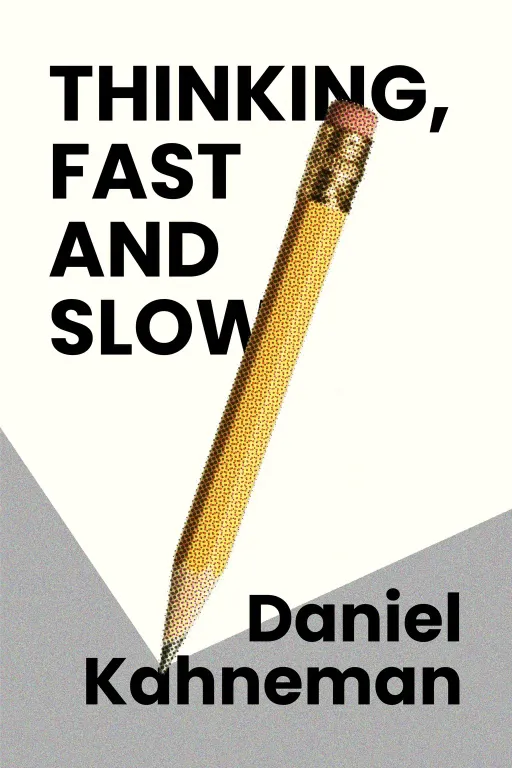
Nova: Exactly. And that missing piece often comes from a Nobel laureate, Daniel Kahneman, whose book completely reshaped our understanding of human judgment and decision-making. He’s not just a psychologist; he’s an economist who brought psychology into economics, winning the Nobel Memorial Prize for his work on prospect theory. It’s a book that’s been widely acclaimed as a modern classic, praised for its rigorous yet accessible exploration of the mind.
Atlas: So, we're talking about going beyond just clicks and conversions to the very core of why people make choices.
Nova: Precisely. We're challenging the common marketing assumption that people are purely rational. We’re revealing how deeply ingrained cognitive biases influence decision-making far more than logical arguments. This isn't just theory; it's a practical framework for genuine engagement.
The Myth of Pure Rationality: System 1 vs. System 2 Thinking
SECTION
Nova: So, let's start by dismantling this myth of the purely rational consumer. Kahneman introduces us to two systems of thought: System 1 and System 2. Think of System 1 as your gut reaction, your intuition. It's fast, automatic, emotional, and requires very little effort. It's what helps you recognize a face or slam on the brakes.
Atlas: Okay, so like when I see a really appealing ad, and I just like I need that product, even if I haven't consciously processed all the details.
Nova: Exactly! That's System 1 at play. System 2, on the other hand, is your slow, deliberate, logical self. It's what you use for complex calculations, comparing pros and cons, or focusing your attention in a noisy room. It demands effort and concentration.
Atlas: So you're saying that most consumer decisions, especially online where things move so quickly, are actually driven by that gut-feeling, System 1, rather than the logical, analytical System 2? That feels counterintuitive for a lot of marketers who spend so much time crafting logical arguments for their products.
Nova: It’s not just counterintuitive, it's a profound blind spot. Consider this: you're scrolling through an online store, overwhelmed by options. Do you meticulously compare every single feature, read every review, and analyze every price point? Or do you quickly scan for something that right – a familiar brand, a visually appealing design, a 'limited time offer' that triggers a sense of urgency?
Atlas: Huh. I'm definitely in the 'quick scan and gut feeling' camp more often than I'd like to admit, especially if I'm not making a huge purchase.
Nova: Right? That quick scan, that feeling, that's System 1 taking the wheel. It's why emotional appeals, compelling visuals, and subtle heuristics – mental shortcuts – are often far more effective than a detailed list of specifications. Marketers who rely solely on rational arguments are essentially talking to an employee who only shows up to work part-time, while the real decision-maker, System 1, is running the show behind the scenes.
Atlas: So, all those countdown timers for sales, the "only three left in stock" notifications, the "join 10,000 happy customers" social proof – those aren't just annoying tactics; they're directly targeting System 1 to trigger that fast, intuitive response.
Nova: Absolutely. They're designed to bypass the slower, more effortful System 2. When you see "only three left," your System 1 instantly perceives scarcity and potential loss, creating an urge to act before your System 2 can kick in and say, "Do I really need this right now?" This is why recognizing these cognitive biases allows you to design marketing strategies that resonate deeply, moving beyond mere clicks to genuine engagement and loyalty.
The Power of Choice Architecture: Nudging Behavior Unconsciously
SECTION
Atlas: Okay, so if System 1 is the real boss, how do we speak its language effectively without just resorting to constant urgency or scarcity? How do we build genuine engagement?
Nova: That’s a fantastic question, and it leads us directly to another groundbreaking book: by Richard H. Thaler and Cass R. Sunstein. Thaler, like Kahneman, also won a Nobel Prize for his contributions to behavioral economics, specifically for his work on nudges.
Atlas: Nudges. That sounds like a gentle push, not a manipulative shove.
Nova: Exactly. shows how subtle changes in what they call 'choice architecture' can guide people towards better decisions without restricting their freedom. It's about designing environments that make desired actions easier, almost automatic, for System 1.
Atlas: So, it's about making the path of least resistance the path. Can you give me an example of what this looks like in the real world, and then how it might apply to marketing?
Nova: Think about the classic example of organ donation. In some countries, you have to actively to be an organ donor, and participation rates are low. In others, you're automatically an organ donor unless you. The default choice, the 'nudge,' profoundly impacts the outcome. People simply tend to stick with the default. It's not about forcing anyone; it's about how the choice is presented.
Atlas: Wow. That's a powerful difference for such a small change. So, in marketing, how do we apply that? Are we talking about simply pre-checking boxes on a form?
Nova: That's one very basic example, but it goes much deeper. It's about optimizing your entire user journey. Imagine an e-commerce site where the 'most popular' or 'best value' product is subtly highlighted, or even pre-selected as a default in a comparison chart. Or a sign-up flow where the 'recommended' newsletter option is already checked.
Atlas: So, it's about guiding customers by subtly highlighting the preferred option, or making it the easiest choice, rather than just presenting a menu of equally weighted options and hoping they pick the 'right' one.
Nova: Precisely. It's about designing your digital environment, your 'choice architecture,' to make the desired action feel effortless and intuitive for System 1. It helps cut through the noise because it reduces cognitive load. Users don't have to deliberate endlessly; they're gently guided. This moves beyond just shouting louder than your competitors; it's about making the path to engagement so smooth, so natural, that it almost feels inevitable.
Atlas: That's actually really inspiring. It means we're not just trying to convince people with facts and figures, but we're helping them make choices that are both good for them and for the brand by understanding their natural decision-making process. It changes the game from a battle of wits to a dance with human nature.
Synthesis & Takeaways
SECTION
Nova: And that's exactly the synthesis here, Atlas. By understanding Kahneman's System 1 and System 2, and then applying the principles of 'nudge' from Thaler and Sunstein, we transform marketing from a purely logical pursuit into a deeply human one. It's not about tricking people; it's about designing experiences that align with how humans make decisions.
Atlas: It's about recognizing that our brains are wired for shortcuts, especially in a world overflowing with information, and using that insight to build better, more intuitive experiences. For someone leading teams and driving impact, this is critical for future-proofing strategy.
Nova: Absolutely. Ignoring these cognitive biases means leaving genuine engagement and loyalty on the table. When you understand that most decisions are made in the blink of an eye, based on emotion and intuition, you stop trying to win arguments with logic alone. Instead, you design your campaigns, your products, your entire brand experience to speak directly to that powerful, fast-thinking System 1. It transforms marketing from a battle of logic into a dance with human nature, leading to deeply resonant campaigns and stronger connections.
Atlas: So, for our listeners who are keen to apply this, what's one concrete step they can take right away to reframe their current marketing campaigns to speak to System 1 thinking?
Nova: Great question. I'd say, take a look at your main marketing touchpoints – your website, your ads, your email flows. For each one, ask yourself: "Are we making the desired action – whether it's a purchase, a sign-up, or even just clicking for more info – the? Are we speaking to the gut, not just the brain?" Look for opportunities to simplify choices, highlight social proof, or create a subtle sense of effortless progression.
Atlas: That's a powerful way to start. It’s about building environments that intuitively guide, rather than just loudly persuade.
Nova: Exactly. It's about being the architect of great experiences, not just the messenger of information.
Atlas: I love that.
Nova: This is Aibrary. Congratulations on your growth!