The Silent Language: Unlocking Effective Communication in Family & Teams.
Golden Hook & Introduction
SECTION
Nova: Atlas, quick question: On a scale of 'silent treatment' to 'Shakespearean soliloquy,' how would you rate your last difficult conversation? Be honest.
Atlas: Oh, Nova, are we starting with a personal attack? I thought this was a safe space. Probably somewhere around 'interpretive dance of frustration,' to be perfectly candid. My intentions were pure, the execution… less so.
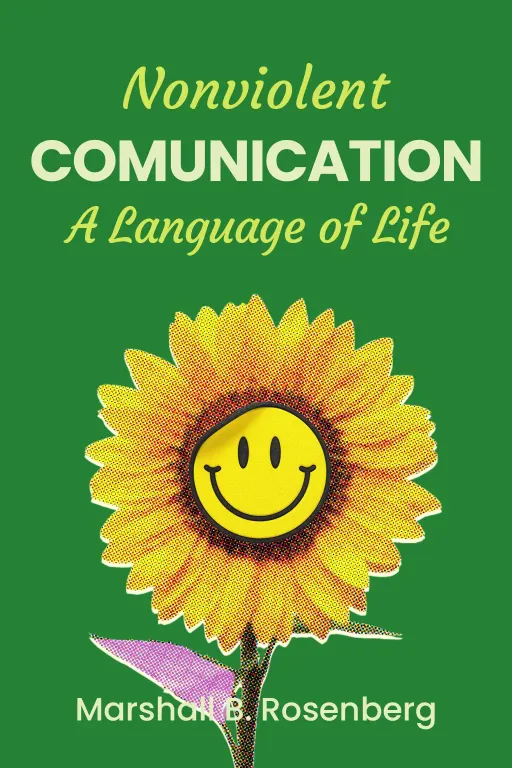
Nova: Interpretive dance of frustration! I love that. And it perfectly sets the stage for our dive into the silent language of communication – or, rather, the silent language we be speaking. Today, we're dissecting two pivotal works that, while seemingly different, offer a unified path to clearer, more empathetic interactions. We’re talking about Marshall B. Rosenberg’s groundbreaking "Nonviolent Communication" and the timeless classic, "How to Talk So Kids Will Listen & Listen So Kids Will Talk" by Adele Faber and Elaine Mazlish.
Atlas: Right, two books that promise to transform how we connect, whether it’s with a colleague who just doesn’t it, or a family member who seems to speak an entirely different dialect. I mean, the core promise there, Nova, is huge: bridging communication gaps. But in a world where everyone’s talking but few are truly connecting, where do we even begin?
Nova: Exactly. And the cold, hard fact at the heart of both these books is that misunderstandings often stem from unspoken needs and unacknowledged feelings. It's the silent undercurrent that sabotages everything from project deadlines to dinner table discussions. So, let’s start with the revolutionary idea of articulating those needs, clearly and without blame.
The Art of Empathetic Expression: Unpacking Unspoken Needs
SECTION
Nova: Rosenberg’s "Nonviolent Communication," or NVC, is less about being 'nice' and more about being radically clear and honest. It’s a framework that teaches us to express our needs clearly without blame, and crucially, to listen deeply to others with empathy. It transforms confrontational interactions into opportunities for mutual understanding.
Atlas: Okay, but wait. For our listeners managing high-pressure teams, or even just high-intensity family dynamics, isn't that just being 'soft' in a competitive environment? Expressing vulnerability might feel incredibly risky. You’re telling me to lay out my feelings when I’m trying to negotiate a tough deal or get my team to hit a crucial deadline?
Nova: That's a common misconception, Atlas, but it's actually the opposite. NVC is about strength through clarity, not weakness. Think of Sarah, a project manager I know. She was constantly frustrated because a team member, Mark, seemed to criticize every idea she brought up in meetings. Her usual response was to either get defensive or just shut down, leading to simmering resentment and stalled projects.
Atlas: I know that feeling. It’s like a communication deadlock.
Nova: Precisely. Using NVC, Sarah learned to pause. She identified her own feelings: frustration, feeling unheard, maybe even a touch of disrespect. Her underlying needs were for collaboration and professional respect. Instead of saying, "Mark, you always undermine me!" which is blaming, she rephrased it.
Atlas: So, what did she say? I’m genuinely curious how that plays out in a real meeting.
Nova: She approached Mark privately and said something like, "Mark, when I hear your feedback on my proposals in team meetings, I feel a sense of frustration and unheard. My need is to feel respected and to collaborate constructively on these projects. Would you be open to discussing how we can achieve that?"
Atlas: Wow. That’s a completely different energy. I imagine a lot of our listeners would find that incredibly difficult to articulate without feeling exposed. But what happened? Did Mark just… melt?
Nova: Not immediately, but the dynamic shifted. Mark, confronted with a clear statement of feelings and needs, rather than an accusation, became less defensive. He admitted he often felt his own ideas weren't being considered, and he’d been expressing that clumsily. This wasn't about Sarah being 'soft'; it was about her being precise. It was like translating emotional static into clear signals. It allowed them to move from a cycle of blame to a conversation about mutual needs, eventually leading to a more collaborative approach where Mark felt heard, and Sarah felt respected. It transformed a confrontational interaction into an opportunity for mutual understanding.
Atlas: That’s a great way to put it. From static to signals. It makes me think about how much energy we waste in these unspoken battles, just because we lack the vocabulary or the courage to express our true 'why.' It sounds like it cultivates a deeper sense of psychological safety, which is paramount in any innovative team.
Beyond Words: Validating Feelings for Deeper Connection
SECTION
Atlas: So, once we've figured out how to express ourselves more effectively, what about the other side of the coin? How do we truly what’s unspoken in others, especially when they’re expressing themselves in that 'interpretive dance of frustration' mode?
Nova: That’s where Faber and Mazlish come in, and their work, "How to Talk So Kids Will Listen & Listen So Kids Will Talk," offers incredible tools that are deeply applicable beyond just parent-child dynamics. The core insight is this: before you can solve a problem or even reason with someone, you must first acknowledge and validate their feelings.
Atlas: I imagine a lot of our listeners, especially those juggling multiple roles as parents, leaders, and innovators, might feel they don't have for this emotional navigation. Isn't it faster to just state the facts or give instructions? Like, "The deadline is Monday, get it done." Or, "No, you can't have cookies before dinner, that’s just how it is." How does validating feelings foster self-esteem and problem-solving in a practical sense, especially when the stakes are high?
Nova: That’s the paradox! It often feels like a detour, but it's actually the most direct path to cooperation and genuine problem-solving. Let's consider a common scenario: a team member, let's call him David, is visibly frustrated about a new, tight deadline for a project he’s already swamped with. Your first instinct might be to reiterate the importance of the deadline or even tell him to just manage his time better.
Atlas: Right, or offer a quick 'pep talk.'
Nova: Instead, applying Faber and Mazlish's insights, you’d start by acknowledging his feeling. You might say, "David, I can see you’re really frustrated with this new deadline. That sounds like a lot to take on right now." You’re not agreeing with his frustration or saying the deadline will change; you’re simply reflecting his emotional state.
Atlas: So, you’re basically saying, "I see you, and I understand that this is tough for you."
Nova: Exactly! And here's the magic: when David feels truly heard and understood, his defensiveness drops. He's no longer fighting to prove his frustration is valid. He might then say, "Yeah, I just feel overwhelmed, and I don't see how I can get it all done without compromising quality." Now you have a conversation, not a confrontation. You've created a space for him to articulate his underlying need – perhaps for support, or for clarity on priorities.
Atlas: That makes me wonder, how does that translate into tangible problem-solving? Because simply acknowledging a feeling doesn't magically make the deadline disappear.
Nova: It doesn't, but it opens the door to finding solutions. Once David feels heard, you can move to, "Okay, so you're feeling overwhelmed and worried about quality. Let's talk through what’s on your plate and see what adjustments we can make, or where we can get you some support." This process fosters self-esteem because David feels respected, and it encourages his own problem-solving skills rather than just waiting for you to fix it. It's building a strong foundation, Atlas, instead of just patching cracks. The long-term gain in trust and efficiency far outweighs the initial perceived 'cost' of pausing to listen.
Synthesis & Takeaways
SECTION
Nova: So, what we’ve seen is that whether you’re expressing your own needs, as Rosenberg teaches, or validating the feelings of others, as Faber and Mazlish illuminate, both approaches address the same core issue: the silent, often destructive, language of unspoken needs and unacknowledged feelings. They're two sides of the same incredibly powerful coin.
Atlas: Absolutely. And when you look at the user profile—the Nurturing Innovator, the Balanced Strategist—it’s clear that these aren't just 'soft skills.' These are fundamental tools for building stronger bonds and resolving conflicts proactively, whether it’s in a bustling family home or a high-stakes team environment. It’s about creating a supportive environment where everyone feels heard and valued.
Nova: Precisely. And that brings us to our 'Tiny Step' for today, something immediate and practical you can implement: Before responding to a challenging statement, pause and identify the underlying feeling or need the other person might be expressing.
Atlas: That’s a micro-moment of mindfulness, isn't it? It connects directly to the growth recommendation for mindfulness practices. It's not about ignoring the challenging statement; it’s about looking it. It’s a deliberate moment of emotional intelligence that can entirely reframe an interaction.
Nova: It truly is. This pause, this moment of reflection, is a powerful tool for personal well-being, because it shifts you from reactive to responsive. It’s also incredibly effective leadership, amplifying your influence by fostering understanding rather than just demanding compliance.
Atlas: So, for the next 24 hours, I challenge everyone listening: try this 'pause and identify' technique in just one conversation. Even just one. See what shifts. It’s a small action, but the ripple effect can be immense, not just for your relationships, but for your own holistic fulfillment.
Nova: It’s about building a life where your communication truly reflects your intention, and where you're not just speaking, but deeply connecting. It's about shaping who we become, one conscious conversation at a time.
Atlas: This is Aibrary.
Nova: Congratulations on your growth!