The Architecture of Empathy
Golden Hook & Introduction
SECTION
Nova: Most people dread conflict, seeing it as a chaotic, destructive force that rips teams apart and stalls progress. But what if beneath the shouting and the slammed doors, there was an elegant, predictable architecture waiting to be understood?
Atlas: An architecture? That’s a bold claim, Nova. My experience in high-stakes environments often feels less like architecture and more like a demolition derby. How do you find elegance in that kind of chaos?
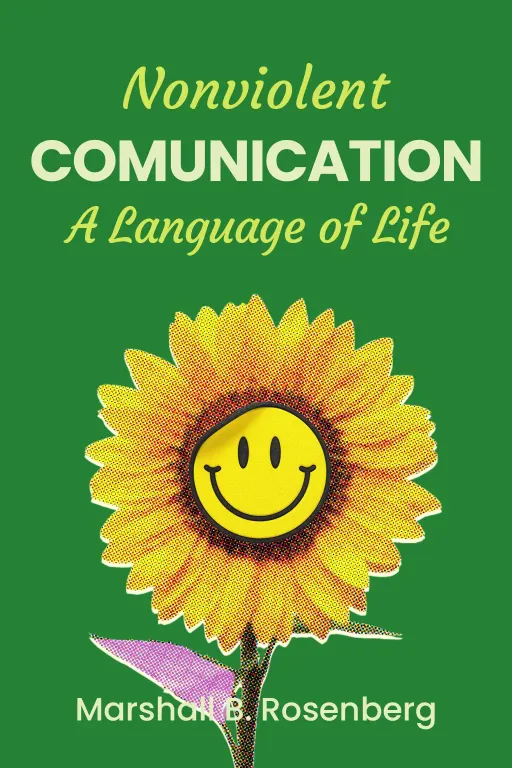
Nova: Exactly! That's the paradigm shift we're diving into today. We're talking about the architecture of empathy, drawing profound insights from two seminal works. First, Marshall B. Rosenberg's revolutionary "Nonviolent Communication," and then, the illuminating work of Douglas Stone, Bruce Patton, and Sheila Heen in "Difficult Conversations."
Atlas: Oh, I like that. The idea that conflict isn't just random noise, but something with an underlying structure, that’s incredibly appealing for anyone trying to build efficient systems or innovate business models. It suggests we can actually better outcomes.
Nova: Precisely. Rosenberg, a clinical psychologist and mediator, spent decades developing and applying Nonviolent Communication in some of the world's most volatile conflict zones, from war-torn regions to inner-city gangs. His work isn't just theory; it's battle-tested. And "Difficult Conversations" emerged from the Harvard Negotiation Project, bringing an academic rigor and practical playbook to the very human messiness of high-stakes interactions.
Atlas: That’s a powerful combination. It sounds like one offers the foundational language, and the other provides the diagnostic tools. So, where do we start peeling back these layers?
Deconstructing Conflict with Empathy: The NVC Framework
SECTION
Nova: We begin with Rosenberg’s "Nonviolent Communication," often abbreviated as NVC. It’s a four-step process—Observation, Feeling, Need, Request—designed to bridge emotional gaps and resolve conflict by shifting us from blame to understanding.
Atlas: So you're saying if I’m in a high-stakes meeting and a colleague is resisting my strategic proposal, instead of immediately countering their argument, I should be thinking about these four steps? That sounds… counterintuitive to the fast pace of business.
Nova: Absolutely. It’s about slowing down to speed up effectively. The first step is. This means stating what you see or hear factually, without judgment or evaluation. For example, instead of saying, "You're always late with your reports," which is an accusation, you'd say, "I noticed the Q3 report was submitted on Friday, three days after the Tuesday deadline."
Atlas: Oh, I see. That’s a subtle but critical difference. It removes the emotional charge right away. Because if someone says, "You're always late," my immediate reaction is defensiveness, not collaboration.
Nova: Exactly! And that leads us to the second step:. This is about expressing your own emotions, not what you the other person or. So, instead of "You made me angry," it's "When the Q3 report was submitted late, I felt frustrated."
Atlas: That makes sense, but sometimes, in a professional setting, expressing feelings can feel vulnerable, or even unprofessional. Many strategists are trained to be logical, objective.
Nova: That’s a common misconception. Vulnerability, when expressed with clarity and intention, can be a profound strength. It humanizes the interaction. The key here is owning feeling, not projecting it. "I felt frustrated" is very different from "Your lateness frustrated me." The latter still implies blame.
Atlas: Okay, so observation, then my own feeling. What’s next in this empathic architecture?
Nova: Next is. This is the core. What universal human need of yours was not met? Was it a need for efficiency, for predictability, for trust, for respect? For our Q3 report example, it might be, "I felt frustrated because I have a need for timely information to make accurate projections."
Atlas: Right, like a need for clarity to build a robust financial model, or a need for reliability to ensure team cohesion. This moves beyond the specific incident to something more fundamental.
Nova: Precisely. And this is where the magic happens. When you identify the underlying need, you often find common ground. Most people can relate to a need for efficiency or respect, even if they disagree on the method.
Atlas: And the last step?
Nova: The final step is. This is a clear, specific, actionable request, stated in positive language, that helps meet your need. Crucially, it's a request, not a demand. "Would you be willing to submit future reports by Tuesday so I can integrate the data into my projections on time?"
Atlas: So you’re saying, instead of a boss just barking, "Get your reports in on time!" they could say, "I noticed the Q3 report was late, and I felt frustrated because I have a need for predictability to finalize our forecasts. Would you be willing to submit future reports by Tuesday?"
Nova: That’s it! Think about the difference in reception. One invites defensiveness; the other invites collaboration and understanding. It transforms a potential confrontation into a conversation about shared needs and solutions.
Atlas: That’s actually really inspiring. It feels like a strategic approach to communication, ensuring the message lands effectively and leads to a desired outcome, rather than just venting frustration. It's not about being "soft;" it's about being profoundly effective.
Unpacking the Hidden Layers of Difficult Conversations
SECTION
Nova: If NVC gives us the language to navigate conflict, then Stone, Patton, and Heen give us the X-ray vision to understand these conversations are so difficult in the first place. Their book, "Difficult Conversations," dives into the three hidden layers beneath every challenging interaction.
Atlas: Hidden layers? Like an iceberg? I’m used to analyzing business models, but human conversations having hidden layers sounds like a whole new level of complexity.
Nova: It’s exactly like an iceberg! What we typically argue about is just the tip. They call this the. This is about facts, intentions, and blame. Who said what, who did what, whose fault is it? It's where most arguments get stuck, endlessly debating whose version of reality is correct.
Atlas: That’s so true. In project post-mortems, it often devolves into a blame game: "I sent the email," "But I never received it," "The server was down," "But you should have followed up." Everyone's trying to establish their truth.
Nova: And it's exhausting because everyone genuinely believes story is the "right" story. But beneath that, there's the. This is about the emotions involved: anger, hurt, fear, frustration, disappointment. These feelings are often unexpressed, unacknowledged, or mismanaged, and they leak into the 'What Happened' conversation, making it even more volatile.
Atlas: Hold on. Bringing feelings into a strategic discussion? For a builder focused on efficiency and objective metrics, that can feel like a distraction, or even a weakness. We’re taught to separate emotion from logic.
Nova: And that’s precisely why it's a conversation! We try to suppress or ignore feelings in professional settings, but they don't disappear. They just manifest as passive aggression, resistance, or an inability to move forward. The authors argue that acknowledging and exploring these feelings, even if briefly, is crucial for resolution. It’s not about wallowing; it’s about recognizing their legitimate presence.
Atlas: I can see how them would be a problem. Like a pressure cooker building steam. What’s the deepest layer then?
Nova: This is perhaps the most profound and often overlooked layer: the. This is about how the situation impacts our self-perception, our sense of competence, our worth, our identity. Am I a good person? Am I competent? Am I worthy of respect? Am I capable of leading this team?
Atlas: Wow. So, if a project I’m building fails, it's not just about the 'What Happened', or the 'Feelings', but also about my 'Identity' as a competent builder, a visionary leader. That’s heavy.
Nova: It is. Imagine a young, ambitious manager presenting a new market entry strategy. Her boss shoots it down with harsh criticism. The 'What Happened' is the critique. The 'Feelings' are her disappointment and fear. But the 'Identity' conversation is her internal monologue: "Am I cut out for this? Am I not smart enough? Will I ever be seen as a true strategist?"
Atlas: That’s a powerful example. And that internal dialogue can be far more damaging than the actual critique. It can lead to disengagement, self-doubt, or even leaving the organization. So, how do these three layers connect back to Rosenberg’s NVC?
Nova: Beautifully. NVC provides the tools to navigate these layers. When you focus on Observation, you're trying to stay out of the 'What Happened' blame game. When you express your Feeling and identify your Need, you're directly addressing the 'Feelings' conversation. And by making a clear Request based on unmet needs, you're moving towards a solution that respects everyone's underlying identity and competence.
Atlas: It’s about being explicit about the implicit. So, understanding these layers helps us apply NVC more effectively, making sure we’re not just scratching the surface of a conflict. It helps us build resilient organizations by addressing the root causes of friction.
Synthesis & Takeaways
SECTION
Nova: Exactly. The architecture of empathy isn't about avoiding conflict; it's about transforming it from a destructive force into a constructive dialogue. It allows strategists, builders, and visionaries to approach disagreements not as obstacles, but as profound opportunities for deeper understanding and stronger collaboration.
Atlas: I love that idea of an opportunity. Because for someone driven by growth, every challenge is an opportunity. And if we can reframe conflict this way, it opens up entirely new pathways for innovation and team cohesion. It’s about fueling sustainable growth by building better human systems.
Nova: Absolutely. And this isn't just theory for an ivory tower. The tiny step we want to leave our listeners with is incredibly practical: In your next high-stakes meeting, before you respond to a colleague's resistance or argument, pause. And identify one 'Feeling' and one 'Need' that might be driving their stance.
Atlas: Just one feeling, one need. That’s a manageable first step for anyone, even in the most intense business negotiation. It shifts your internal state from reaction to curiosity, from defense to understanding. And that, in itself, can change the entire trajectory of the conversation.
Nova: Precisely. This iterative learning, this small step, is how we build the future of commerce and truly design resilient organizations. It’s about seeing the human element not as a variable to control, but as a rich, complex system to understand and leverage.
Atlas: That’s a profound insight. It reminds us that even in the most data-driven, analytical environments, the human connection is the ultimate competitive advantage.
Nova: Absolutely. Thank you for joining us on this deep dive into the architecture of empathy. We hope this sparks new ways of thinking about your own interactions and helps you build even stronger, more connected teams.
Atlas: We’d love to hear how these insights resonate with you. Share your thoughts on social media and connect with our community. How does understanding the hidden layers of conflict change your approach to strategic challenges?
Nova: This is Aibrary. Congratulations on your growth!