Stop Unclear Boundaries, Start Assertive Connection: The Guide to Honoring Your Needs.
Golden Hook & Introduction
SECTION
Nova: What if I told you that the very thing you think pushes people away is actually the secret ingredient to pulling them closer?
Atlas: Whoa, that flies in the face of everything we're often taught about being 'nice' or 'accommodating.' Are we talking about boundaries here?
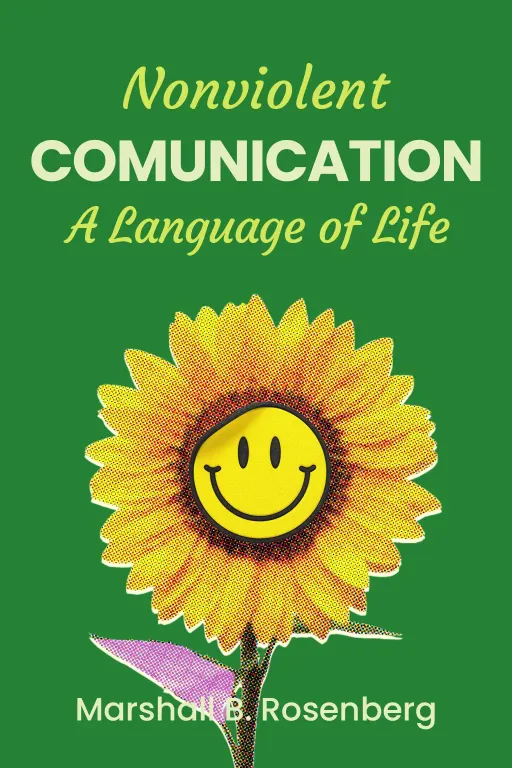
Nova: Absolutely, Atlas. Today, we're diving into the transformative power of clear boundaries, guided by two foundational texts: "Boundaries" by Henry Cloud and John Townsend, and "Nonviolent Communication" by Marshall B. Rosenberg.
Atlas: And Cloud and Townsend’s book, in particular, became a cultural phenomenon, selling millions and practically defining the modern conversation around personal limits in relationships for a generation. So this isn't just theory, it's widely adopted wisdom.
Nova: Precisely. And we're going to challenge that common misconception that boundaries are walls. Instead, we'll see them as the solid ground for secure relationships. Then, we'll get tactical: how to actually communicate those boundaries assertively, but with profound empathy.
Boundaries as Foundations, Not Walls: Redefining Healthy Connection
SECTION
Nova: So, let's just rip off the band-aid here. The cold, hard fact, as Cloud and Townsend brilliantly articulate, is that clear boundaries aren't walls designed to keep people out; they are the essential foundations upon which secure, respectful, and truly connected relationships are built.
Atlas: But wait, looking at this from a healer or guide's perspective, isn't there a deep-seated fear that setting a boundary feels selfish? That it goes against the very act of nurturing and supporting others?
Nova: That's exactly the myth we need to bust. Think about it like this: a house without a foundation crumbles. It might look fine on the surface, but any stress, any weather, and it falls apart. A relationship without boundaries is similarly precarious. Cloud and Townsend share countless stories, but one that always sticks with me is about a woman named Sarah.
Nova: Sarah was the ultimate 'yes' person – a compassionate healer in her community, always available, always giving. Her friends, family, even distant acquaintances knew they could rely on her for emotional support, favors, financial help, anything. She never said no. The problem was, Sarah was constantly exhausted, resentful, and felt utterly drained. Her 'nurturing' had turned into a deep well of bitterness, and paradoxically, her relationships, while numerous, lacked true depth. People loved what she for them, but few truly knew.
Atlas: I imagine a lot of our listeners, especially those driven by profound empathy, feel that. The line between helping and sacrificing yourself becomes so blurry. What happens to Sarah?
Nova: Well, Sarah eventually hit rock bottom, experiencing a profound burnout. Through therapy, she realized her boundless giving wasn't true generosity; it was a desperate attempt to feel valued, and she was terrified of disappointing anyone. Her relationships were built on her utility, not mutual respect. When she started to tentatively say 'no' – to late-night calls, to unreasonable requests, to lending money she didn't have – some people reacted negatively. They felt rejected, even angry.
Atlas: That's the fear, right? The backlash. The idea that if you stop being a doormat, people will just walk away.
Nova: Precisely. But here's the profound insight: the people who respected her new boundaries, who understood her need for self-care, were the ones who truly valued, not just her services. Her relationships, though fewer, became exponentially stronger, more authentic, and reciprocal. Her energy returned, and her capacity for genuine compassion, not resentful obligation, blossomed. She built a foundation of self-respect, and on that, true connection could thrive. It wasn't a wall that isolated her; it was a boundary that defined her, allowing healthy connection.
The Art of Assertive Connection: Communicating Needs Without Blame
SECTION
Atlas: That's a powerful story, Nova. It really highlights the 'why.' But for someone who's spent a lifetime being that 'yes' person, the 'how' feels like scaling Mount Everest. How do you actually articulate these limits without sounding accusatory or hurting someone you genuinely care about?
Nova: That's where Marshall Rosenberg's "Nonviolent Communication" becomes an absolute game-changer. Rosenberg provides a brilliant framework for expressing our needs and feelings without blame, fostering mutual understanding even in difficult conversations. It's about moving from 'you make me feel X' to 'I feel Y when Z happens, and I need A.'
Atlas: So you're saying it's a language shift? Like, instead of 'You always dump your work on me and it's unfair,' it's... something else?
Nova: Exactly! Rosenberg's framework has four components: Observation, Feeling, Need, and Request. Let's take your example. Instead of 'You always dump your work on me and it's unfair,' which is blame-filled, Sarah – our compassionate healer – might say: 'When I see these extra tasks added to my plate without discussion, I feel overwhelmed and anxious because my need for balance and manageable workload isn't being met. Would you be willing to discuss how we can divide responsibilities more evenly next time, or how I can communicate my capacity proactively?.'"
Atlas: Okay, that sounds... incredibly structured. And a bit robotic in the beginning. But the intention is so different. It shifts the focus from 'you're bad' to 'here's what's happening for me, and here's what I need.' That's a huge difference for someone who wants to maintain connection.
Nova: It is. And it takes practice to make it sound natural, but the clarity is unparalleled. Rosenberg's work came from his experience mediating conflicts in war zones and between deeply divided communities. He realized that at the core of all human conflict is an unmet need, and blame only escalates, it never resolves. This method allows you to be assertive about your needs without attacking the other person's character.
Atlas: Can you give another example, maybe something more personal? For someone trying to set a boundary with a family member who constantly oversteps?
Nova: Absolutely. Imagine a listener who loves their family but feels drained after every visit because their aunt constantly criticizes their life choices. Instead of lashing out with 'You always make me feel bad when I visit!', which will likely lead to defensiveness, they could use NVC. 'Aunt Carol, when you comment on my career choices, I feel a pang of sadness and frustration because I have a need for acceptance and understanding from my family. Would you be willing to refrain from those kinds of comments when we're together?'
Atlas: Wow. That's a direct request, but it's grounded in 'I' statements and feelings, not accusations. It gives the other person a clear path to respond constructively, rather than just react defensively. It's assertive, but it truly honors that desire for connection, rather than severing it.
Nova: Precisely. It requires vulnerability and courage, but it transforms potential conflict into an opportunity for deeper understanding and mutual respect. It's the language of secure attachment, allowing you to honor your needs while fostering genuine, resilient bonds.
Synthesis & Takeaways
SECTION
Nova: So, what we've really explored today is this incredible paradox: that true connection, genuine empathy, and secure foundations aren't built on an absence of boundaries, but on their very presence. Like a river needs banks to flow powerfully, our relationships need boundaries to thrive.
Atlas: It challenges that deep-seated belief that our sensitivity is a weakness. Instead, it reframes it as a superpower that, when protected by clear boundaries and assertive communication, allows us to nurture and heal without burning out.
Nova: Exactly. And the tiny step, the one thing you can do today, is to identify just one small area where you feel stretched. Maybe it's an email that always comes in late, or a recurring request you dread. Then, rehearse a clear, kind statement using that NVC framework. It's not about being aggressive; it's about being clear, kind, and self-respecting.
Atlas: It's about trusting your inner wisdom, as you always say, Nova. Your sensitivity a superpower, but it needs a strong foundation to stand on. This isn't just about protecting yourself; it's about creating space for more authentic, more reciprocal, and ultimately, more joyful connections.
Nova: Absolutely. It's the path to secure attachment strategies, assertive communication, and ultimately, self-compassion. Because you cannot pour from an empty cup, and a cup without a base simply cannot hold anything.
Atlas: So, if you're feeling that resonance, if you're a compassionate healer who's been stretching yourself thin, we invite you to reflect on one boundary you can lovingly establish this week. And share your reflections with us online – we'd love to hear how these insights are impacting your journey.
Nova: This is Aibrary. Congratulations on your growth!