Stop Avoiding Conflict, Start Navigating It: The Guide to Stronger Teams.
Golden Hook & Introduction
SECTION
Nova: Most of us are hardwired to think that avoiding conflict, sidestepping those uncomfortable conversations, is actually keeping the peace. It feels safer, right? But what if that 'peace' is actually a slow, silent killer of trust, innovation, and genuine connection within your team?
Atlas: Oh, I know that feeling. For anyone leading a team, especially in high-stakes environments, that urge to just keep things moving smoothly, to not rock the boat, is incredibly strong. But you're right, it often feels like you're just pushing the problem further down the road, and it always comes back, usually bigger.
Nova: Exactly. It's a fundamental misunderstanding of what genuine team health looks like. Avoiding tough conversations doesn't make problems disappear; it allows them to fester, erode trust, and ultimately undermine the very resilience a team needs to thrive. Today, we're diving into strategies that flip that script, turning potential conflict into a powerful catalyst for growth.
Atlas: So, we're not just talking about putting out fires, but actually using the heat to forge something stronger? That sounds like exactly what many of our listeners, especially those building with purpose, are looking for.
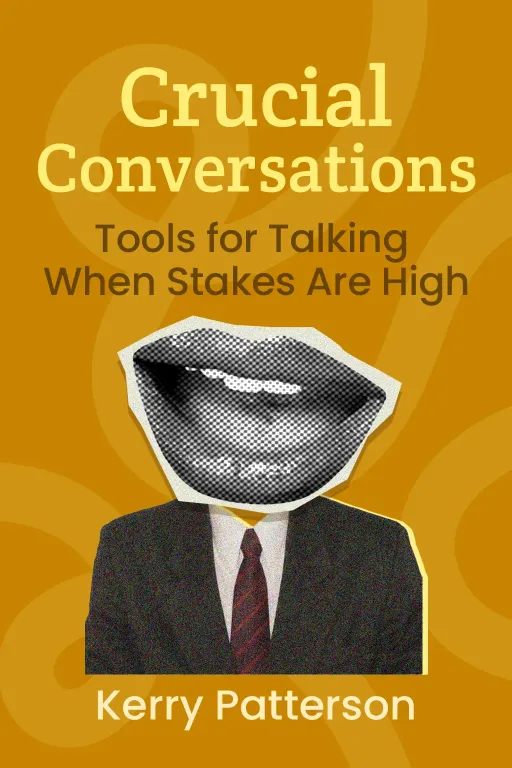
Nova: Absolutely. And to guide us, we're drawing insights from two incredibly powerful books. First, "Crucial Conversations: Tools for Talking When Stakes Are High" by Kerry Patterson, Joseph Grenny, Ron McMillan, and Al Switzler. These authors are pioneers in corporate training and research, their work stemming from decades of studying high-performing individuals and teams in some of the most challenging environments. They've literally mapped out how to navigate these high-stakes discussions.
Atlas: That's a strong foundation. You know, for many leaders, the idea of having a 'crucial conversation' can feel like preparing for battle.
Nova: And then we have "Nonviolent Communication: A Language of Life" by Marshall B. Rosenberg. Rosenberg developed NVC through his extensive work as a clinical psychologist, mediating conflicts in war-torn regions and fostering peace through communication. His framework is about expressing needs and feelings without blame, fostering empathy even in the most tense situations. Together, these provide a comprehensive toolkit for transforming how we approach disagreements.
Atlas: That makes me wonder, how do these seemingly different approaches—one more structured, the other more focused on empathy—actually work together? Because for a leader, the goal is impact, and sometimes, you need both precision and heart.
The Art of Crucial Conversations: Mastering High-Stakes Dialogue
SECTION
Nova: That’s a brilliant way to frame it, Atlas. Let's start with "Crucial Conversations." What makes a conversation "crucial"? It’s simple: when there are high stakes, differing opinions, and strong emotions involved. Think about it: giving a performance review to an underperforming team member, challenging a colleague's deeply held belief about a project, or discussing a sensitive budget cut. These are the moments that can define a team's success or failure, yet we often botch them or avoid them entirely.
Atlas: Right. For many in leadership, the instinct might be to either shut down, or worse, to steamroll. Neither feels particularly effective in the long run.
Nova: Precisely. The authors of "Crucial Conversations" found that the best communicators don't avoid these moments; they lean into them, but with a specific strategy. Their core principle is to "start with heart" – meaning, get clear on what you really want for yourself, for the other person, and for the relationship. Not just what you want to avoid.
Atlas: That's interesting. So it’s not about winning an argument, but about preserving the relationship and achieving a better outcome for everyone.
Nova: Exactly. Let me give you a hypothetical scenario. Imagine Sarah, a project manager, has a star developer named Mark. Mark is brilliant, incredibly innovative, but his code is often overly complex, and it’s now delaying a critical product launch. Sarah fears telling Mark this because he's sensitive to criticism and she values his talent. She's worried he might quit, or worse, retaliate by becoming uncooperative.
Atlas: Oh man, that’s a classic. The "don't upset the genius" dilemma. For leaders, navigating that kind of talent can be a real tightrope walk. You need their brilliance, but their approach is creating a bottleneck.
Nova: Right. If Sarah avoids the conversation, the launch gets further delayed, the team gets frustrated, and trust erodes. If she approaches it poorly, she alienates Mark. The "Crucial Conversations" framework would guide Sarah to first "start with heart." What does she want? She wants the launch to succeed, Mark to continue contributing his brilliance, and their working relationship to remain strong.
Atlas: So, it’s not just about "Mark, your code is too complicated." It's about a bigger picture.
Nova: Precisely. Next, she needs to "make it safe" for Mark. This means ensuring mutual respect and mutual purpose. Instead of attacking his code or his intelligence, she might start by acknowledging his incredible contributions and the value he brings. She might say, "Mark, your innovative solutions are a huge asset to this team, and I really value your creativity." She then clearly states the mutual purpose: "We both want this product to be a huge success, right?"
Atlas: Okay, but then what? How do you actually get to the "your code is a problem" part without him shutting down?
Nova: That’s where the "shared pool of meaning" comes in. Instead of stating it as a judgment, she describes the observable facts. "I've noticed that several recent modules have required significant rework by the QA team, and that's pushed back our integration schedule by two weeks." She invites his perspective: "What are your thoughts on this? What do you see happening?" She’s not blaming; she’s observing and inviting dialogue.
Atlas: I can see how that shifts the dynamic. It moves from an accusation to a problem-solving discussion. For our listeners who are focused on building with purpose, this framework provides a clear path to address issues without sacrificing valuable team members or crucial relationships.
Nova: It absolutely does. It’s about staying in dialogue, even when emotions run high, by constantly monitoring safety and re-establishing mutual respect if it falters. It turns a potential landmine into a structured, productive discussion.
Nonviolent Communication: Empathy as a Conflict Resolution Superpower
SECTION
Nova: Now, while "Crucial Conversations" gives us a powerful structure for to approach high-stakes dialogue, "Nonviolent Communication," or NVC, by Marshall Rosenberg, dives deeper into the we use, focusing on the underlying needs and feelings that drive our behavior. It’s about fostering empathy and understanding, even when you fundamentally disagree.
Atlas: So, if "Crucial Conversations" is the strategic blueprint, NVC is like the refined, diplomatic language you use within that blueprint?
Nova: That's a perfect analogy! NVC isn't about being 'nice' or avoiding difficult truths. In fact, it's about radical honesty, but expressed in a way that invites compassion rather than defensiveness. It has four key components: Observations, Feelings, Needs, and Requests.
Atlas: Okay, Observations, Feelings, Needs, Requests. That sounds like a lot to remember in the heat of the moment. Can you walk me through an example? Because for an empathetic leader, understanding what's truly going on beneath the surface is vital, but sometimes, the surface is all you see in a fast-paced environment.
Nova: Let’s use another hypothetical. Imagine David and Emily, two team leads, are constantly clashing over resource allocation. David believes his team is understaffed and Emily's team is getting preferential treatment. Emily feels David is always undermining her projects and doesn't appreciate the pressure she's under. Every meeting devolves into thinly veiled accusations and frustration.
Atlas: This is so common. It’s never just about the resources; it's always about something deeper.
Nova: Exactly. An NVC approach would encourage them to first state their without judgment. Instead of "Emily, you always hoard resources," David might say, "Emily, I observed that for the last three projects, your team received three additional developers, while my team received none." It's factual, not interpretive.
Atlas: That's a huge shift. Just stating facts, not accusations.
Nova: Then, they connect to their. Instead of "I feel like you're being unfair," which is actually a thought disguised as a feeling, David might say, "When I observe my team struggling with workload, I feel frustrated and a bit worried." Emily might express, "When I hear you imply my team is 'hoarding,' I feel disheartened and misunderstood."
Atlas: This is where it gets tricky, right? People are so used to blaming others for their feelings.
Nova: Absolutely. The crucial step is connecting those feelings to universal human. This is the game-changer. David might realize his need is for equity and support for his team's success. Emily's need might be for recognition for her team's hard work and trust in her judgment. These are universal needs we all share, which creates empathy.
Atlas: So it's not about "David needs more people," but "David needs his team to feel supported and have the resources to succeed." And Emily needs to feel her efforts are recognized and her decisions are trusted. That fundamentally changes the conversation. It's no longer a zero-sum game.
Nova: Precisely! Once needs are identified, they can move to. Instead of demanding, "Give me three developers," David might say, "Would you be willing to sit down with me and the department head to explore alternative ways to allocate resources that ensure both our teams feel adequately supported?" It's a specific, actionable, and negotiable request.
Atlas: That makes so much sense. It shifts from "you're the problem" to "how can we both get our needs met?" For an empathetic leader, this isn't just about avoiding conflict; it's about building a deeper understanding and finding truly collaborative solutions. It's about strengthening the team's underlying fabric, which is essential for a resilient visionary.
Nova: And that's where Nova's Take comes in. Mastering these communication tools, whether it's the structured approach of Crucial Conversations or the empathetic language of NVC, allows you to address issues head-on. It turns potential conflicts into opportunities for deeper connection, stronger trust, and ultimately, far better solutions. It's about building psychological safety, where people feel safe enough to be honest about their observations, feelings, and needs.
Synthesis & Takeaways
SECTION
Atlas: So, it's really about building resilience not just in individuals, but in the very fabric of the team's communication. It transforms potential breakdowns into breakthroughs. For someone who connects the dots and builds with purpose, these aren't just soft skills; they're foundational strategic tools.
Nova: Absolutely. The "Cold Fact" we started with, that avoiding tough conversations allows problems to fester and erode trust, becomes an empowering truth. When you learn to navigate conflict directly, you don't just solve problems; you proactively build effective, resilient teams. You create an environment where discomfort isn't a threat, but a signal for growth.
Atlas: That’s actually really inspiring. It frames conflict not as something to be feared, but as a critical pathway to genuine connection and innovation. It's about creating a culture where people feel heard and understood, even when they disagree.
Nova: And that brings us back to the "Tiny Step" from our core content. The next time you feel that tension rising, that impulse to duck and avoid, just pause. Ask yourself: "What is my true intention here?" Are you trying to avoid discomfort, or are you trying to achieve a better outcome for everyone involved? Then, pivot your focus to understanding, not just being understood.
Atlas: That’s a powerful, actionable step. For our listeners who are strategic builders and empathetic leaders, that simple pause can genuinely reframe an entire interaction. It’s about trust your intuition, but also having the frameworks to back it up.
Nova: Exactly. It's about being intentional in your communication, knowing that every interaction, especially the tough ones, is an opportunity to strengthen your team.
Atlas: Thank you, Nova. This has been incredibly insightful.
Nova: My pleasure, Atlas. And to all our listeners, remember, the path to stronger teams isn't about avoiding the storm, but learning how to sail through it, together. This is Aibrary. Congratulations on your growth!