Mastering the Art of Constructive Disagreement
Golden Hook & Introduction
SECTION
Nova: Alright, Atlas, quick game: I'll say a classic movie scenario, and you tell me the one thing that would have solved the entire plot if the characters had just mastered constructive disagreement. Ready?
Atlas: Oh, I like this! Hit me.
Nova: .
Atlas: Oh, easy! If Romeo and Juliet's families, the Montagues and Capulets, had just sat down and used a mediator instead of sword fighting in the streets, they'd all be alive, probably at a joint family barbecue. No poison, no daggers, just awkward small talk.
Nova: Exactly! Or how about? All those decades of galactic civil war, all that destruction...
Atlas: Right? If the Jedi Council and the Galactic Senate had just had a few better 'crucial conversations' with Anakin, maybe he wouldn't have felt the need to turn to the Dark Side and choke everyone. A little nonviolent communication could've saved the galaxy a lot of grief!
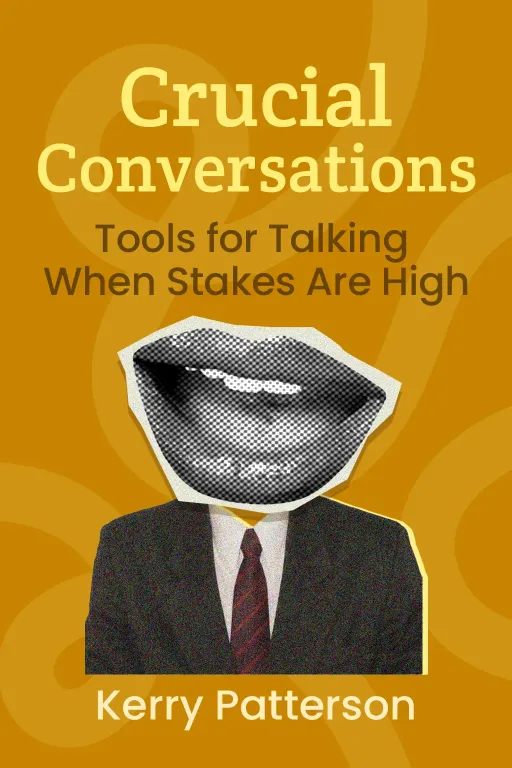
Nova: See, Atlas, it always comes back to this fundamental human challenge: how do we talk when the stakes are high, when emotions are charged, and when the outcome truly matters? Today, we're diving into exactly that with a look at the art of constructive disagreement. We're pulling insights from some incredibly powerful works, including "Crucial Conversations" by Kerry Patterson, Joseph Grenny, Ron McMillan, and Al Switzler, and Marshall B. Rosenberg's groundbreaking "Nonviolent Communication." What's fascinating is that the 'Crucial Conversations' authors actually spent years observing thousands of real-life interactions, dissecting what made some people incredibly effective in high-stakes talks while others consistently failed. They weren't just theorizing; they were meticulously documenting real human behavior under pressure.
Atlas: That's a great way to put it, Nova. It sounds like they weren't just giving advice, but almost reverse-engineering success. I imagine a lot of our listeners, especially those leading teams or navigating complex projects, feel like they're constantly in 'high-stakes' mode. So, how do we shift from those disastrous movie-plot disagreements to something genuinely productive?
The Power of Productive Dialogue: From Conflict to Connection
SECTION
Nova: That’s the core question, isn't it? The first big idea we need to grasp is that effective conflict resolution isn't about avoiding tension. It's about channeling it. Think of it like a river. You can build a dam and try to stop the flow, but eventually, it'll overflow and cause chaos. Or, you can build a hydroelectric plant and channel that immense energy into something powerful and beneficial.
Atlas: So, you're saying conflict isn't inherently bad? Because honestly, for many of us, conflict feels like the enemy of harmony, the thing that fractures relationships. We're taught to avoid it, to smooth things over.
Nova: Absolutely. That's a common misconception. The authors of "Crucial Conversations" argue that the problem isn't the conflict itself, but how we it. When you avoid crucial conversations, those unresolved issues don't just disappear; they fester. They become the silent killers of trust, innovation, and even personal well-being. They call it 'the Fool's Choice' – the belief that you have to choose between speaking your mind and being kind.
Atlas: Oh, I know that feeling! It’s like when you’re in a meeting, and you see a potential disaster brewing, but you keep quiet because you don’t want to be 'that person' who rains on the parade. Then, weeks later, the disaster happens, and you're left thinking, 'I knew it!' So, what’s the alternative to this 'Fool's Choice'?
Nova: The alternative is dialogue – a free flow of meaning between two or more people. It sounds simple, but it’s profound. The goal isn't to win an argument or to get your way, but to create a shared pool of meaning where everyone's perspectives, feelings, and intentions are out in the open. They emphasize that psychological safety is paramount here. It's the belief that you can speak up without fear of punishment or humiliation.
Atlas: Psychological safety… that’s a big one for leaders, especially. It's about creating an environment where people feel safe enough to challenge the status quo, to bring up uncomfortable truths, without worrying about being shut down or penalized. But how do you actually build that safety when a conversation is already heated?
Nova: That's where Rosenberg's "Nonviolent Communication" offers a brilliant framework. It's less about avoiding conflict and more about transforming it into an opportunity for mutual understanding. He breaks down communication into four key components: observation, feeling, need, and request. Instead of blaming or judging, you state what you without evaluation, express how you about it, connect that feeling to a universal that isn't being met, and then make a concrete.
Atlas: Okay, so let me try to translate that into a real-world scenario. Let's say I'm working on a project, and a colleague consistently misses deadlines, which impacts my work. My usual approach might be to say, "You're always late, you're messing up the whole project!"
Nova: And how does that usually go?
Atlas: Not great! They get defensive, maybe say I'm being too demanding, and the problem often continues.
Nova: Exactly. Now, with the NVC framework, you'd start with observation. "When I see that the report wasn't submitted by Friday's deadline..." – that's objective, no judgment. Then, your feeling: "... I feel frustrated and anxious..." – connecting to your internal state. Then, the need: "... because I have a need for predictability and efficiency to meet my own commitments."
Atlas: Wow, that’s so different. It immediately shifts the focus from 'you're bad' to 'here's how this situation affects me.' And then the request?
Nova: The request would be specific and actionable. "... Would you be willing to discuss what's making those deadlines challenging and how we can ensure future reports are submitted on time?" It's not a demand; it's an invitation to collaborate. This framework, combined with the "Crucial Conversations" emphasis on psychological safety, creates a powerful synergy. They both teach us that the path to better outcomes and stronger relationships isn't through silence or aggression, but through skilled, empathetic dialogue.
Atlas: That's fascinating. It really reframes the whole idea of conflict from a battle to be won into a problem to be solved collaboratively. For anyone who's ever felt stuck in a communication loop, where arguments just escalate or go nowhere, this sounds like a lifeline.
Your Toolkit for Tough Talks: Intentions, Reframing, and Collaboration
SECTION
Nova: It absolutely is. And that naturally leads us to the second key idea we need to talk about: the practical toolkit for these tough talks. It's one thing to understand the theory, but how do we actually it? The "Crucial Conversations" authors emphasize a crucial tiny step before you even open your mouth: identifying your true intentions and desired outcomes.
Atlas: So, before I even engage, I need to know what I want out of this conversation? Not just for myself, but for the other person and the relationship? That sounds deceptively simple, but I can see how easy it is to skip that step when emotions are running high.
Nova: It's often the most overlooked and most powerful step. Most people enter a crucial conversation with a hidden agenda or simply reacting emotionally. The authors suggest asking yourself: "What do I want for myself? What do I want for the other person? What do I want for the relationship?" And then, "How would I behave if I wanted these outcomes?" This exercise helps you get curious about your own motives and prevents you from falling into that 'Fool's Choice.'
Atlas: That's a profound shift. It forces you to pause and align your actions with your deepest values, rather than just reacting. For our listeners who are often strategizing and planning in their professional lives, this is like bringing that strategic mindset to their personal interactions. It’s a proactive approach to communication.
Nova: Precisely. And once you've clarified your intentions, the next step in the toolkit is reframing the disagreement. Instead of viewing it as a battle where one person wins and the other loses, you reframe it as a shared problem that you can solve together. This is where the wisdom from both books truly converges. Rosenberg's NVC helps you articulate your needs without blame, and "Crucial Conversations" provides the structure to turn that into a collaborative problem-solving session.
Atlas: So, it's about moving from 'my way or the highway' to 'how can we both get what we need here?' But what if the other person isn't on board with this collaborative mindset? What if they're still in 'battle mode'?
Nova: That's a critical point. The "Crucial Conversations" authors talk about making it safe. If the other person feels attacked, they'll retreat into silence or aggression. You have to step out of the content of the conversation and fix the safety problem first. This might involve apologizing if you've done something to threaten safety, or clarifying your positive intent. For example, "My intention here isn't to blame you; it's to find a solution that works for both of us because our team's success is important to me."
Atlas: That makes so much sense. You can’t solve a problem if one person is in a defensive crouch. You have to create the conditions for genuine dialogue first. It’s like building a bridge before you try to cross the chasm.
Nova: Exactly. And the tiny step recommendation from our content – "Before your next challenging conversation, identify your true intentions and desired outcomes for both yourself and the other party" – is incredibly powerful. It’s about taking five minutes to reflect, to embrace the power of pause, as our user profile suggests. Your calm, thoughtful approach is contagious. When you enter a conversation with clarity and a genuine desire for mutual understanding, you set a completely different tone.
Atlas: So, it's not just about what you say, but the internal state you bring to the conversation. That's a huge takeaway. It allows you to guide with integrity and inspire trust, which are key for ethical leaders and anyone looking to build stronger teams.
Synthesis & Takeaways
SECTION
Nova: Absolutely. What really stands out from both of these approaches is the profound insight that our ability to navigate disagreement isn't a weakness to be overcome, but a skill to be honed. When we channel tension constructively, when we clarify our intentions, and when we reframe conflict as a collaborative problem to be solved, we don’t just resolve issues; we fortify relationships. We unlock better outcomes, not just for ourselves, but for everyone involved. It’s about understanding that every tough talk is an opportunity to deepen connection and understanding, not just a hurdle to jump over.
Atlas: That's such a hopeful way to look at it. It transforms what often feels like a draining, unavoidable chore into a powerful tool for growth and connection. It’s not about avoiding the storm, but learning to sail through it more skillfully, and perhaps even enjoying the journey. It really makes you think about all those times you've either dodged a conversation or gone into it with the wrong mindset, and the opportunities for deeper relationships that were missed.
Nova: It does. And the beauty of these frameworks is that they're not just for the boardroom; they're for the dinner table, for family discussions, for any human interaction where understanding is more valuable than winning. It's about moving towards a world where empathy and clear communication are not just ideals, but practical, everyday tools.
Atlas: That's a powerful vision. So, for our listeners, what's one tiny step they can take this week to start mastering this art?
Nova: I'd say, just as we discussed, before your very next challenging conversation—even a small one, like deciding where to go for dinner—take just two minutes. Ask yourself: "What do I want for myself, for the other person, and for our relationship in this discussion?" That simple pause can completely transform your approach and the outcome.
Atlas: That’s actionable and impactful. It’s about putting intention before reaction.
Nova: Exactly. And remember, every interaction is a chance to practice.
Atlas: This is Aibrary. Congratulations on your growth!