Beyond 'Good Vibes': Mastering Your Emotional Landscape for Peak Performance.
Golden Hook & Introduction
SECTION
Nova: Atlas, if I asked you for five words to describe your relationship with your emotions you started really digging into this stuff, what would they be?
Atlas: Oh, that's a good one. Before? Hmm. Unpredictable, loud, confusing, bossy, and honestly, exhausting. What about you, Nova?
Nova: Mine? A locked box I occasionally kicked. And sometimes it kicked back. Hard.
Atlas: Sounds familiar. So, we're confessing our emotional baggage right out of the gate. I like it.
Nova: Well, it’s the perfect segue into today’s topic, because that "locked box" or "bossy confusion" is exactly what we’re tackling. We’re diving into the profound idea that our emotions aren't just feelings to be suppressed or reacted to impulsively. They are, in fact, valuable, actionable data.
Atlas: Data? Like a spreadsheet of feelings? That’s a fascinating reframe.
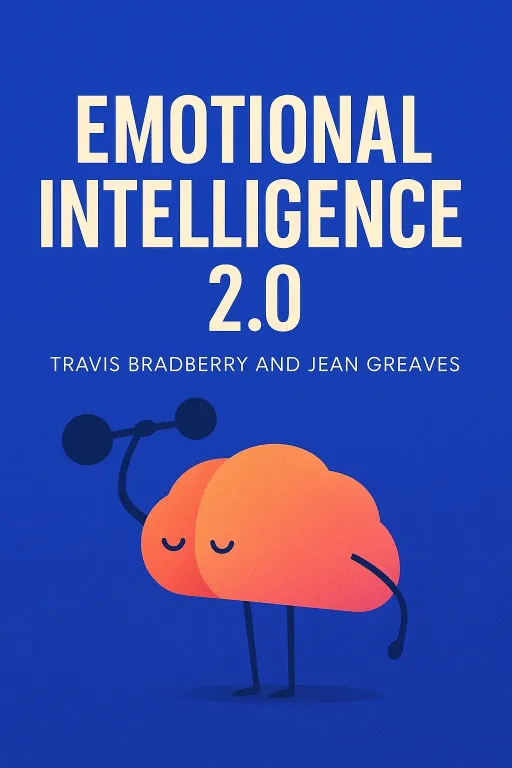
Nova: Exactly! And to unpack this, we're looking at two incredibly insightful books: "Emotional Intelligence 2.0" by Travis Bradberry and Jean Greaves, and "Nonviolent Communication" by Marshall B. Rosenberg.
Atlas: Both highly acclaimed in their fields, if I recall. Bradberry and Greaves, I believe, are co-founders of a leading emotional intelligence training firm, bringing a really practical, research-backed approach to understanding ourselves.
Nova: Spot on. Their work is grounded in helping professionals and individuals actually emotional intelligence. And Rosenberg, on the other hand, was renowned for his global peace work and mediation, demonstrating how his communication methods could transform even the most entrenched conflicts. So, these aren't just theoretical musings; they’re battle-tested frameworks for real-world change.
Atlas: That’s impressive. It sounds like we’re moving from the abstract "feel your feelings" to a much more concrete "understand and utilize your feelings."
Emotions as Data - The Shift from Reaction to Understanding
SECTION
Nova: Precisely. The core of our discussion today is really an exploration of how to transform our emotional landscape from a chaotic battlefield into a powerful toolkit for peak performance and profound human connection. Today we'll dive deep into this from two perspectives. First, we'll explore why our emotions are not just feelings, but crucial data points we've been largely ignoring. Then, we'll discuss practical frameworks from leading experts that can help us master this data for better self-management and deeper relationships.
Atlas: Okay, but if emotions are data, why do they feel so overwhelming sometimes? Why does anger feel like a firestorm and sadness like a black hole, instead of a neat little data tag?
Nova: That’s the "cold fact" these authors confront head-on. Many of us are taught to either suppress our emotions entirely or react to them impulsively. We treat them as inconveniences or uncontrollable forces. This emotional blind spot leads to miscommunication, poor decision-making, and chronic stress. It hinders both personal well-being and professional effectiveness.
Atlas: So, my "bossy, exhausting" description was actually pretty accurate for the old paradigm. I imagine a lot of our listeners feel that way too.
Nova: Absolutely. Think of it like this: imagine an executive named Sarah. She’s brilliant, driven, but she has a pattern. Every time a project hits a snag, she snaps at her team. Her anger isn't just "being mad"; it's data. But she's not reading it. The team sees her as volatile, they start withholding bad news, and project delays worsen.
Atlas: That’s a classic scenario, unfortunately. I’ve seen versions of that play out in so many workplaces.
Nova: Now, if Sarah were to pause, as these books suggest, and ask, "What is this anger me?" she might discover it’s not just about the project. It’s a fear of failure, a deep-seated need for control, or even a feeling of being overwhelmed and unsupported. The anger is a messenger, saying: "Hey, check in on your boundaries, or your need for support, or your sense of competence."
Atlas: Oh, I see. So the emotion itself isn't the problem; it’s our interpretation and reaction to the message it carries. What kind of "message" could intense frustration possibly be sending, other than "I’m frustrated"?
Nova: It could be signaling a boundary being crossed, a value being violated, or a need for clarity that isn't being met. The key is to shift from judging the emotion to to it. Bradberry and Greaves emphasize this in "Emotional Intelligence 2.0" – the first step is always self-awareness. It's about recognizing the emotion, understanding its cause, and seeing its potential message without immediately acting on it.
Atlas: That makes sense. It’s like getting an error message on your computer. You don't just smash the computer; you try to decode the message to figure out the underlying issue.
Nova: A perfect analogy, Atlas. And for Sarah, once she understands her anger is data about her need for control and fear of failure, she can then a different response. She could say to her team, "I'm feeling overwhelmed by this setback, and my need for this project to succeed is really high. What resources do we need to get back on track?" That’s a completely different outcome than just lashing out.
Atlas: That’s actually really inspiring. It transforms what feels like a weakness into a tool for strength and connection. I can see how that would lead to better decision-making and less stress.
EQ & Empathetic Communication - Tools for Emotional Mastery & Connection
SECTION
Nova: And that naturally leads us to the second key idea we need to talk about: once we start seeing emotions as data, the next logical question is, what do we with that data? This is where "Emotional Intelligence 2.0" and "Nonviolent Communication" truly shine, offering practical frameworks.
Atlas: Self-awareness sounds great, but how does someone actually that? Is it just journaling?
Nova: While journaling can be part of it, Bradberry and Greaves lay out a step-by-step program. Self-awareness is about accurately recognizing your own emotions as they happen and understanding your typical reactions. It’s about noticing that knot in your stomach before you even identify it as anxiety, or that flush of heat before you call it anger. They suggest techniques like "emotion logging," where you simply note what you feel and when, without judgment.
Atlas: So you’re saying it’s about becoming an observer of your own internal experience, rather than being swept away by it.
Nova: Exactly. And once you have that awareness, you move to self-management. This is about using that data to manage your emotional reactions and behaviors. It’s about pausing, identifying the underlying need, and then choosing a constructive response. The "tiny step" we often recommend—pausing when you feel a strong emotion and trying to identify the underlying need—comes directly from this principle.
Atlas: That makes me wonder about the "Nonviolent Communication" piece. Once I’m aware of my own emotions and needs, how do I actually convey that to someone else without it turning into a blame game?
Nova: That’s where Marshall Rosenberg’s work is revolutionary. NVC provides a framework for expressing needs and feelings clearly and empathetically, leading to deeper understanding and conflict resolution. It focuses on four components: observation, feeling, need, and request.
Atlas: That sounds… almost too simple. How does it handle genuinely difficult people or situations where needs clash directly?
Nova: It’s deceptively simple, but profoundly powerful. Let’s take another case, a couple named Maria and David. They constantly argue about household chores. Maria feels David isn't pulling his weight, and David feels Maria is always nagging him. Their usual communication is reactive: "You never help!" "I do too, you just don't notice!"
Atlas: Classic. That’s a recurring argument in many households.
Nova: Now, with NVC, Maria would reframe her communication. Instead of "You never help," she would start with an observation: "When I see your clothes on the floor for the third day this week..."
Atlas: Okay, that’s less accusatory already.
Nova: Then she states her feeling, linking it to her observation: "... I feel frustrated and overwhelmed..."
Atlas: That’s a huge shift from simply "I'm angry at you."
Nova: Right. And then, crucially, she expresses her unmet need: "... because I need more support in maintaining a tidy home and I value our shared space being calm."
Atlas: Wow. So it’s not about David being bad; it’s about Maria’s needs not being met.
Nova: Precisely. And finally, she makes a clear, actionable request: "Would you be willing to put your clothes in the hamper when you take them off, or let me know if you need help with that?"
Atlas: That’s a completely different conversation. It shifts from conflict to collaboration. It’s about understanding, not just winning an argument. But what if David's need is for relaxation and not having to think about chores right after work?
Nova: That's the beauty of NVC. It’s not just about one person expressing their needs. It's about creating a space where people can express their observations, feelings, needs, and requests without judgment. David could then respond, "When you ask me about clothes right after work, I feel pressured because I need a moment to decompress. Would you be willing to give me 30 minutes before we discuss chores?"
Atlas: I can see how that would foster profound connection. It moves past the surface-level fight and gets to the heart of what each person genuinely needs. This is about reframing conflict as an opportunity for deeper understanding.
Synthesis & Takeaways
SECTION
Nova: These insights from "Emotional Intelligence 2.0" and "Nonviolent Communication" fundamentally shift your view on emotions. They transform them from unpredictable forces into powerful tools for self-mastery and profound connection. It's about moving from that locked box or bossy confusion to a clear, articulate understanding of what's going on inside you and between you and others.
Atlas: It’s a complete paradigm shift. Instead of just reacting to the waves, you learn to read the currents, understand the tides, and ultimately, navigate your emotional ocean with far more skill and intention. It’s about reclaiming agency over your inner world.
Nova: Exactly. The profound insight here is that our emotional landscape isn't something external that happens us. It's an internal system designed to provide us with critical information. When we learn to interpret that data and communicate our needs effectively, we unlock not just personal well-being, but also the capacity for truly peak performance and richer, more authentic relationships.
Atlas: And the tiny step, from our core content, really brings it home. This week, when you feel a strong emotion, pause and try to identify the underlying need or message it's communicating before reacting. It’s a simple act, but it’s the gateway to everything we’ve talked about today.
Nova: That single pause can be the difference between a reactive outburst and an insightful, connecting conversation. It's about choosing curiosity over judgment, and understanding over impulse.
Atlas: So, instead of being passengers on the emotional rollercoaster, we become the engineers, understanding the mechanics and choosing the direction. That's a truly empowering thought.
Nova: Absolutely. Mastering your emotional landscape isn't about eliminating emotions; it's about leveraging them as your superpower.
Atlas: This is Aibrary. Congratulations on your growth!