Unlocking Influence: The Art of Strategic Negotiation.
Golden Hook & Introduction
SECTION
Nova: Atlas, I have a question for you. When you hear the word "negotiation," what's the first thing that springs to mind? Be honest.
Atlas: Oh, man. Immediately, my brain conjures up images of intense boardroom standoffs, awkward salary discussions, or maybe even a really aggressive car salesperson. It's not exactly a word that sparks joy, you know? More like... strategic dread.
Nova: Strategic dread! I love that. You've hit on exactly why so many professionals, ourselves included sometimes, shy away from it. We see it as this confrontational battle, a zero-sum game where someone has to lose for someone else to win.
Atlas: Absolutely. And honestly, for anyone trying to advance their career or push a new idea, that feeling of confrontation can be a huge blocker. You just want to avoid it entirely.
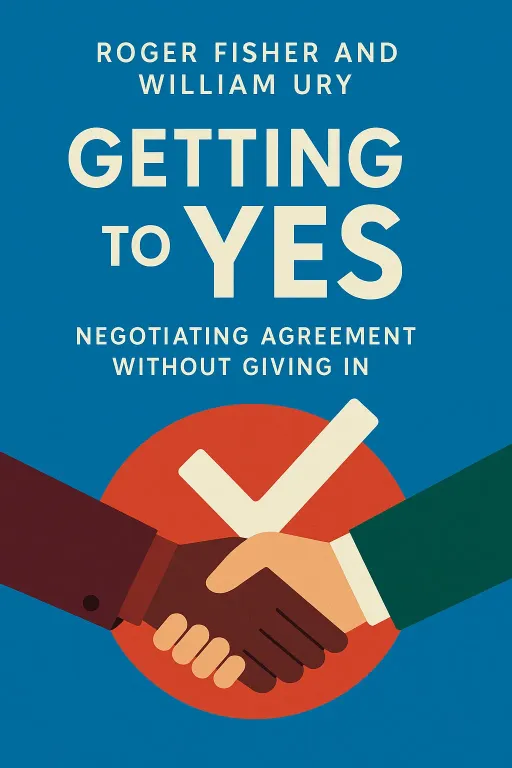
Nova: Exactly. But what if we told you that effective negotiation isn't about confrontation at all, but about collaboration, about building partnerships, and securing resources in a way that strengthens relationships? That's what we're diving into today, drawing insights from two seminal works: "Getting to Yes" by Roger Fisher and William Ury, and "Never Split the Difference" by Chris Voss.
Atlas: That's a fascinating pairing, Nova. Fisher and Ury, these brilliant minds from the Harvard Negotiation Project, essentially codified principled negotiation, giving us an academic bedrock. And then Chris Voss, a former FBI hostage negotiator, swoops in with these high-stakes, real-world psychological tactics. How do these two seemingly different worlds collide to unlock influence for us?
Nova: That's the magic. They both, in their own unique ways, teach us to transform negotiation from a battle of wills into a skilled, insightful dialogue. The core of our podcast today is really an exploration of how to transform the often-dreaded act of negotiation into a powerful art form for career and life advancement.
Atlas: Right, so today we'll dive deep into this from two perspectives. First, we'll explore the fundamental mindset shift from confrontation to collaboration in negotiation, then we'll discuss the advanced tactical tools, like empathy and calibrated questions, that can turn any discussion into a strategic advantage. I'm already curious how these high-stakes FBI techniques translate to, say, asking for a raise.
Negotiation as Collaboration: Shifting Perspective
SECTION
Nova: Let's start with that fundamental mindset shift, which is really the heart of "Getting to Yes." Fisher and Ury introduce this concept of principled negotiation, and it's revolutionary because it asks us to focus on interests, not positions.
Atlas: Hold on, so it's not about winning? That feels counterintuitive to what we're taught. For many of us, especially in competitive environments, negotiation feels inherently about "my side versus your side."
Nova: It absolutely does, and that's the trap. Imagine two people arguing vehemently over an orange. One says, "I need the whole orange!" The other retorts, "No, need the whole orange!" They're stuck in positions. But if you ask they want the orange, you might find one needs the peel for zest in a cake, and the other needs the pulp for juice.
Atlas: Oh, I love that analogy! So, if they had focused on their underlying interests, they could have both gotten what they needed. One gets the peel, the other gets the juice. Nobody 'loses.'
Nova: Precisely. It shifts from a win-lose dynamic to a win-win, or at least a win-some, win-some outcome. They advocate for inventing options for mutual gain. It's about brainstorming solutions that satisfy both parties' deeper needs, not just their stated demands. And crucially, it's about using objective criteria. Instead of "I want more money," it's "Based on industry benchmarks for this role and my performance metrics, this salary increase is justified."
Atlas: That makes so much sense. I can definitely see how that would change the dynamic in, say, a team meeting. For our listeners who are navigating complex projects or managing difficult stakeholders, this concept might feel like a breath of fresh air. Instead of a manager just saying, "You need to cut your budget by 20%," a principled approach would be, "What are the core objectives we need to achieve, and how can we get there effectively with the resources available?"
Nova: Exactly. Think about a corporate case study: a project team needs more budget to launch a new product. Instead of just demanding more money, they articulate their interests: "We need to hit these market share targets, we need to ensure product quality, and we need to deliver on time." Then they present options that show how the extra resources lead to project success, which benefits the entire company's bottom line. It's not about 'us vs. them' for money, it's about 'us working together' for a shared, successful outcome.
Atlas: So, when I'm negotiating, whether it's for a promotion, a new project, or even just getting my ideas heard, I shouldn't just say "I want more responsibility" or "I think my idea is best." Instead, I should frame it as "I want to contribute to X goal, and more responsibility in Y area would achieve that, benefiting the company by Z." That's brilliant. It makes it about shared value, not personal gain.
Tactical Empathy & Calibrated Questions: The Human Element in High Stakes
SECTION
Nova: While "Getting to Yes" gives us this incredible framework for collaboration, Chris Voss's "Never Split the Difference" brings in the psychological superpowers, especially when collaboration feels impossible. He introduces tactical empathy.
Atlas: Whoa, tactical empathy. That sounds like something straight out of a spy novel. And coming from an FBI hostage negotiator, it certainly adds a layer of intensity. How does that translate to, say, a performance review, or even just a disagreement with a colleague without sounding manipulative?
Nova: It’s not about manipulation, Atlas. It's about understanding the other side's emotional state and worldview, not just their words. Voss argues that humans are fundamentally emotional beings, and logic often comes second. Tactical empathy is about identifying, understanding, and then articulating the other person's emotions and perspective. He calls it "labeling."
Atlas: Labeling emotions? Like, "It sounds like you're feeling frustrated"?
Nova: Precisely. "It sounds like you're concerned about the timeline," or "It seems like you're under a lot of pressure right now." When you accurately label someone's emotions, you disarm them. They feel heard, understood, and that creates an immediate connection. It's a surprising way to build rapport, even in high-stakes situations. Voss has incredible stories of using this to de-escalate armed standoffs, simply by saying things like, "It seems like you're feeling trapped."
Atlas: That’s incredible. I can see how that would work in a crisis, but it strikes me that it’s just as powerful in everyday professional life. For anyone in a leadership role, or even just trying to get a project moving forward, understanding that underlying emotion changes everything. Instead of just hearing "no," you hear "I'm overwhelmed," or "I'm afraid of failure."
Nova: Exactly. And alongside tactical empathy, Voss introduces calibrated questions. These are open-ended questions, usually starting with "What" or "How," that make the other side feel in control while subtly guiding them toward your solution. Instead of demanding, you ask.
Atlas: Give me an example. Like how?
Nova: Instead of saying, "You need to get this done by Friday," which can feel like an order, you might say, "How are we supposed to accomplish this by Friday?" Or "What about this deadline is important to you?" These questions force the other person to think, to articulate their challenges, and often, to come up with solutions that align with what you need, making them feel like it was their idea.
Atlas: Oh, that’s such a powerful shift! Instead of pushing back on a difficult manager or a reluctant team member, I could say, "It sounds like you're under a lot of pressure to hit these targets. How can I help us both achieve this?" Or, if someone is resisting a new idea, "What about this proposal concerns you most?" It makes them part of the solution, rather than just the problem.
Nova: Bingo! It's not about being soft; it's about strategically understanding the human being across the table. It's about seeing the negotiation not just as a transaction, but as a deeply human interaction. Voss often says, "He who defines the problem, controls the solution." Calibrated questions give you that power, but in a way that empowers the other person too.
Synthesis & Takeaways
SECTION
Nova: So, bringing these two powerful approaches together: principled negotiation gives you the collaborative mindset and the strategic framework to find mutual gain, while tactical empathy and calibrated questions provide the crucial tools to navigate the human element, especially when emotions run high or collaboration seems unlikely.
Atlas: That's a profound synthesis, Nova. It's about being strategically empathetic and prepared, rather than just aggressive or passively accepting. It's truly "unlocking influence" by understanding what drives people, both rationally and emotionally. It transforms negotiation from a dreaded confrontation into an opportunity for genuine connection and shared success.
Nova: Absolutely. And for anyone listening who wants to put these ideas into immediate practice, here's a tiny step: before your next important conversation—whether it's with your boss, a client, or even a family member—list three interests you have, and three interests you think the other party has.
Atlas: And I'd add to that: try to craft just one calibrated question you could ask to uncover their true interests or concerns. Something like, "What's the biggest challenge you're facing with this?" or "How would you like to see this situation resolved?" You might be surprised at what you learn.
Nova: Those simple preparations can completely shift the dynamic. It's about doing your homework, understanding the human element, and approaching every interaction as an opportunity to create value, not just win a point.
Atlas: It's empowering, really. It gives you a roadmap to navigate those tricky conversations with confidence and a genuine desire for positive outcomes.
Nova: This is Aibrary. Congratulations on your growth!