The Power of Persuasion: Influencing Outcomes Without Force
Golden Hook & Introduction
SECTION
Nova: Many people think persuasion is about having the loudest voice or the most convincing argument. It's about asserting dominance, right?
Atlas: Yeah, that’s often the default, isn't it? Like, "whoever shouts loudest wins," or "the data will speak for itself." But I’ve definitely felt that fall flat when I’m trying to get a new initiative off the ground or align a team. It just… doesn't always translate into action.
Nova: Exactly! What if I told you that true influence, the kind that actually moves people to say 'yes' and genuinely come along with your vision, is often about silence, subtle cues, and even giving things away? We're talking about influencing outcomes without force.
Atlas: Oh, I'm already intrigued. As someone who's always looking for that strategic edge, that sounds like the ultimate mastery. So, where do we even begin to unpack that kind of power?
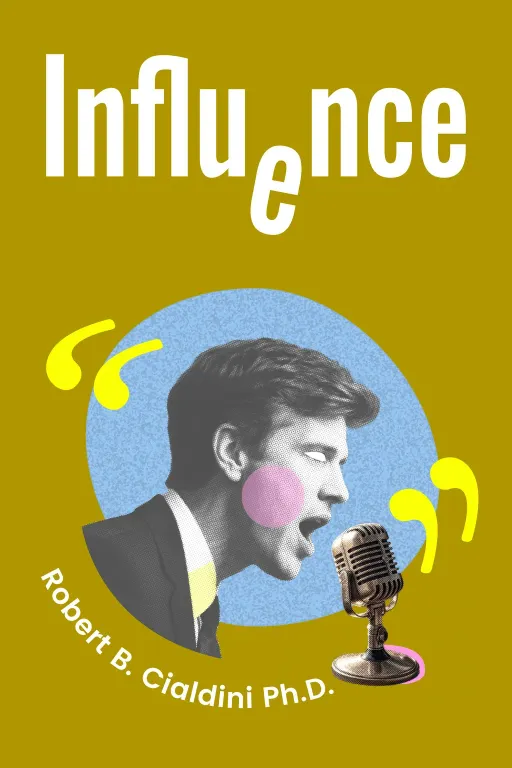
Nova: Well, today, we're cracking open two seminal works that lay out this blueprint beautifully. First, Robert Cialdini’s, a book born from academic rigor and decades of deep dives into what makes people comply. Cialdini actually spent years undercover, immersing himself in various compliance professions—from car sales to fundraising—to understand these mechanisms firsthand.
Atlas: That’s amazing! He’s not just theorizing; he was in the trenches.
Nova: Absolutely. And then, we have Chris Voss’s, penned by a former FBI hostage negotiator who literally put these theories to the ultimate test in life-or-death situations. Talk about high stakes.
Atlas: From the academic lab to the negotiating table with a gun to someone’s head. That's quite the spectrum. So, are we talking about two completely different approaches, or is there some overlap in this 'influence without force' idea?
Nova: There's profound overlap, Atlas. And we're going to start by looking at Cialdini's work, which reveals the invisible architecture of human decision-making. He gives us these universal psychological triggers that, when understood and used ethically, can dramatically increase your ability to influence.
The Hidden Levers of Influence: Cialdini's Six Principles
SECTION
Nova: So, imagine you're a leader, trying to get your team to adopt a new, slightly inconvenient but ultimately beneficial process. You could just mandate it, but that often brews resentment, right?
Atlas: Oh, definitely. You get compliance, maybe, but not genuine buy-in. And certainly not enthusiastic adoption. For anyone trying to implement change, that's the constant battle.
Nova: Right. Cialdini identifies six such principles. Let's just touch on two today to give a flavor: Reciprocity and Scarcity. Reciprocity is incredibly powerful. It’s the deep-seated human tendency to repay in kind what another person has provided us.
Atlas: So, like, if I give you a gift, you feel obligated to give me one back?
Nova: Precisely, but it's far more subtle and powerful than just gifts. Think about a software company that offers a truly valuable, free trial with no strings attached—not just a demo, but full functionality. Or a consultant who spends hours giving genuinely insightful advice to a potential client, even before a contract is signed.
Atlas: Oh, I see. So, instead of just pitching, they're in the relationship, in the client's success, upfront. That builds trust, and it definitely makes you feel like you owe them a serious look when it comes time to choose a vendor. It's not about being transactional; it's about being genuinely helpful first.
Nova: Exactly! It's about giving value first, without expectation, but knowing that human psychology often compels a return. It's a powerful principle for building long-term relationships and influence. Now, let's look at Scarcity. This one is about making something less available to increase its perceived value.
Atlas: Okay, so "limited time offer" or "only three left in stock." That's the classic sales tactic. But that can feel a bit… manipulative, honestly. For leaders, how do you use scarcity ethically without just creating artificial pressure?
Nova: That's a critical distinction, Atlas, and it speaks to the "ethical" part of Cialdini's work. True ethical scarcity isn't about fabricating limits. It's about highlighting scarcity or unique opportunities. Imagine you're trying to get a project funded, and you know there's a unique window of opportunity due to market conditions or a specific internal resource availability that won't last.
Atlas: Ah, so it's not "buy now or else," but "this is a unique window for us to achieve X, and that window is closing." It frames it as an opportunity that demands decisive action, rather than an arbitrary deadline. It leverages the reality of limited resources or time.
Nova: That’s it. It's about communicating genuine constraints or unique opportunities that genuinely exist. When people perceive something as rare or time-bound, their desire for it, and their willingness to act, naturally increases. It’s not about tricking them; it’s about accurately reflecting reality to prompt necessary action. These principles aren't about manipulation; they're about understanding the deep-seated drivers of human behavior to guide decisions towards mutually beneficial outcomes.
From Hostage Negotiation to Everyday Leadership: Voss's Tactical Empathy
SECTION
Atlas: That makes a lot of sense. So Cialdini gives us these foundational psychological triggers. But what happens when you’re dealing with someone who isn't just a potential client, but someone in deep distress, or outright hostile? Someone who feels cornered and resistant to any kind of influence? That's where I imagine Chris Voss comes in, right?
Nova: You've hit the nail on the head. Voss's world was literally life-or-death negotiations. He couldn't rely on subtle cues or reciprocal favors. He needed to find a way to connect, understand, and influence in the most extreme conditions. His core philosophy is what he calls 'tactical empathy.'
Atlas: Tactical empathy. That sounds like a fascinating contradiction. Empathy feels so soft, so human, and 'tactical' suggests something strategic, even hard-nosed. How do those two concepts even coexist?
Nova: It’s brilliant, actually. It’s not about agreeing with someone's viewpoint. It's about understanding and acknowledging their emotions, their perspective, and their pain points so deeply that they. And when someone feels truly understood, their defenses drop. Voss uses techniques like 'mirroring,' where you repeat the last one to three words someone said.
Atlas: Just repeat their words? That sounds almost too simple. How does that disarm someone in a high-stakes situation?
Nova: It's powerful because it signals active listening. It forces you to internalize what they just said, and it encourages them to elaborate. Imagine a high-pressure meeting where a stakeholder is ranting about budget cuts. Instead of immediately countering, you say, "budget cuts."
Atlas: And they'll likely say, "Yes, budget cuts! They're killing our project, making it impossible to deliver!" And suddenly, they're explaining problem more to, not just yelling me.
Nova: Exactly! You've opened a channel. Then there’s 'labeling.' This is verbally acknowledging the other person's emotions. "It sounds like you're feeling frustrated." "It seems like you're worried about the timeline."
Atlas: That's interesting. So you're not saying "I understand," which can feel dismissive if you don't. You're just observing and naming what you perceive. It takes the emotion out of the abstract and makes it concrete.
Nova: And it gives them an opportunity to correct you if you're wrong, which still builds rapport, or confirm that you're right, which builds massive trust. Voss tells stories of hostage situations where simply labeling the kidnapper's anger or fear helped de-escalate the situation, allowing him to gain a foothold. It's not about being soft; it's about being profoundly intelligent with your emotional radar. It's about seeing the world through their eyes, even if you utterly disagree with their actions.
Atlas: So, for leaders, this means actively listening to feedback, even if it's critical, and then reflecting back those concerns to the team or individual. Not to concede, but to demonstrate that their perspective has been heard and validated. That feels like a huge step towards gaining trust, especially when trying to implement those difficult changes we talked about earlier. It’s about building a bridge, not just asserting your position.
Synthesis & Takeaways
SECTION
Nova: So, when we bring Cialdini and Voss together, what emerges is a powerful, multifaceted approach to influence. Cialdini gives us the scientific understanding of the universal psychological levers. Voss gives us the operational playbook for human connection, even in the most adversarial settings.
Atlas: It's not about being loud or forceful. It’s about being deeply informed and profoundly empathetic. The cold fact is, achieving your goals often requires others to come along. And the insights from Cialdini and Voss fundamentally solve the problem of ineffective communication by providing actionable strategies. It's about mastering human behavior, not just managing it.
Nova: Right. It transforms the idea of "persuasion" from a battle of wills into an art of understanding. For the strategic seeker, the practical pioneer, or the impactful leader, these aren't just theories. They are essential tools for navigating complex human interactions, leading teams, influencing stakeholders, and ultimately, making a significant mark.
Atlas: And the beauty is, you don't need to be an FBI negotiator or an academic psychologist to start applying these. The tiny step is always the most important.
Nova: Absolutely. This week, we challenge you: Identify one situation where you want to influence an outcome. It could be a team decision, a personal negotiation, or even just getting your kids to do their homework. Choose one Cialdini principle—maybe reciprocity, offer some genuine value first. Or try one of Voss’s tactical empathy techniques—mirroring or labeling.
Atlas: Just pick one, try it out, and observe what shifts. That's how you move from theory to true mastery.
Nova: This is Aibrary. Congratulations on your growth!